Welcome back!
You're currently shopping with your default address:
You're currently using an unsupported browser, which may impact the sites display and prevent key functionality. Update your browser now for greater security, speed, and the best experience on this site. View supported browsers.


Vaccinate Against MenB
MenB is rare but potentially deadly, and ages 16-23 may be at higher risk.
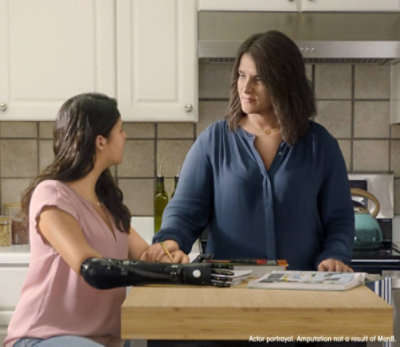
Meningitis B (also known as MenB) is an uncommon but potentially deadly disease that progresses quickly and can lead to death within 24 hours.1,5 TRUMENBA is an FDA-approved vaccine that helps protect teens against MenB infections that are common causes of meningitis outbreaks.7,10,11 Adolescents and young adults between the ages 16-23 may be at a higher risk for MenB.6,7
MenB can be spread through typical teen sharing behavior such as sharing drinks and utensils.3,12-14 It attacks the brain and spinal cord and can cause an infection of the blood.1,5,15,16 So why risk it? You can help your teen by talking to their healthcare provider about vaccinating with TRUMENBA. Click the link below to find where to get your teen vaccinated.
TRUMENBA is approved by the FDA, and is the only vaccine tested against diverse MenB strains. It has been shown to help protect teens from the most common strains.7,8 The incidence of MenB peaks at age 19, so if your child is between the ages of 16 and 23, they may be at a higher risk.6,7
Two different vaccines are needed to fully vaccinate your teen against meningitis. There are 5 primary types of bacteria that cause meningitis: A, C, W, Y, and B. The CDC recommends vaccination for types A, C, W, and Y at ages 11 to 12 and a booster at age 16.9 The CDC-recommended age for MenB vaccination is 16-23.3,4 Talk to your healthcare provider about protecting your teen with TRUMENBA. Click the link below to find the nearest pharmacy to vaccinate your teen.
1. Soeters HM, McNamara LA, Whaley M, et al. Serogroup B meningococcal disease outbreak and carriage evaluation at a college-Rhode Island, 2015. Morb Mortal Wkly Rep. 2015;64(22):606-607.
2. Bettinger JA, Scheifele DW, Le Saux N, et al. The disease burden of invasive meningococcal serogroup B disease in Canada. Pediatr Infect Dis J. 2013;32(1):e20-e25.
3. Centers for Disease Control and Prevention. Recommended child and adolescent immunization schedule for ages 18 years or younger: United States, 2021. Centers for Disease Control and Prevention website. Updated February 12, 2021. Accessed July 8, 2021
4. MacNeil JR, Rubin L, Folaranmi T. Use of serogroup B meningococcal vaccines in adolescents and young adults: recommendations of the Advisory Committee on Immunization Practices, 2015. Morb Mortal Wkly Rep. 2015;64(41):1171-1176.
5. Thompson MJ, Ninis N, Perera R, et al. Clinical recognition of meningococcal disease in children and adolescents. Lancet. 2006;367(9508):397-403.
6. National Foundation for Infectious Diseases. Addressing the challenges of serogroup B meningococcal disease outbreaks on campuses: a report by the National Foundation for Infectious Diseases. Published May 2014. Accessed July 8, 2021.
7. TRUMENBA [package insert]. Philadelphia, PA: Pfizer Inc.; 2019.
8. Wang X, Cohn A, Comanducci M, et al. Prevalence and genetic diversity of candidate vaccine antigens among invasive Neisseria meningitidis isolates in the United States. Vaccine. 2011;29(29-30):4739-4744.
9. McNeil LK, Zagursky RJ, Lin SL, et al. Role of factor H binding protein in Neisseria meningitidis virulence and its potential as a vaccine candidate to broadly protect against meningococcal disease. Microbiol Mol Biol Rev. 2013;77(2):234-252.
10. Biwas HH, Han GS, Wendorf K, et al. Notes from the field: outbreak of serogroup B meningococcal disease at a university–California, 2016. Morb Mortal Wkly Rep. 2016;65(20):520-521.
11. Centers for Disease Control and Prevention. Enhanced Meningococcal Disease Surveillance Report, 2017. Centers for Disease Control and Prevention website. Accessed July 8, 2021.
12. Dwilow R, Fanella S. Invasive meningococcal disease in the 21st century–an update for the clinician. Curr Neurol Neurosci Rep. 2015;15(3):1-9.
13. Ewald AJ, McKeag DB. Meningitis in the athlete. Curr Sports Med Rep. 2008;7(1):22-27.
14. Tully J, Viner RM, Coen PG, et al. Risk and protective factors for meningococcal disease in adolescents: matched cohort study. BMJ. 2006;332(7539):445-450.
15. Borg J, Christie D, Coen PG, et al. Outcomes of meningococcal disease in adolescence; prospective, matched-cohort study. Pediatrics. 2009;123(3):e502-e509.
16. Centers for Disease Control and Prevention. Meningococcal disease. Centers for Disease Control and Prevention website. Updated January 21, 2020. Accessed July 8, 2021.
17. Patton ME, Stephens D, Moore K, et al. Updated recommendations for use of MenB-FHbp serogroup B meningococcal vaccine–Advisory Committee on Immunization Practices, 2016. Morb Mortal Wkly Rep. 2017;66(19):509-513.
Please see full Prescribing Information
IMPORTANT SAFETY INFORMATION
INDICATION