


Should You Use Laundry Pods, Liquid, Powder, or Sheets?
The same detergent comes in four types. Which one you end up picking changes how much you use and how much shelf it takes up, more than how clean the wash comes out. Pods and sheets fix the dose for you. Liquid and powder let you set it yourself.
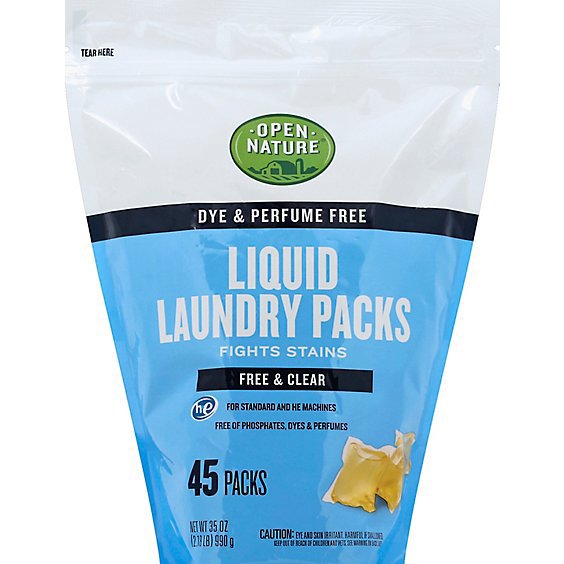
Open Nature Laundry Packs Free & Clear
The Four Formats
Each format holds the same kinds of cleaning ingredients. What differs is dosing, residue, storage, and how well it handles a heavy or a tiny load.
Format | What it is | Dosing | The tradeoff |
|---|---|---|---|
Liquid | Detergent suspended in water. | Full control from the cap. | Best for heavy or variable loads, pre-treats stains from the cap, but easy to over-pour and heavy to store. |
Powder | Dry granules, the original form. | Scoop-measured, good control. | Stores and travels well if kept dry, but can leave undissolved grit in very cold or short cycles. |
Single-dose packs | A fixed dose sealed in dissolvable film. | None, the dose is set. | No measuring and no spills, but you can't dial down for a small load or up for a dirty one. Keep dry. |
Sheets | A thin dry strip with the water removed. | Fixed per sheet, some tear in half. | Lightest and most compact, no plastic jug, but the fixed dose limits heavy soils. |
Liquid
Liquid is detergent suspended in water, which is why a big bottle is heavy: a lot of what you're carrying is water. It gives you control over the dose. You pour more for a full, muddy load and less for a couple of shirts, and you can rub a little straight onto a stain before it goes in. The cap looks small, so it's easy to pour past the fill line. Too much leaves residue, and in a high-efficiency machine it makes too many suds. Fill to the line for your load size.
Powder
Powder is the original detergent, dry granules you scoop. It gives good dosing control and stores a long time without leaking. Its weak point is dissolving, since very cold water or a short cycle can leave undissolved grit on fabric. Safeway's laundry shelf runs mostly to liquid, packs, and sheets, so powder may not be stocked at every store. Check the aisle or the app if it's what you want.
Single-Dose Packs
A pack is a pre-measured dose of concentrated detergent sealed in a film that dissolves in the wash. You drop one in and start the machine, with no measuring and no drips. One shopper of the Open Nature Free & Clear packs, headed "Great & Convenient Open Nature Laundry Packs," calls them "great and convenient for small laundry loads." A pack holds the right amount for an average load, but you can't cut it down for a small wash or add to it for a heavy one. Packs also have to stay dry, since wet hands can start the film dissolving before it reaches the drum. Because the detergent inside is concentrated and the packets can look like candy to a small child, they come with storage rules, covered below.
Sheets
Sheets are the newest format, they are a thin, dry strip of concentrated detergent with the water removed, which you toss straight into the drum. They weigh almost nothing and stack flat with no plastic jug, so they suit small spaces, travel, and hauling laundry up stairs. A sheet holds the same kinds of ingredients as liquid, surfactants and enzymes, minus the water.
On cleaning power the evidence is mixed. Consumer Reports washed sheets side by side with liquids and pods and found the sheets they tested cleaned less well than both, weaker on some stains like coffee. Makers counter that newer sheets use concentrated surfactants and enzymes on par with premium detergents. So independent testing has generally found sheets clean tougher stains less well than liquid, though formulas keep changing, and for light everyday loads that difference matters less than for ground-in stains. One reviewer of the Open Nature sheets, headed "Less Plastic Thank you!," writes, "I love these laundry sheets. They are mild scented but work well."
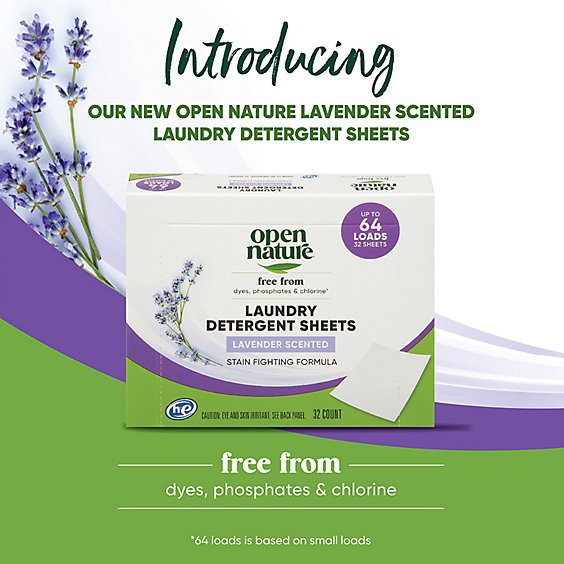
Open Nature Laundry Detergent Sheets
A Note on HE Machines
If you have a high-efficiency washer, the front-loaders and newer top-loaders that use less water, the format matters less than the "he" mark. Most detergent sold now is HE-compatible whatever the format. Look for the lowercase "he" in a circle on the package. Regular high-sudsing detergent in an HE machine foams too much, which can leave residue over time.
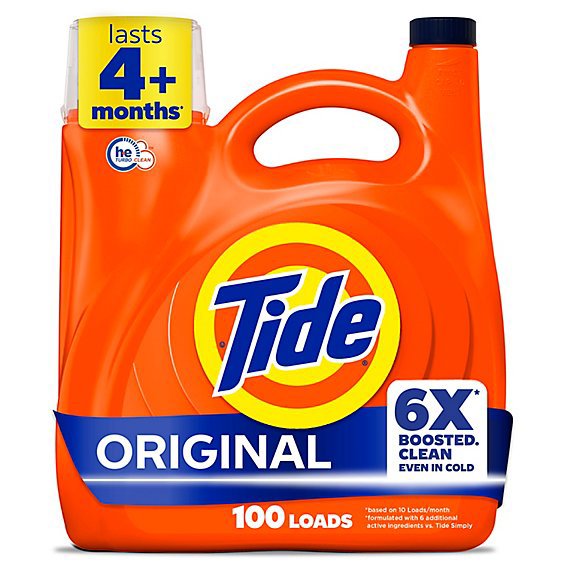
Tide HE Liquid Detergent Original
Keeping Packs Away From Children
Single-dose packs need one safety habit that loose detergent doesn't. The detergent inside is highly concentrated, and the small, bright, squishy packets can look like candy to a young child. The American Academy of Pediatrics notes that when a child bites or squeezes one, the contents can be swallowed or squirt into the eyes, and poison centers logged 1,423 packet exposures in children age five and under in January and February of 2024 alone.
The guidance from the AAP and poison-control centers is about storage:
Keep packets in their original container, closed, with the label intact.
Store them up high, out of sight and reach, ideally in a locked cabinet.
Don't set one out until you're ready to use it, and don't let a child handle it.
For a home with children age six and under, the AAP suggests considering traditional liquid or powder detergent, which is far less concentrated.
If an exposure happens, the AAP and poison centers direct people to Poison Help at 1-800-222-1222. Many pack tubs carry a child-hazard symbol on the label.
Buying It at Safeway
Match the format to how you do laundry. Liquid gives the most control for heavy, variable, or stain-heavy loads. Packs remove the measuring for average loads. Sheets store smallest and travel easiest. Powder keeps longest, where a store stocks it.
Safeway's own Open Nature line carries liquid, packs, and sheets, including Free & Clear versions meant to skip added fragrance and dyes, plus a lavender scent. Tide and Arm & Hammer sit alongside as national brands. For what the words on the box mean, from "free & clear" to the green claims, see the laundry detergent label guide. Availability and formats vary by store, so check your Safeway's shelf or the app.
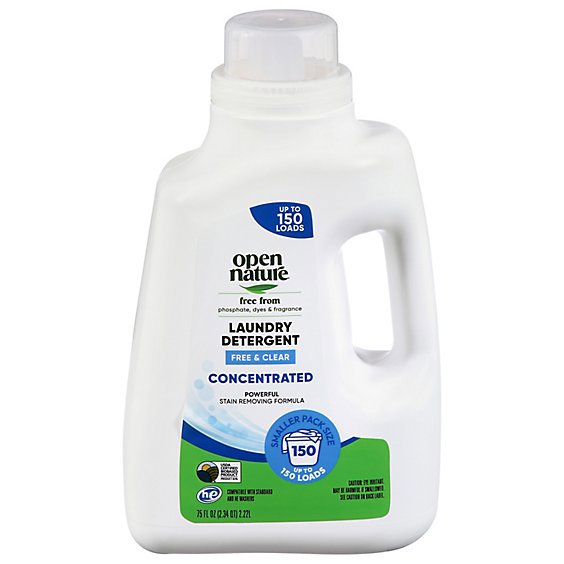
Open Nature Liquid Laundry Detergent Free & Clear
Common Questions
Are laundry pods better than liquid detergent?
Neither is better across the board. Pods win on convenience, a fixed dose with no measuring or spills. Liquid wins on control, since you can pour more for a heavy load, less for a small one, and pre-treat a stain from the cap. Pods also need child-safe storage because the detergent inside is concentrated. Pick by whether you value convenience or control.
Do laundry sheets clean as well as liquid?
Independent testing says not quite on tough stains. Consumer Reports found the sheets they tested cleaned less well than liquids and pods, and weaker on stains like coffee. Sheets hold the same kinds of ingredients minus the water, and they win on weight, storage, and skipping the plastic jug. For light everyday loads the difference matters less than for ground-in stains.
Is powder or liquid detergent better?
They clean comparably. The difference is handling. Powder stores a long time, travels without leaking, and gives good dosing control, but can leave undissolved grit in very cold or short cycles. Liquid dissolves instantly, pre-treats stains from the cap, and works well in cold water, but is heavier to store and easy to over-pour.
How much detergent should I use?
Fill to the line on the cap or scoop for your load size, not by eye. Over-pouring is the common mistake, especially with concentrated formulas where the correct dose looks small. Too much detergent leaves residue and, in a high-efficiency machine, extra suds that can build up. Packs and sheets take that decision away with a fixed dose.
Can I use any detergent format in a high-efficiency washer?
Only if it's HE-compatible, marked with a lowercase "he" in a circle. Most detergent sold today is HE-compatible whatever the format. Regular high-sudsing detergent in an HE machine foams too much, which cushions the clothes and can leave residue in the machine over time.
Are laundry pods safe to have around kids?
They need careful storage. The AAP notes that the concentrated detergent in a packet can harm a young child who bites or squeezes one, and that the packets can look like candy. It advises keeping them closed in their original container, up high and out of reach, and for homes with children six and under, considering traditional detergent instead. The AAP and poison centers direct people to call Poison Help at 1-800-222-1222 if a child is exposed.