


Fiber: the Nutrient Most Americans Are Missing


Bestsellers for Probiotic Yogurt & Kefir
The average American eats about 16 grams of fiber a day. The recommended target is 25 grams for women and 38 grams for men. Only about 5% of the population hits that target.
That gap matters. Fiber feeds the bacteria in your gut. They break it down and turn it into compounds that fuel the cells lining your colon, keep the gut wall strong, and help regulate your immune system. When you don't eat enough fiber, those bacteria don't have enough to work with.
This isn't about adding a supplement. Most high-fiber foods are things you'd buy anyway: beans, berries, oats, whole wheat bread, nuts. The trick is knowing which ones move the needle and how to add them without your gut punishing you for it.
What 25 grams of fiber looks like
Most people have no idea how much fiber they eat. Here's what hitting the target looks like in a normal day of eating:
Breakfast: Oatmeal made with a quarter cup of steel cut oats, topped with a cup of raspberries and a tablespoon of chia seeds. That's about 18 grams of fiber before you've left the house.
Lunch: A sandwich on whole wheat bread with whatever filling you like. Two slices of whole wheat bread add about 6 grams. Throw in a side of baby carrots and hummus and that's another 3 to 4.
Dinner: Whole wheat pasta with broccoli. The pasta adds about 6 grams, the broccoli about 5.
Snack: A handful of almonds. About 3.5 grams.
Total: roughly 40 grams. That's above the target for both men and women, and nothing on that list is unusual.
The point isn't that you need to eat exactly this. It's that fiber adds up fast once you know where it comes from. Swap a few items in your regular meals and you can close the gap without overhauling your routine.
High-fiber foods at Safeway
Beans and lentils
 Signature SELECT Beans Black - 15 Oz
These are the highest-fiber items in the grocery store. Half a cup of canned lentils has 8 grams. Half a cup of black beans, kidney beans, or pinto beans has 6 to 8 grams. That's more fiber per serving than almost anything else you can buy.
Canned beans are ready to use. Open the can, rinse them (this cuts the sodium by about 40%), and add them to whatever you're making. Rice bowls, tacos, soups, salads, pasta. If you cook dried beans or lentils, the fiber per serving is the same and the cost per serving drops even further.
Safeway carries canned beans in store-brand, organic, and name-brand options.
Berries
 Raspberries Prepacked - 6 Oz
Raspberries and blackberries have 8 grams of fiber per cup. That's more than a slice of whole wheat bread, more than a banana, more than most vegetables. Blueberries have about 4 grams per cup. Strawberries about 3.
Fresh or frozen, the fiber content is the same. Frozen berries are picked at peak ripeness and are available year-round.
Oats and seeds
 Bob's Red Mill Steel Cut Oats - 24 Oz
A quarter cup of steel cut oats (dry) has about 5 grams of fiber. Rolled oats have about 4 grams per half cup. Both also contain a type of soluble fiber that's especially good at feeding beneficial gut bacteria.
 O Organics Chia Seeds - 16 Oz
Chia seeds are the highest-fiber topping you can add to anything. Two tablespoons have about 10 grams. They absorb liquid and form a gel, which is why they work well stirred into yogurt or oatmeal. Ground flaxseed has about 4 grams per two tablespoons. Buy it ground or grind it yourself. Whole flax seeds pass through without being broken down.
Bread and wraps
Not all bread is equal for fiber. A slice of white bread has about 1 gram. A slice of whole wheat bread has about 3 grams. A sandwich on whole wheat gives you about 6 grams of fiber; one on white has about 2.
Check the ingredient list. "Wheat flour" is not whole wheat. Look for "whole wheat flour" as the first ingredient.
Some high-fiber wraps and tortillas at Safeway go much higher, with 12 to 30 grams of fiber per wrap. That fiber comes partly from added ingredients like modified wheat starch and resistant starch, not just the grain itself. It still counts toward your daily intake, but whole-food fiber comes with more nutrients.
Whole wheat pasta and grains
 Barilla Whole Grain Spaghetti Pasta - 16 Oz
Whole wheat pasta has about 6 grams of fiber per serving. Regular white pasta has about 2. Triple the fiber for the same meal.
Barley has about 6 grams per cup when cooked and is high in soluble fiber. Quinoa has about 5 grams and is one of the few grains with complete protein. Brown rice has about 3.5 grams, up from 0.6 in white rice.
Vegetables and snacks
Broccoli has about 5 grams per cup when cooked. Green peas have 4.5 grams per half cup. Sweet potatoes have about 4 grams if you eat the skin. Cooked vegetables give you more fiber per serving than raw because they shrink down, so you eat more of the original food.
For snacking, popcorn is a whole grain with about 3.5 grams per three cups. Almonds have 3.5 grams per ounce. Dried figs have about 4 grams per serving.
Small swaps that add up
You don't have to overhaul your diet. A few changes can add 10 to 15 grams of fiber a day.
The easiest: switch white bread, rice, or pasta for whole wheat or brown versions. Each swap adds 3 to 4 grams per serving. A whole wheat sandwich at lunch and whole wheat pasta at dinner add about 8 grams over the white versions.
Adding half a cup of beans to something you already make (rice bowl, soup, tacos, salad) adds 7 grams in one move. A tablespoon of chia seeds stirred into yogurt or oatmeal adds 5 grams you won't even taste.
Fruit choice matters too. A cup of raspberries has 8 grams of fiber. An apple has about 4. A cup of grapes has about 2.
Pick two or three of these that fit your routine. That's usually enough to close the gap.
How to add fiber without the gas
This is the part that stops people. You read that fiber is good, buy a bag of lentils and a box of Fiber One, eat 30 grams on day one after months of eating 12, and spend the next two days bloated and miserable. Then you decide fiber doesn't agree with you.
That's not fiber disagreeing with you. That's too much, too fast.
Your gut bacteria need time to adjust to more fiber. When you suddenly flood them with food they haven't had much of, they produce extra gas as they ramp up. This is temporary. It usually settles in two to three weeks of consistent eating.
Add about 5 grams per week. If you're at 15 grams a day, aim for 20 the first week, 25 the second, and so on. Your gut bacteria adapt along the way.
Drink more water. Fiber absorbs water. Without enough fluid, it can slow things down instead of speeding them up. There's no magic number, but if you're adding fiber and feeling clogged, drink more.
Cooked over raw. If raw vegetables cause you trouble, cook them. Cooking breaks down some of the cell walls, making the fiber easier for your gut to handle. Steamed broccoli is gentler than raw broccoli.
Spread it across meals. Three meals with 8 to 10 grams each are easier on your gut than one meal with 25 grams. Loading all your fiber into one sitting gives your bacteria more to ferment at once, which means more gas at once.
Beans are worth the effort. They cause more gas than most foods because they contain certain carbohydrates your body can't break down on its own. Your gut bacteria handle them, and they produce gas doing it. Soaking dried beans overnight and cooking in fresh water reduces this. Canned beans cause less gas than dried because the canning process breaks down some of those carbohydrates. And the gas decreases as your gut bacteria adjust over a few weeks of regular eating.
Fiber supplements
 Metamucil 4 in 1 Fiber Supplement Powder Sugar-Free Orange - 72 tsp
Supplements can help fill the gap while you build more fiber into your meals. They're not a replacement for high-fiber foods, which deliver vitamins, minerals, and different types of fiber that no single supplement provides. But if you're only getting 10 to 15 grams a day from food, a supplement can bridge the difference.
Safeway carries three main types:
Psyllium husk (Metamucil and store-brand equivalents) is a soluble fiber that forms a gel in water. It has the most clinical research behind it for cholesterol, blood sugar, and regularity. Start with half a dose for the first week. It thickens in liquid, so drink it quickly after mixing.
Wheat dextrin (Benefiber and store-brand equivalents) dissolves clear and is tasteless. You can mix it into coffee, soup, or water and not notice it. About 3 grams per serving. It has less research than psyllium for cholesterol but works as a prebiotic.
Methylcellulose (Citrucel) causes less gas than psyllium because your gut bacteria don't ferment it as much. It delivers less fiber per dose, but it's a good option if other supplements bother you.
All three are also available as capsules, chewables, or on-the-go packets.
Fiber and fermented foods
A 2021 Stanford study found that people who ate more fermented foods (yogurt, kefir, kimchi) developed a more diverse mix of gut bacteria. People who ate more fiber saw their existing bacteria produce more enzymes to process the extra fiber, but didn't gain the same diversity.
The researchers' take: fermented foods can help build gut diversity. Fiber feeds that diverse gut. The two work together.
A separate review of 90 studies found that combining probiotics with fiber reduced inflammation more than fiber alone.
If you're interested in the fermented foods side, we have a separate article on yogurt and gut health that covers what the research says about probiotics, how to read a yogurt label, and what to look for.
FAQ
How much fiber should I eat per day?
25 grams for women, 38 grams for men. Most Americans get about half that.
Can I eat too much fiber?
Yes. Going above 50 grams a day can interfere with how your body absorbs zinc, calcium, iron, and magnesium. Most people are nowhere near this problem. If you're eating a normal diet and adding fiber gradually, you're unlikely to overshoot.
Which fiber is better for constipation?
Insoluble fiber adds bulk and helps move things along. Wheat bran, whole grains, and vegetable skins are high in insoluble fiber. Soluble fiber (oats, beans, psyllium) also helps by drawing water into the stool and softening it. Both types can help. Drink plenty of water with either.
Which fiber is better for gut health?
Soluble fiber. Your gut bacteria ferment it into compounds that fuel the cells lining your colon. Oats, beans, lentils, barley, chia seeds, and most fruits are good sources. But eating a variety of fiber types from different foods feeds a wider range of bacteria, which is what the research links to better gut health.
Why do beans make me gassy?
Beans contain carbohydrates your body can't break down. Your gut bacteria do it instead, producing gas in the process. Canned beans tend to cause less gas than dried. Soaking dried beans overnight and cooking in fresh water also helps. The effect decreases after a few weeks of regular eating.
Are fiber supplements as good as fiber from food?
Not quite. Food delivers fiber plus vitamins, minerals, and other nutrients. It also delivers different types of fiber that feed different gut bacteria. Supplements deliver one type. But supplements are useful when you can't get enough from food alone, or as a starting point while you build fiber into your meals.
Does cooking reduce the fiber in food?
Not significantly. Cooked vegetables actually give you more fiber per serving than raw because they shrink, so you eat more of the original food per cup.
What's the difference between soluble and insoluble fiber?
Soluble fiber dissolves in water and forms a gel. It slows digestion, which can help with blood sugar and cholesterol. Your gut bacteria ferment it easily. Oats, beans, barley, chia seeds, and most fruits are high in soluble fiber.
Insoluble fiber doesn't dissolve. It adds bulk and helps food move through your digestive system. Wheat bran, whole grains, and vegetable skins are high in insoluble fiber.
Most high-fiber foods contain both types. You don't need to track the ratio. Eating a variety of high-fiber foods covers both.
Safeway Buying Guide
Activia Probiotic Dailies Strawberry And Blueberry Yogurt Drink - 8-3.1 Fl. Oz.



Activia Probiotic Dailies Strawberry And Blueberry Yogurt Drink is a great choice for those looking to support their gut health. It contains billions of live and active probiotics per serving, and there are both strawberry and blueberry flavors to choose from. The drink also contains vitamin D, and is certified gluten-free and Non-GMO Project verified. Additionally, it has no cholesterol or trans fat, making it a nutritious snack or beverage.
- Probiotic benefits: Many customers appreciate the probiotic properties of Activia's yogurt drink, stating it supports their gut health and digestion.
- Flavor: The combination of strawberry and blueberry flavors is a hit among consumers who find it delicious and refreshing.
- Convenience: Users love the individual serving sizes, which makes it easy to incorporate into their daily routine or grab on-the-go.
- Consistency: Consumers praise the smooth and creamy consistency of this yogurt drink, finding it very enjoyable to consume.
- Healthier choice: Several buyers consider this product a healthier alternative to other snack options, appreciating its nutritional content.
- Package design: The packaging is appreciated for being easy to open and consume directly from the bottle.
- Quantity: The pack of 8 bottles is seen as good value by customers, providing enough servings for more than a week.
Activia Probiotic Dailies Strawberry Yogurt Drink - 8-3.1 Oz

Activia Probiotic Dailies Strawberry Yogurt Drink is a lowfat yogurt drink with billions of live and active probiotics per serving. It's certified gluten free, Non-GMO Project verified, Kosher and has 5 live cultures.
This product is perfect for those looking to promote gut health in their daily routine. It contains billions of live and active probiotics per serving that help reduce the frequency of minor digestive discomfort such as gas, bloating, abdominal discomfort, and rumbling. It's also certified gluten free and Non-GMO Project verified making it a great choice for those with special dietary needs. Additionally, it provides 10% of your daily value of calcium and 4% of your daily value of potassium making it a nutritious addition to any diet.
- Rich Strawberry Flavor: Many reviews praise the delicious and authentic strawberry taste.
- Probiotic Benefits: Reviewers appreciate the positive impact on their digestive health due to the presence of probiotics.
- Convenient Packaging: Users love the small, portable bottles that make it easy to consume on-the-go.
- Low Calorie: Several reviews mention that this yogurt drink is a great low-calorie snack option.
- High in Protein: Consumers note that it helps them meet their daily protein intake.
- Great Texture: The smooth and creamy texture of the yogurt drink is highly appreciated by customers.
- Daily Dose of Goodness: Many users like that they can incorporate this nutritious drink into their daily routine.
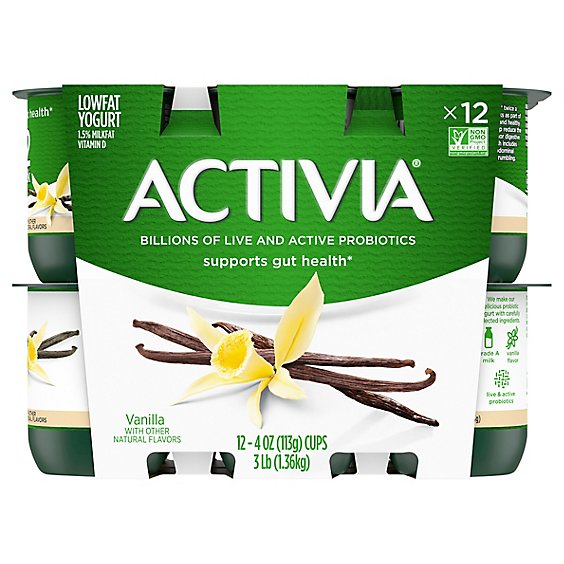
Activia Low Fat Probiotic Vanilla Yogurt - 12-4 Oz


This Activia Low Fat Probiotic Vanilla Yogurt contains billions of live and active probiotics, supports gut health, is made with carefully selected ingredients such as Grade A milk and vanilla flavor, has a smooth and creamy texture, and is certified gluten free. It also contains Vitamin D and Non-GMO Project verified.
- Low Fat: Many customers appreciate the fact that this yogurt is low in fat, making it a healthier choice.
- Probiotic Benefits: Users frequently mention the probiotic benefits of Activia yogurt, which helps improve gut health.
- Vanilla Flavor: The vanilla flavor is well-loved by many, who find it rich and delicious.
- Packaging: The 12-pack of 4 oz servings is appreciated for its convenience and portion control.
- Improves Digestion: Several customers have noted improvements in their digestion after consuming this yogurt regularly.
- High in Protein: Customers enjoy the high protein content, which makes it a filling snack or breakfast option.
- Quality Ingredients: Users praise the use of quality ingredients in Activia yogurt, contributing to its great taste and nutritional value.


