


Yogurt for Gut Health and Bloating According to the Research


Bestsellers for Probiotic Yogurt & Kefir
Yogurt with live cultures can help with mild bloating. You need to eat it daily for at least two to three weeks, and research suggests it works better alongside high-fiber foods like berries, oats, or chia seeds. It's not a cure for digestive problems. But eaten regularly, it's backed by real research.
The bacteria in yogurt don't move in permanently. They pass through your gut and leave. That's why eating it once doesn't do much. Eating it every day keeps a steady stream passing through, and studies suggest the effects build over time. Stop eating it and those effects gradually fade.
Most of the advice online stops at "eat yogurt with probiotics." The research goes further. What you eat with your yogurt may matter as much as the yogurt itself.

How to read a yogurt label
Check the label on the side of the container. The culture list tells you what bacteria are inside.
Every yogurt has at least two: S. thermophilus and L. bulgaricus. These are the starter cultures. They're required to legally call the product yogurt. They're alive, but they don't have much research behind them for digestion.
Look for names beyond those two. L. acidophilus, Bifidobacterium (sometimes shortened to "Bifidus" on labels), L. rhamnosus, L. casei. These are the ones that show up most in studies on bloating and digestion. Yogurts at Safeway list anywhere from two cultures up to six. Kefir products list 12.
A 2025 review of dozens of studies found that products with multiple types of bacteria reduced bloating. Products with only one type did not. A longer culture list isn't a guarantee, but it's worth checking.
Four more things to look for:
"Live & Active Cultures" seal. This means the product had at least 100 million live bacteria per gram when it was made. That's 10 times the FDA minimum. The seal is voluntary, so not every qualifying yogurt carries it.
"Heat treated after culturing." This means the bacteria are dead. The yogurt still has protein and calcium, and it tastes the same. But the live cultures are gone. This shows up on shelf-stable yogurts and yogurt-covered snacks.
Added sugar. All yogurt has some sugar from lactose, about 4 to 6 grams per serving. That's natural. Flavored yogurts can hit 12 to 25 grams total. The nutrition label has two lines: "Total Sugars" and "Added Sugars." The second one tells you what the manufacturer put in.
Sugar substitutes. Some "zero sugar" yogurts use erythritol or sorbitol. Your gut bacteria can ferment these, which produces gas. If a zero-sugar yogurt makes you bloated, the sweetener is probably why.
One thing worth saying: flavored yogurt you eat every day is doing more for your gut than plain yogurt you buy once and leave in the back of the fridge. If you're trying to reduce bloating specifically, less added sugar helps. But consistency matters more.
What to eat with your yogurt
This is the part most yogurt articles skip.
Your gut already has about 38 trillion bacteria. A serving of yogurt adds 1 to 10 billion. That's a tiny fraction. The yogurt bacteria don't take over. They pass through. Along the way, research suggests they interact with your immune system and produce compounds that help maintain your gut wall. Then they're gone.
The bacteria that actually live in your gut full-time need fuel. That fuel is fiber. They break it down and turn it into compounds that keep the lining of your colon healthy. The problem is that 95% of Americans don't eat enough fiber. The average is about 16 grams a day. The target is 25 to 38.
A Stanford study tested this directly. Researchers split 36 adults into two groups for 17 weeks. One group ate six servings of fermented foods per day: yogurt, kefir, kimchi, sauerkraut, kombucha. The other added 20 grams of fiber.
The fermented foods group developed more types of gut bacteria over time. Nineteen markers of inflammation in their blood dropped.
The fiber group didn't see the same diversity gains. But when the researchers looked closer, people who already had a diverse mix of gut bacteria at the start did benefit from the extra fiber. People with less diversity didn't, at least not in the study's timeframe.
The takeaway: the Stanford study suggests fermented foods like yogurt can help build a more diverse gut. Fiber feeds that diverse gut. A review of 90 studies found that combining the two worked better for reducing inflammation than either one alone.
In practice, this suggests a bowl of yogurt with berries and granola is doing more for your gut than the yogurt by itself. The berries and oats feed the bacteria that are already there. The yogurt adds new ones passing through.
Here's what different toppings actually bring:
Raspberries are the highest-fiber common fruit. One cup has 8 grams. That's more than a slice of whole wheat bread, more than a banana, more than most things in the produce section. Blueberries have about 4 grams per cup, strawberries about 3.
 ReadyMeals Fresh Berry Yogurt Snacker - Each
Chia seeds pack the most fiber per spoonful of anything you can add. Two tablespoons have about 10 grams. They absorb liquid and thicken into a gel, which is why they work well mixed into yogurt the night before. Ground flaxseed is similar: 4 grams per two tablespoons. Buy it ground or grind it yourself. Whole flax seeds pass through you intact.
A quarter cup of oats adds 4 grams. Granola varies, so check the fiber and sugar on the label.
A handful of almonds adds about 3.5 grams. Other nuts are in the 2 to 3 gram range.
One medium banana has about 3 grams. Less ripe bananas (still a little green) have more resistant starch, a type of fiber your gut bacteria break down especially well.
How much matters? One study found that 2.5 grams a day of certain fibers wasn't enough to shift gut bacteria. Ten grams a day was. A yogurt bowl with a cup of raspberries and two tablespoons of chia seeds hits 18 grams. That's more fiber than most Americans eat in an entire day.
When yogurt makes bloating worse
For some people, yogurt causes the problem they're trying to fix.
Lactose. About two-thirds of people worldwide have some trouble digesting lactose, the natural sugar in milk. Yogurt has less than milk because the bacteria break some down during fermentation. But it's not zero.
Product | Lactose per cup (approximate) |
|---|---|
Whole milk | 12g |
Regular yogurt | 8-9g |
Greek yogurt | 4-5g |
Kefir | 1-4g |
Lactose-free yogurt | 0g |
Studies suggest most people with lactose intolerance can handle 4 to 7 grams in one sitting. Greek yogurt and kefir usually fall within that range. If regular yogurt bothers you, try those before giving up on dairy.
IBS and FODMAPs. If you follow a low-FODMAP diet for IBS, regular yogurt counts as high-FODMAP because of the lactose. Small amounts of Greek yogurt may be tolerated. Lactose-free yogurt is low-FODMAP.
One thing to watch: some yogurts sold for digestive health contain chicory root fiber (also called inulin) as an added ingredient. Chicory root is itself a FODMAP trigger. A product marketed for gut health could make IBS symptoms worse. Read the ingredient list.
The first two weeks. Your gut may produce more gas when you start eating probiotic foods regularly. This usually passes within one to two weeks. Start with a smaller amount and work up. If bloating lasts longer than two weeks, that yogurt may not agree with you.
Types of yogurt at Safeway
Type | What it is | Protein per serving | Lactose | Notes |
|---|---|---|---|---|
Regular yogurt | Fermented milk, unstrained | 5-8g | Higher | More calcium than Greek |
Greek yogurt | Strained to remove whey | 14-20g | Lower | Straining does not remove probiotics. They live in the solid part, not the liquid. |
Icelandic skyr | Similar to Greek, very thick | 15-18g | Lower | Safeway carries brand-name and store-brand |
Kefir | Drinkable, fermented 14-18 hours | 8-12g | Very low | Typically lists 12 strains and billions of live cultures per serving. Tangier than yogurt. Try flavored or blend into a smoothie. |
Dairy-free | Made from coconut, almond, oat, or soy | Varies widely | None | Check label for live cultures. Soy-based has the most protein. |
Safeway also carries drinkable yogurt, probiotic-specific yogurt (in a dedicated section alongside kefir), and probiotic shots.
FAQ
Does yogurt actually help with bloating?
It can. The research supports eating yogurt with multiple live cultures every day for at least two to three weeks. It can help with mild, occasional bloating. For people with lactose sensitivity or IBS, yogurt can make bloating worse. If you have ongoing digestive problems, talk to a doctor.
Does Greek yogurt have probiotics?
Yes. Straining removes liquid, not bacteria. Many Greek yogurts add strains beyond the two required ones. Check the culture list on the label.
How much yogurt should I eat for gut health?
One serving a day. How often you eat it matters more than how much. A small serving every day does more than a big serving once a week.
Is kefir better than yogurt for probiotics?
Kefir has more types of bacteria per serving and less lactose. If you like the taste or mix it into smoothies, it's a strong option. Greek yogurt is higher in protein and more versatile. Some people have both.
Should I take a probiotic supplement instead?
They work differently. Supplements give you specific strains at controlled doses. Yogurt gives you live bacteria along with compounds produced during fermentation, plus protein and calcium. No study has directly compared the two for the same condition. The Stanford study that found reduced inflammation used fermented foods, not supplements.
Can I eat yogurt if I'm lactose intolerant?
Many people can. Greek yogurt and kefir are usually the easiest to handle because they have less lactose. Studies suggest most people with lactose intolerance can manage 4 to 7 grams in one sitting, and Greek yogurt falls in that range. Start small. Lactose-free yogurt is also available if you don't want to test it.
What about probiotics after antibiotics?
A 2018 study found something unexpected: people who took probiotics after antibiotics saw their original gut bacteria take longer to come back. The probiotic bacteria settled into the empty gut and got in the way of the native bacteria returning. This was one study, and more research is needed. If you're on antibiotics, ask your doctor rather than guessing.
Will yogurt help me lose weight?
Yogurt shows up alongside lower body weight in studies, but that's likely the protein, not the probiotics. Protein keeps you full longer. Greek yogurt has 14 to 20 grams per serving. It doesn't burn fat. It's a filling food that can replace less satisfying options.
My yogurt says "heat treated after culturing." Does it still have probiotics?
No. Heating kills the bacteria. You still get protein and calcium, but the live cultures are gone.
Safeway Buying Guide
Activia Probiotic Dailies Strawberry And Blueberry Yogurt Drink - 8-3.1 Fl. Oz.



Activia Probiotic Dailies Strawberry And Blueberry Yogurt Drink is a great choice for those looking to support their gut health. It contains billions of live and active probiotics per serving, and there are both strawberry and blueberry flavors to choose from. The drink also contains vitamin D, and is certified gluten-free and Non-GMO Project verified. Additionally, it has no cholesterol or trans fat, making it a nutritious snack or beverage.
- Probiotic benefits: Many customers appreciate the probiotic properties of Activia's yogurt drink, stating it supports their gut health and digestion.
- Flavor: The combination of strawberry and blueberry flavors is a hit among consumers who find it delicious and refreshing.
- Convenience: Users love the individual serving sizes, which makes it easy to incorporate into their daily routine or grab on-the-go.
- Consistency: Consumers praise the smooth and creamy consistency of this yogurt drink, finding it very enjoyable to consume.
- Healthier choice: Several buyers consider this product a healthier alternative to other snack options, appreciating its nutritional content.
- Package design: The packaging is appreciated for being easy to open and consume directly from the bottle.
- Quantity: The pack of 8 bottles is seen as good value by customers, providing enough servings for more than a week.
Activia Probiotic Dailies Strawberry Yogurt Drink - 8-3.1 Oz

Activia Probiotic Dailies Strawberry Yogurt Drink is a lowfat yogurt drink with billions of live and active probiotics per serving. It's certified gluten free, Non-GMO Project verified, Kosher and has 5 live cultures.
This product is perfect for those looking to promote gut health in their daily routine. It contains billions of live and active probiotics per serving that help reduce the frequency of minor digestive discomfort such as gas, bloating, abdominal discomfort, and rumbling. It's also certified gluten free and Non-GMO Project verified making it a great choice for those with special dietary needs. Additionally, it provides 10% of your daily value of calcium and 4% of your daily value of potassium making it a nutritious addition to any diet.
- Rich Strawberry Flavor: Many reviews praise the delicious and authentic strawberry taste.
- Probiotic Benefits: Reviewers appreciate the positive impact on their digestive health due to the presence of probiotics.
- Convenient Packaging: Users love the small, portable bottles that make it easy to consume on-the-go.
- Low Calorie: Several reviews mention that this yogurt drink is a great low-calorie snack option.
- High in Protein: Consumers note that it helps them meet their daily protein intake.
- Great Texture: The smooth and creamy texture of the yogurt drink is highly appreciated by customers.
- Daily Dose of Goodness: Many users like that they can incorporate this nutritious drink into their daily routine.
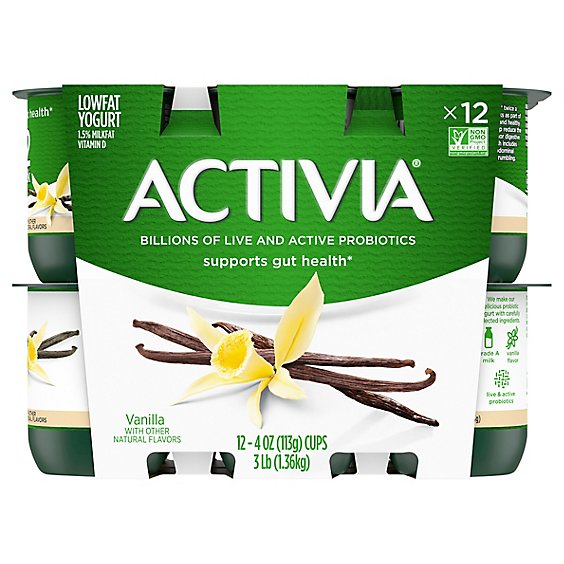
Activia Low Fat Probiotic Vanilla Yogurt - 12-4 Oz


This Activia Low Fat Probiotic Vanilla Yogurt contains billions of live and active probiotics, supports gut health, is made with carefully selected ingredients such as Grade A milk and vanilla flavor, has a smooth and creamy texture, and is certified gluten free. It also contains Vitamin D and Non-GMO Project verified.
- Low Fat: Many customers appreciate the fact that this yogurt is low in fat, making it a healthier choice.
- Probiotic Benefits: Users frequently mention the probiotic benefits of Activia yogurt, which helps improve gut health.
- Vanilla Flavor: The vanilla flavor is well-loved by many, who find it rich and delicious.
- Packaging: The 12-pack of 4 oz servings is appreciated for its convenience and portion control.
- Improves Digestion: Several customers have noted improvements in their digestion after consuming this yogurt regularly.
- High in Protein: Customers enjoy the high protein content, which makes it a filling snack or breakfast option.
- Quality Ingredients: Users praise the use of quality ingredients in Activia yogurt, contributing to its great taste and nutritional value.


