


What Is Apple Cider Vinegar, and What Does It Do?
What it is
Apple cider vinegar is apple juice that's been fermented twice. First the sugar turns into alcohol, then the alcohol turns into acetic acid. That acetic acid is what makes it sour, and it's the part that has any effect. Most bottles are about 5% acetic acid, the same as the other vinegars in the aisle. The main difference is that it's made from apples and tastes milder. If a bottle is cloudy with a clump floating in it, that's the mother, a harmless leftover of fiber and bacteria from fermenting. It doesn't change what the vinegar does.
What people think it does
People drink it to bring down blood sugar, lose weight, "detox" or cleanse the body, lower cholesterol, and clear up skin problems like acne, warts, and skin tags. Almost all of that comes from social media and old home remedies, not from doctors. Only one of the claims holds up.
What the research shows
The one claim with good evidence is blood sugar. A tablespoon or two in water, taken with a meal, lowers the blood sugar spike afterward. A 2004 study at Arizona State found that drinking vinegar before a high-carb meal improved how people handled the blood sugar, with the biggest benefit in those who were already insulin resistant. Another 2005 study in Sweden gave 12 people white bread with and without vinegar and saw lower blood sugar and insulin after the vinegar. And finally a 2007 study had 11 people with type 2 diabetes take it at bedtime and wake up with blood sugar about 6% lower. A 2017 review pooled these studies and reached the same result.
The acetic acid slows how fast your stomach empties, so starch turns into blood sugar more slowly. That's why it works with a starchy meal, or right before one. But these are small studies, often a single meal with a dozen people. Vinegar lowers the spike, but it doesn't treat diabetes. If you take diabetes medication, it can push your blood sugar too low, so check with your doctor first.
The evidence for weight and cholesterol is much weaker. The most-cited weight study followed 155 people in Japan for 12 weeks in 2009. The ones who drank vinegar lost about two to four pounds more than those who didn't. The difference was small, and a vinegar company paid for the study. A 2024 study that showed a bigger effect was retracted in 2025 for unreliable data. Some studies also show small drops in cholesterol or triglycerides, but the results are inconsistent and come from the same few studies. People do report feeling a little fuller in the short term, but vinegar isn't an appetite suppressant and won't make you lose weight on its own. Any effect is small, and only if you're already eating less.
The rest of the claims are either wrong or risky. Vinegar doesn't detox or "alkalize" anything. Your liver and kidneys clean your blood, and your blood pH stays around 7.4 no matter what you drink. It can briefly shift the pH of your urine, but that does nothing for you. On skin, it can hurt you. There's no good evidence it clears acne or eczema. It's acidic enough to burn, and there are real cases of chemical burns from putting it on undiluted, including on children. When people say it burned off a skin tag, that's acid burning skin.
How to use it safely
The same acid that lowers a blood sugar spike also wears down your teeth and burns tissue. Almost all the harm comes from drinking it straight, or drinking a lot every day for years. It dissolves tooth enamel: one 15-year-old who drank about a cup of undiluted vinegar a day ended up with badly eroded teeth. Water it down, drink it through a straw if you can, rinse your mouth after, and wait about half an hour before brushing. Straight vinegar can also burn your throat. Pills are worse: in at least one case an ACV tablet got stuck and injured someone's esophagus. Take any pills with plenty of water.
Taking more than that doesn't help and can hurt. One person who drank about a cup of diluted vinegar daily for six years was hospitalized with dangerously low potassium and weakened bones. It's rare and took years, but it's the reason to keep the amount small. Vinegar can also lower your blood sugar and potassium enough to interact with insulin and other diabetes drugs, water pills, and the heart medication digoxin, so check with your doctor if you take any of those. A safe amount is one to two tablespoons a day, always in a big glass of water, with a meal or just before. Never drink it straight.
Buying it at Safeway
Apple cider vinegar is in the vinegar aisle, next to the white, balsamic, and red wine. The two store brands are Signature SELECT Apple Cider Vinegar and the organic O Organics version, both in 16-ounce bottles. Signature SELECT also comes in a 128-ounce jug, which is for cooking or cleaning. At a tablespoon a day, a 16-ounce bottle lasts a long time.
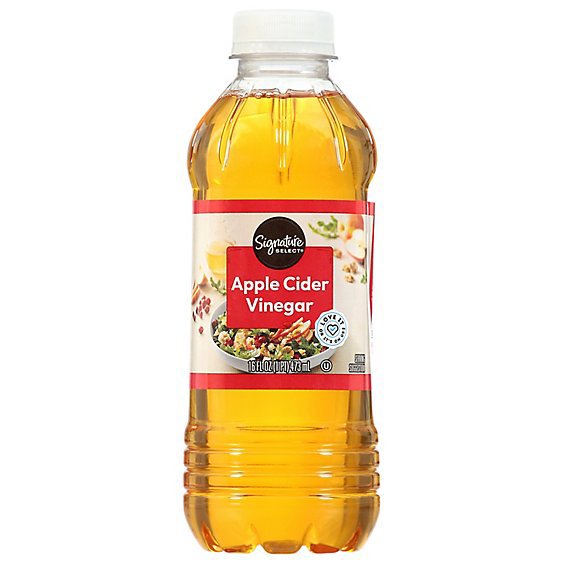
Signature SELECT Apple Cider Vinegar, 16 oz
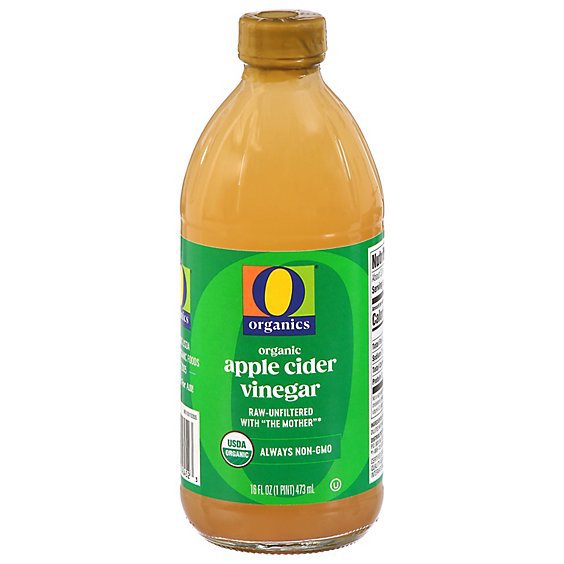
O Organics Apple Cider Vinegar, 16 oz
Most of the words on the label make little difference to the effect. "Raw," "unfiltered," and "with the mother" describe the same cloudy style. The O Organics bottle is raw and unfiltered, with the mother, and it's organic. The Signature SELECT bottle is a standard apple cider vinegar without those labels. Both are 5% acetic acid, which is the part that does the work, and no study has shown the mother itself adds anything, so pick whichever you like. The other number to check is the acidity. 5% is normal for vinegar you drink or cook with. "Cleaning vinegar" is 6% or higher and isn't meant for drinking.
The bigger choice is liquid versus gummies or pills. The research was all done on liquid vinegar in water, where one to two tablespoons gives you about 750 to 1,500 mg of acetic acid, the amount the studies used. Gummies are made from dried vinegar powder with added sugar, and their labels list "mg of apple cider vinegar," which isn't the same as acetic acid, so you can't tell how much you're getting. Pills can injure the throat and hide the acid amount too. The liquid is the only form anyone has actually tested.
Common questions
How much should I drink a day?
One to two tablespoons, about 15 to 30 mL, always in a big glass of water. More isn't better.
When's the best time to drink it?
With a starchy meal, or right before one. That's where the blood sugar evidence is strongest.
Will it help me lose weight?
Barely. The best study showed two to four pounds over 12 weeks, and a vinegar company paid for it. Any effect is small and only happens if you're already eating less.
Do I have to mix it with water?
Yes. Straight vinegar can wear down your teeth and burn your throat.
Are the gummies as good as the liquid?
The research used liquid. Gummies add sugar and don't tell you how much actual acid is inside, so you can't match the studied amount.
Does "with the mother" matter?
Not for the blood sugar effect. The mother is a harmless leftover from fermenting, and filtered and unfiltered have about the same acid.
Can I use it on my skin or for acne?
Better not to. It can irritate or burn skin, and there's no good evidence it helps.