


What Toothpaste and Mouthwash Labels Mean


Bestsellers for Oral Rinse & Mouthwash
Check the label on both sides. The front will have words like whitening, sensitive, tartar control and antiseptic, which tell you what the product is intended to do. On the back you'll find the ingredient that does it, and whether anyone has checked that the claim holds.
Look for the Drug Facts panel, the boxed "Active ingredient / Uses / Warnings / Directions" format also used on a bottle of aspirin. A product with one is regulated by the FDA as an over-the-counter drug, and the active ingredient listed inside is tied to a claim the FDA recognizes, such as preventing cavities, reducing sensitivity or reducing gum inflammation. A product without one is a cosmetic. It can clean, polish or freshen breath, but it makes no FDA-backed claim.
Also look for the ADA Seal of Acceptance. The American Dental Association runs this as a voluntary program, so a manufacturer submits safety and effectiveness data and the ADA checks the product does what its label claims before the Seal goes on. Many products never apply, so a missing Seal means little, but a Seal means the claim has been checked independently. Both the panel and the Seal work the same way on toothpaste and on mouthwash.
What the words on the front mean
Word on the package | Where | What it means | Drug or cosmetic |
|---|---|---|---|
Anticavity, "with fluoride" | Toothpaste, mouthwash | Fluoride active; the ADA recognizes it for preventing cavities | Drug |
Sensitive | Toothpaste | Potassium nitrate or stannous fluoride; builds over about two weeks | Drug |
Antiseptic, antigingivitis | Mouthwash | Essential oils or CPC; targets plaque and gum bacteria | Drug (therapeutic) |
Whitening | Toothpaste, mouthwash | Abrasive polishing, sometimes peroxide; surface stain only | Cosmetic |
Tartar control | Toothpaste | Slows new tartar; can't remove hardened tartar | Cosmetic |
Fluoride-free | Toothpaste | No fluoride; cleans and freshens; no ADA cavity Seal | Cosmetic |
Reading a toothpaste label
Most tubes make several claims at once. A tube sold as whitening plus tartar control plus cavity protection will have a Drug Facts panel for the fluoride, and cosmetic claims for the whitening and the tartar, on the same package.
Cavity protection
Any toothpaste that says it prevents cavities is regulated by the FDA as a drug, in the same category as an over-the-counter medicine. Fluoride is the active ingredient responsible for preventing cavities, and you will typically see one of three versions on the panel: sodium fluoride, stannous fluoride and sodium monofluorophosphate. All three work equally well, so it does not matter which one you get. The ADA will only seal a toothpaste for cavity protection if it contains one of them.
Of the three, stannous fluoride does more than prevent cavities. It also fights the bacteria behind gum inflammation and plugs the exposed channels that cause sensitivity, so a stannous fluoride paste can make cavity, gum and sensitivity claims on one panel.
Sensitivity
Pastes for sensitive teeth are regulated as drugs too, and they either calm the nerve or block the channels that reach it. Potassium nitrate, usually at 5%, calms the nerve. The potassium travels down the dentin tubules, the microscopic channels running from the tooth surface toward the nerve, and builds up there until the nerve stops firing so readily. Stannous fluoride instead plugs those channels, so hot and cold cannot reach the nerve.
Neither works immediately, and the ADA says these pastes need consistent twice-daily use. Potassium-nitrate relief usually starts around two weeks in and keeps improving for another two to four weeks, because the active has to accumulate first. Using the paste only when the tooth hurts does not build it up.
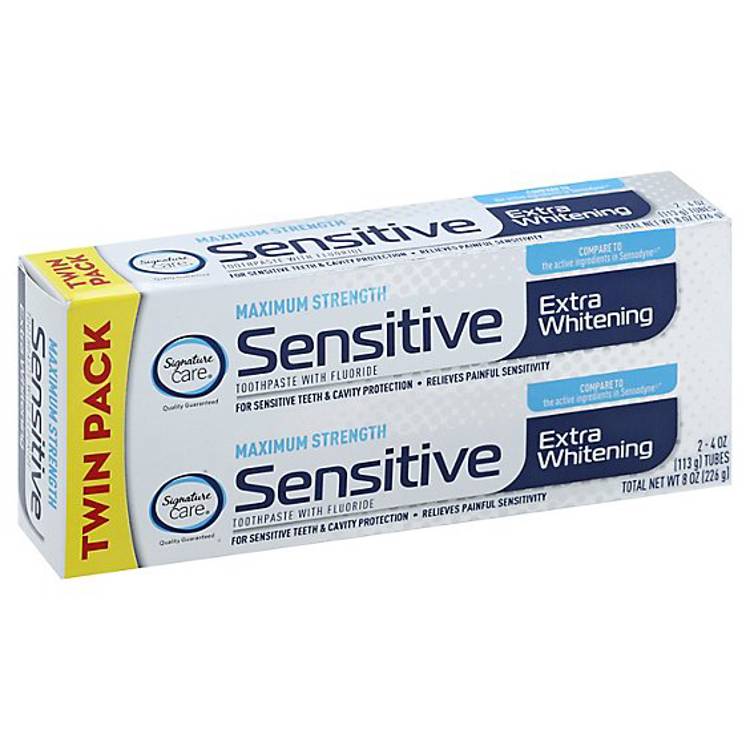
Safeway's Signature Care sensitive paste carries the potassium nitrate 5% active alongside fluoride. One shopper, under the headline "Just better," wrote that "the texture feels smoother compared to the name brand that's comparable and the taste is also better."
Whitening
No toothpaste bleaches the tooth. These pastes remove surface stain, mostly by abrasion, using fine particles, usually silica, to scrub it off the enamel. Some add peroxide, but in a toothpaste it does not stay on the teeth long enough to reach past the surface. Strips and in-office treatment change the color of the tooth itself.
Abrasiveness is measured as RDA, relative dentin abrasivity, on a scale from 0 to about 250. The ADA will not seal a paste above 250, and says pastes at or below that level are safe to use twice a day for a lifetime with little wear. Whitening pastes sit higher on the scale than plain pastes. Dentists often suggest that people with sensitive teeth alternate a whitening paste with a sensitivity paste, or use it less often, because abrasion and peroxide on a tooth with exposed dentin can make the nerve react more.
Tartar control
This is a cosmetic claim, and pyrophosphates are the usual ingredient. They bind the calcium that plaque needs to harden, which keeps new plaque soft enough for brushing to remove. They do not affect tartar that has already formed. Once plaque calcifies onto the tooth, only a dental cleaning removes it.
Fluoride-free
These pastes leave out the FDA-recognized cavity active, though they can still clean, polish and freshen with baking soda, silica or xylitol. Under current ADA rules a toothpaste must contain fluoride to earn the Seal for cavity protection, so fluoride-free pastes do not have it.
Nano-hydroxyapatite, printed as nHAP, is a fluoride-free ingredient that rebuilds early softened enamel before a hole forms. An 18-month trial found it about as effective as standard fluoride at preventing cavities in adults, and a 2024 review found no significant difference between the two. The evidence is still limited, the ADA has not changed its fluoride requirement, and nHAP cannot reverse a cavity that has already formed.
Reading a mouthwash label
Mouthwash is either cosmetic or therapeutic, and the Drug Facts panel tells you which. A cosmetic rinse controls bad breath for a while and tastes pleasant. A therapeutic rinse has an FDA-recognized active and an accepted claim, either reducing plaque and gum inflammation or preventing cavities.
The therapeutic actives
The antiseptic rinses, meaning Listerine and its store-brand equivalents, use a blend of essential oils: eucalyptol, menthol, thymol and methyl salicylate. These target the bacteria behind plaque and gum inflammation. Cetylpyridinium chloride, or CPC, does a similar antibacterial job and is the base of most alcohol-free therapeutic rinses, and research finds CPC and the essential-oil rinses roughly equal. Sodium fluoride rinses, such as ACT, coat the enamel to prevent cavities and do not act on gum bacteria. Chlorhexidine is stronger than any of these but is prescription-only in the US.
Antiseptic and antigingivitis
"Antigingivitis" means the rinse has been clinically tested against a set benchmark for reducing gum inflammation. "Antiseptic" signals the germ-killing family without necessarily making that tested claim. The Drug Facts panel shows which claims a bottle makes.
Alcohol and alcohol-free rinses
The alcohol in some rinses is a solvent that keeps the essential oils dissolved. It causes the burn and is not the active ingredient. Alcohol-free rinses, usually based on CPC or fluoride, make the same claims. They also do not dry the mouth, so people on medications that cause dry mouth often prefer them. Research has not established a link between alcohol rinses and oral cancer.
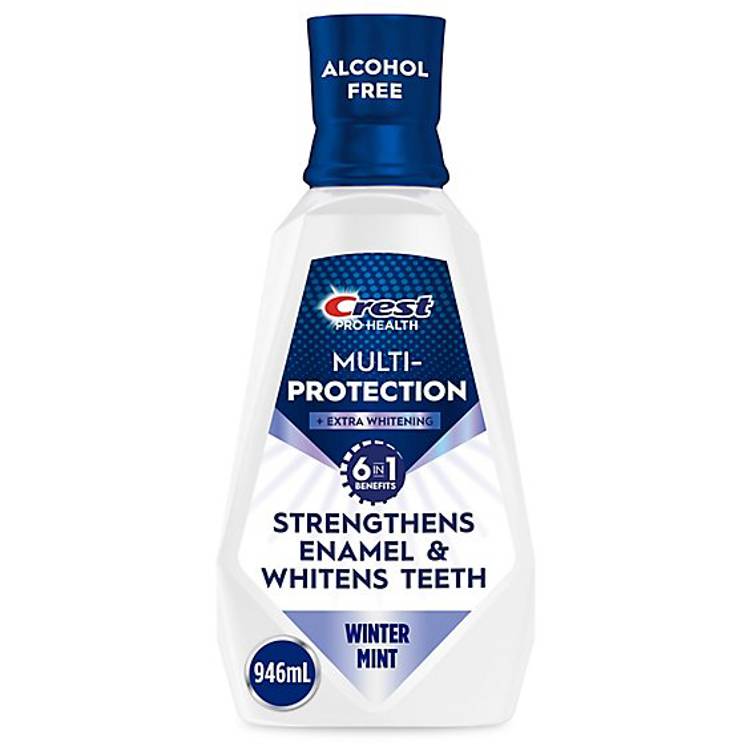
Buying toothpaste and mouthwash at Safeway
The FDA claim comes from the active ingredient. Brand and price do not change it. A store-brand paste with the same fluoride active at the same level makes the same cavity claim as a national brand, and a store-brand antiseptic rinse with the same essential-oil blend makes the same antiplaque claim. Signature Care is Safeway's own line and covers both toothpaste and antiseptic mouthwash. Read the Drug Facts active to see what a product claims, and check for the ADA Seal if you want a claim that has been verified independently.
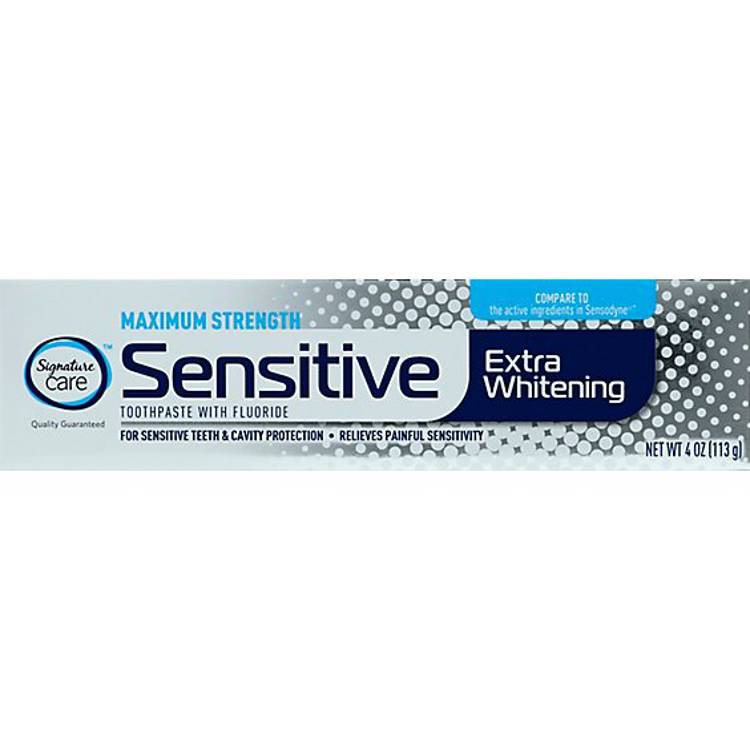
The Signature Care fluoride paste carries the same sodium fluoride cavity active as the national brands. Under the headline "Toothpaste," one shopper wrote it is "just as good as the big box stores brand."
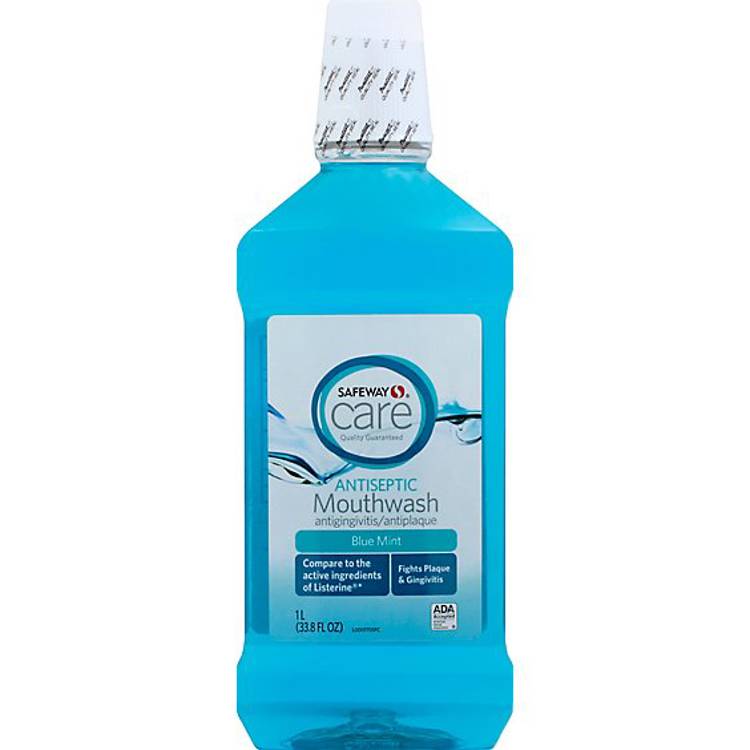
Signature Care Antiseptic Blue Mint uses the same four essential oils as Listerine and carries the ADA Seal of Acceptance. Under the headline "Wonderful," one shopper called it "every bit as good as Listerine."
Common questions
Does mouthwash expire?
Yes, usually two to three years after manufacture, and the date is printed on the bottle. After it passes, the active ingredients break down and the rinse works less well, and the flavor can change. It is not dangerous to use. Store it at room temperature out of direct sun.
What's the difference between mouthwash and toothpaste?
They do different jobs. Toothpaste and a brush physically remove plaque, the film of bacteria that causes cavities and gum disease. Mouthwash delivers an active ingredient and reaches some spots a brush misses, but it does not remove plaque. The ADA states that rinsing does not replace brushing and flossing. Some toothpastes and rinses share the same active, usually fluoride, which is why many people use both.
How long does sensitive toothpaste take to work?
About two weeks. A potassium-nitrate paste needs twice-daily use before the active builds up around the nerve, and it keeps improving for about a month after that. Stannous-fluoride pastes block the exposed channels more directly. The ADA stresses consistency, because occasional use does not build up enough to hold.
Do I need fluoride, or is fluoride-free fine?
For cavity protection, fluoride is the default, and it is the only cavity-prevention active the ADA will seal. Fluoride-free pastes clean and freshen. One of them, nano-hydroxyapatite, has performed comparably to fluoride in a few recent studies, but that evidence is limited and has not changed ADA policy. For cavity protection specifically, fluoride has more behind it.
Is alcohol-free mouthwash weaker?
No. Alcohol dissolves the essential oils and causes the burn, but it is not the active ingredient. Alcohol-free rinses use CPC or fluoride and make the same label claims. Research has not established the oral-cancer concern raised about alcohol rinses. Choose on feel and on the active you want.
Should kids use fluoride toothpaste?
Yes, in small amounts. The ADA advises a rice-grain smear for children under 3 and a pea-size amount for ages 3 to 6, with brushing supervised. This gives cavity protection while limiting how much fluoride a child swallows. Swallowing too much at this age can cause mild fluorosis, faint white marks on the developing permanent teeth. For mouthwash, ADA and dentist guidance is that young children who cannot reliably spit should not use it.
Safeway Buying Guide
Signature Care Mouthwash Antiseptic Blue Mint - 33.8 Fl. Oz.



This Signature Care Mouthwash Antiseptic Blue Mint has antiseptic properties and is ADA Accepted. It helps to prevent and reduce gingivitis and plaque above the gumline when used as directed. Plus, it comes with a 100% quality & satisfaction guarantee or your money back.
- Provides a refreshing Blue Mint flavor that leaves your mouth feeling clean and fresh.
- Contains antiseptic properties that help in fighting bacteria and germs.
- Comes in a large 33.8 Fl. Oz. size which offers great value for money.
- The formula is non-stinging, making it comfortable for daily use.
- Leaves a long-lasting fresh breath after use, great for maintaining oral hygiene.
- Easy to use with clear instructions provided on the packaging.
- Produced by Signature Care, a trusted brand known for high-quality products.
Crest Pro Health Mouthwash Multi-Protection Clean Mint - 33.8 Fl. Oz.


Crest Pro Health Mouthwash Multi-Protection Clean Mint is an effective product with 99% germ kill and a healthier mouth. It helps reduce gum inflammation and bleeding gums, provides 24 hour protection against plaque and gingivitis when used twice daily and has no harsh alcohol burn. It is also produced by Procter & Gamble which is a trusted brand.
- Provides long-lasting fresh breath with its clean mint flavor
- Effectively helps prevent cavities and tooth decay
- Contains a unique formula that kills 99% of germs causing bad breath
- It's alcohol-free, ensuring a no burn sensation when using
- Offers multi-protection for overall oral health
- Leaves your mouth feeling exceptionally clean and refreshed
- Easy to use with clear instructions, making it suitable for daily use.
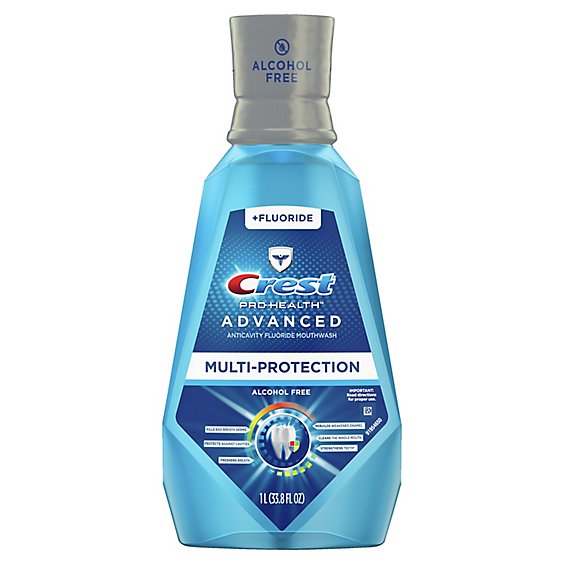
Crest Pro Health Advanced Mouthwash Alcohol Free Multi-Protection - 33.8 Fl. Oz.


Crest Pro Health Advanced Mouthwash Alcohol Free Multi-Protection is an effective oral care solution that prevents cavities, kills bad breath germs, strengthens enamel, cleans teeth and gums, and freshens breath. The mouthwash contains fluoride ion for extra protection and is alcohol free so there's no burn. It comes with easy-to-follow instructions for adults and children 6 years and older. Additionally, it is produced by Procter & Gamble which is a trusted name in the industry.
- Provides a clean, fresh feeling after use, making your mouth feel thoroughly cleansed
- It is alcohol-free, reducing the burning sensation often associated with mouthwash
- Offers multi-protection, ensuring comprehensive oral care
- Contains advanced formula that helps in fighting against plaque and gingivitis
- Comes in a large 33.8 Fl. Oz. bottle which provides great value for money
- Leaves a pleasant taste in the mouth, unlike some other mouthwashes
- Promotes healthier gums and stronger teeth, contributing to overall oral health


