


What Do Sulfate-Free, Clarifying, and 2-in-1 Mean On Shampoo?
Sulfates are the detergents that make shampoo lather and clean, so "sulfate-free" doesn't mean detergent-free. It means the formula swaps the strong sulfate detergents for milder ones. You really have to look at the ingredient list to figure out what each ingredient is actually doing.
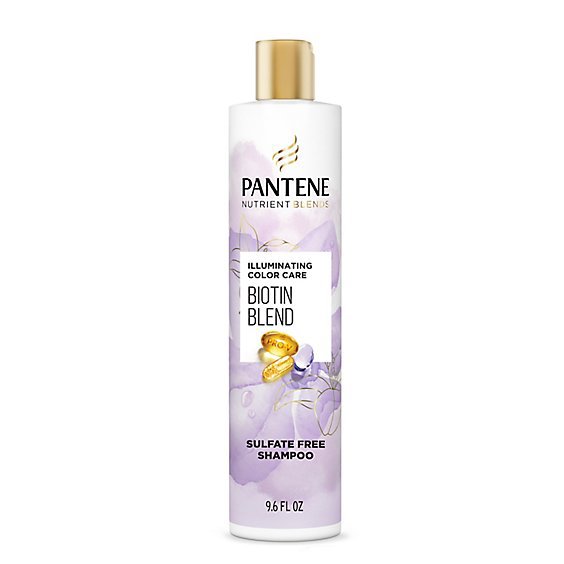
Sulfate-Free
Shampoo cleans because it contains surfactants, the detergent molecules that grab oil and dirt so water rinses them away, and that make the lather people associate with clean hair. The two most common ones are sodium lauryl sulfate and sodium laureth sulfate which are the sulfates commonly found. They are strong cleansers that foam richly and rinse well in hard water.
A sulfate-free shampoo still has detergents. It swaps the sulfates for milder surfactants, listed as things like sodium cocoyl isethionate, cocamidopropyl betaine, or a taurate. These clean and foam less aggressively.
People tend toward sulfate-free for a few reasons. Sulfates lather hard and can leave the scalp feeling tight, and gentler cleansing is associated with slower color fade on color-treated hair and with keeping natural oils on curly or dry hair. One reviewer of the Pantene sulfate-free shampoo, headed "Gentle and Kind to Color treated hair," writes that it "cleansed my color treated hair" well. Sulfate-free formulas also lather less and can feel like they don't clean as hard.
Clarifying vs. Regular vs. Moisturizing
A regular, daily shampoo is the middle. It removes dirt and oil without stripping too much of the oil from your hair.
A clarifying shampoo is a periodic deep clean. It's built to strip out buildup that regular shampoo leaves behind: styling-product residue, hard-water minerals, and leftover silicone film that makes hair look dull or feel heavy. It uses stronger surfactants, so it's an occasional reset, roughly every week or two for most people and more sparingly for color-treated or dry hair, which the deeper clean can leave feeling stripped.
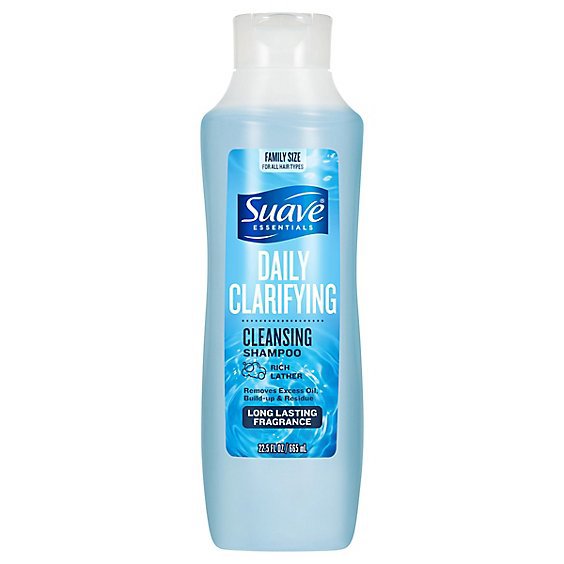
Suave Essentials Daily Clarifying Shampoo
A moisturizing or hydrating shampoo is the gentle end. It cleans more mildly and adds conditioning ingredients like glycerin or oils, so hair feels soft rather than squeaky. The bottle will have words for this including "moisture," "hydrating," "nourishing," and "rich moisture."
What about 2-in-1
A 2-in-1 puts shampoo and conditioner in one bottle. Ordinary shampoo detergents carry a negative charge and ordinary conditioners carry a positive one, so mixed straight they cancel out and you get neither clean nor conditioned hair. A 2-in-1 gets around that with a charge-neutral silicone, dimethicone, suspended as tiny droplets. The droplets stay put while you lather, then as you rinse and the mix dilutes, they drop out and leave a thin conditioning film on the hair.
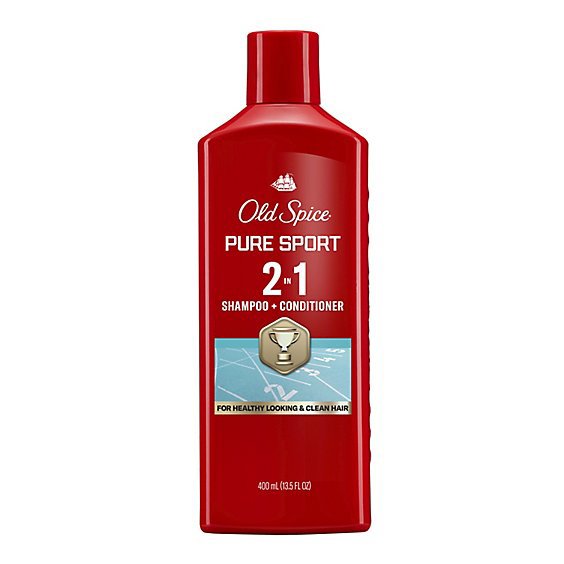
Old Spice Pure Sport 2-in-1 Shampoo and Conditioner
The trade is convenience for control. One product and one step suits a gym bag, travel, or short hair, but you can't tune cleansing and conditioning separately the way two products let you, and heavier silicone can build up over repeated washes and weigh fine hair down. That buildup is one of the things a clarifying shampoo cuts through.
Color-Safe
"Color-safe" isn't a regulated or tested term and no standard exists that a shampoo passes to for the label. In practice it maps to two real things, a milder, often sulfate-free detergents that clean more gently, plus added ingredients pitched to slow fade. Because the gentle-cleansing logic is the same, "color-safe" and "sulfate-free" often sit on the same bottle. Read it as "gentler than a standard sulfate shampoo," and check the ingredient list to confirm the detergents are milder.
Volumizing, Smoothing, and Strengthening
Volumizing, thickening, or "extra body" formulas use lighter conditioning so fine hair isn't weighed down, sometimes with polymers that coat the shaft to add apparent thickness. Smoothing or anti-frizz formulas add more conditioning agents and silicones that coat the cuticle so it lies flat. Strengthening or repair formulas use proteins and film-formers that coat and smooth damaged hair.
Shampoo rinses off in under a minute, so these effects are not long lasting. They coat and condition the hair you have. When "biotin," "collagen," or "keratin" appears on a shampoo, it's marketing an active in a product. One reviewer of the OGX biotin and collagen shampoo, headed "This shampoo works!," writes it "lathers up really nice and left my hair feeling clean and soft."
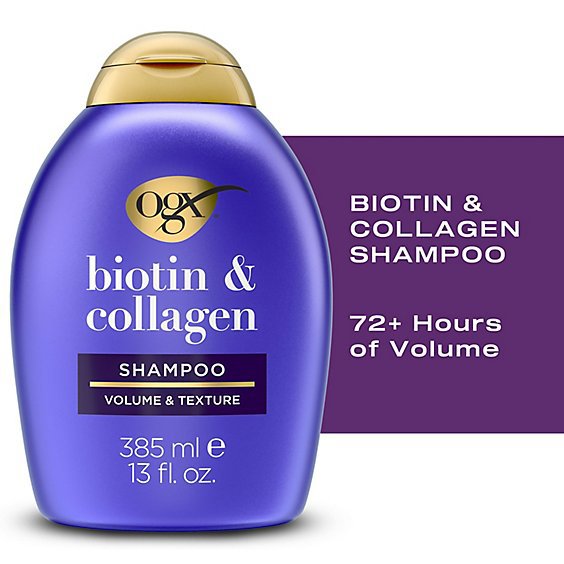
OGX Thick & Full Biotin & Collagen Shampoo
Dandruff Shampoo Is a Regulated Category
Anti-dandruff shampoo is regulated as a drug, not a cosmetic, because it treats a scalp condition, so it carries a Drug Facts panel and an active ingredient. That's a different aisle from the general shampoo covered here.
Buying It at Safeway
Start with your hair, then read the label. For gentler cleansing or color-treated hair, look for sulfate-free and check that the ingredients lead with milder detergents. For buildup, a clarifying shampoo, used occasionally. For everyday softness, a moisturizing formula.
Safeway's own store brand, Signature Select, carries shampoo and matching conditioner in a couple of positions, including Coconut Milk and a Biotin & Collagen shampoo on the volumizing side. One reviewer of the Coconut Milk shampoo, headed "Signature hair shampoo coconut," writes it's "nourishing to the hair."
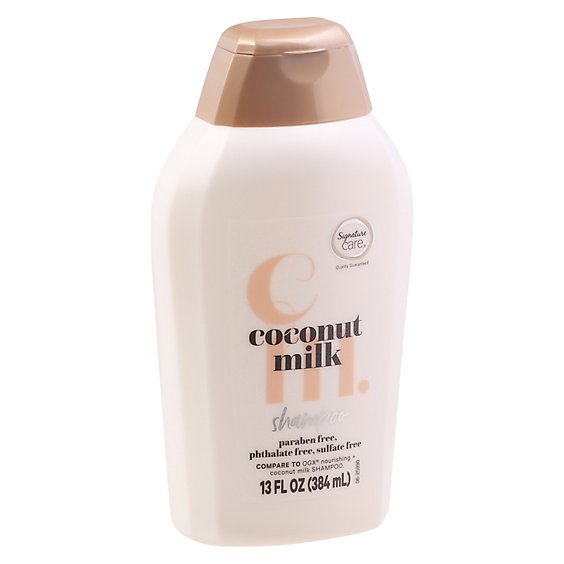
Signature SELECT Coconut Milk Shampoo
Availability and scents vary by store. Check your Safeway's shelf or the app for what's in stock.
Common Questions
Is sulfate-free shampoo better for your hair?
Not better in general. It's a fit-to-your-hair choice. Sulfate-free formulas use milder detergents that clean and lather less aggressively, which suits color-treated, curly, or dry hair and scalps that feel tight after a strong shampoo. Sulfates clean and foam more strongly. Neither is a health issue.
Does sulfate-free shampoo still clean your hair?
Yes. Sulfate-free doesn't mean detergent-free. It swaps the sulfate detergents for milder surfactants like sodium cocoyl isethionate or a betaine, which clean and foam less aggressively. Some people find they need a bit more product or a second wash.
What does clarifying shampoo do?
It's a deeper clean that strips out buildup regular shampoo leaves behind: styling-product residue, hard-water minerals, and silicone film that makes hair look dull. Use it occasionally, roughly every week or two, and more sparingly on color-treated or dry hair, which the deeper clean can leave feeling stripped.
Is 2-in-1 shampoo bad for your hair?
No, it's a convenience trade-off. A 2-in-1 uses suspended silicone to clean and leave a light conditioning film in one step, which is handy for travel or short hair. You just can't tune cleansing and conditioning separately, and heavier silicone can build up on fine hair over time.
Does "color-safe" shampoo protect color?
"Color-safe" isn't a regulated or tested term. It usually signals milder, often sulfate-free cleansing plus ingredients pitched to slow fade, and it frequently overlaps with "sulfate-free" on the same bottle. Read it as gentler than a standard sulfate shampoo, and check the ingredient list.
What's the difference between rinse-out, leave-in, and hair-mask conditioner?
Mainly weight and how long they stay on. A rinse-out conditioner is the standard: apply after shampoo, leave a minute, rinse. A leave-in is lighter, usually a spray you don't rinse, for detangling and frizz control through the day. A hair mask is the heaviest, used occasionally and left on longer.
Do biotin and collagen in shampoo thicken hair?
Not from a shampoo. Biotin, collagen, and keratin on a shampoo label are marketing actives in a product that rinses off in under a minute. Volumizing shampoos can make fine hair look fuller by coating the shaft and using lighter conditioning, but that's a temporary cosmetic effect, not feeding the hair.