


How to Roast Perfect Beef: Master Prime Rib, Tenderloin & Rib Roasts
Learn essential techniques for roasting perfect beef every time. From selecting cuts to safe cooking temperatures, master prime rib, tenderloin, and rib roasts with expert timing guides and troubleshooting tips.
Quick reference
| Rare | 115-120°F (finish temp 125°F after resting) |
|---|---|
| Medium-Rare | 125-130°F (finish temp 135°F after resting) |
| Medium | 135-140°F (finish temp 145°F after resting) |
| Medium-Well | 145-150°F (finish temp 155°F after resting) |
| Safety Note | Always use meat thermometer inserted into thickest part, avoiding fat and bone |
| Tenderloin (high heat 425-450°F) | 10-12 minutes per pound for medium-rare |
| Prime Rib (low temp 325°F) | 15-17 minutes per pound for medium-rare |
| Prime Rib (high-then-low method) | 20 min at 475°F, then 325°F until desired temp |
| Ribeye Roast (350°F) | 18-20 minutes per pound for medium-rare |
| Resting Time | Minimum 15-30 minutes loosely tented with foil |
| Dry, Tough Exterior | Don't overcook—remove at target temp before resting. Consider reverse-sear method for thick cuts |
| Undercooked Center | Use meat thermometer in thickest part. Allow roast to come to room temperature before cooking |
| No Crispy Crust | Pat meat completely dry before seasoning. Try high-heat sear (475°F) for first 15-20 minutes |
| Uneven Cooking | Tie roast with butcher's twine for uniform shape. Rotate pan halfway through cooking |
| Bland Flavor | Season overnight uncovered in refrigerator. Use herb pastes with garlic, rosemary, and thyme |
| Difficulty Carving | Rest meat fully (15-30 min). Remove bones before slicing. Use sharp carving knife against the grain |
Shoppable recipes
Rather start from a proven recipe? These are ready to shop in one click.


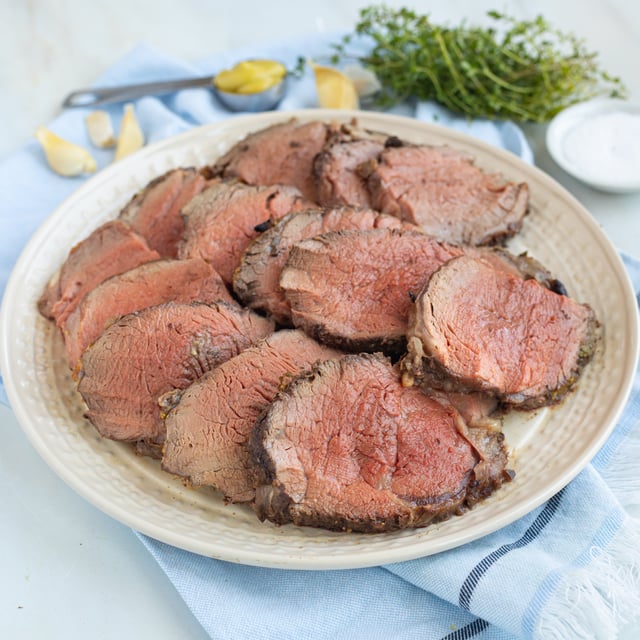
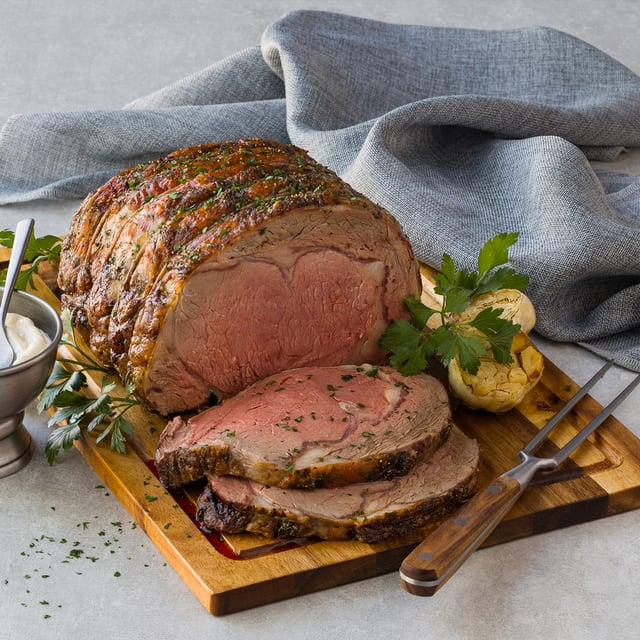
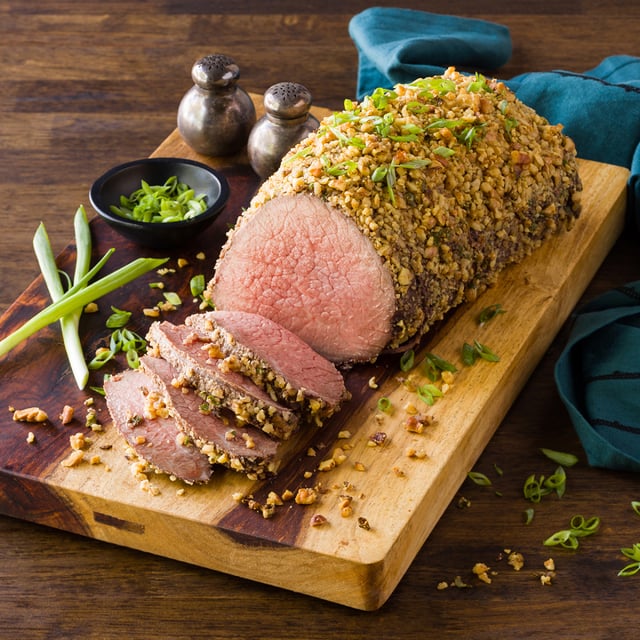
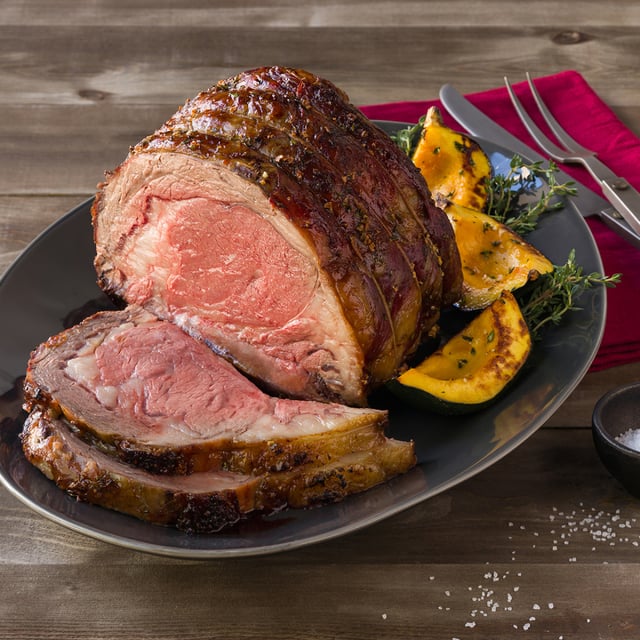
Essential beef roasting techniques & equipment
Choose Your Cut
Select the right beef roast for your occasion and skill level. Prime rib (standing rib roast) with bone delivers maximum flavor and dramatic presentation—ideal for holidays. Ribeye roast (boneless version) cooks more evenly and carves easier for beginners. Beef tenderloin offers the most tender, premium eating experience with milder flavor. Top sirloin or round tip roasts provide budget-friendly options. Look for USDA Choice or Prime grade with good marbling throughout. Plan 8-12 ounces per person for bone-in roasts, 6-8 ounces for boneless cuts.
Pro tip: Grade Matters: USDA Prime or Choice grade ensures better marbling, juiciness, and flavor—worth the investment for roasts
Prep Your Roast
Proper preparation is essential for perfect results. Remove roast from refrigerator 2-3 hours before cooking to reach room temperature—this ensures even cooking throughout. Pat completely dry with paper towels to help develop a crispy crust. Trim excess fat to 1/4-inch thickness, leaving enough for flavor and moisture. Season generously with kosher salt and freshly ground black pepper, or apply herb paste (garlic, rosemary, thyme, olive oil) the night before for deeper flavor penetration. For prime rib, leave uncovered in refrigerator overnight for dry-aged effect.
Pro tip: Room Temperature Essential: Cold roasts cook unevenly—allow 2-3 hours at room temperature for roasts over 3 pounds
Set Up for Success
Use a heavy-duty roasting pan with low sides for proper heat circulation. Place roast fat-side up on a rack or directly in pan—bone-side down for prime rib (bones act as natural rack). Position oven rack in lower-middle position. Preheat oven thoroughly—choose high-heat method (450°F) for quick-cooking cuts like tenderloin, or low-and-slow (325°F) for prime rib. For high-then-low method, start at 475°F. Have instant-read meat thermometer ready—it's absolutely essential for perfect doneness.
Pro tip: Thermometer Required: Meat thermometer is non-negotiable—roast size and oven variations make timing unreliable alone
Roast Your Beef
Place prepared roast in preheated oven and avoid opening door frequently—heat loss affects cooking time. For high-then-low method: roast at 475°F for 20 minutes to develop crust, then reduce to 325°F without opening door. For steady low-temp method: roast at 325-350°F throughout. Begin checking temperature after calculated time minus 30 minutes. Insert thermometer into thickest part of meat, avoiding fat and bone. Target temperature is 10-15°F below desired final doneness—meat continues cooking during rest. For medium-rare, remove at 120-125°F.
Pro tip: Carryover Cooking: Roast temperature rises 10-15°F during resting—remove early to avoid overcooking
Rest Before Carving
This step is absolutely critical—never skip resting. Remove roast when thermometer reaches target temperature (120-125°F for medium-rare finish). Transfer to large cutting board and tent loosely with aluminum foil. Let rest minimum 15 minutes for small roasts, 30 minutes for prime rib over 5 pounds. During rest, internal temperature rises 10-15°F and juices redistribute throughout meat. Cutting too early causes all juices to run out, resulting in dry meat. Use rest time to make pan sauce or gravy from drippings if desired.
Pro tip: Patience Pays: Resting is when magic happens—juices redistribute for incredibly moist, tender beef throughout
Carve and Serve
For bone-in prime rib: set roast on its side and use sharp knife to slice bones away from meat in one piece—save bones for serving or stock. Turn roast right-side up and slice across grain into 3/4-inch thick slices. For boneless roasts: identify grain direction and slice perpendicular to it. Use long, smooth strokes with sharp carving knife. Arrange slices on warm platter. Serve immediately with horseradish sauce, au jus, or pan gravy. Drizzle with any collected resting juices.
Pro tip: Slice Against Grain: Always carve perpendicular to muscle fibers for maximum tenderness in every bite
Advanced techniques & flavor enhancement
Seasoning and Herb Crusts
Elevate your roast with strategic seasoning techniques. Dry rub method: generously coat with kosher salt (1 tablespoon per 4 pounds) and leave uncovered in refrigerator 8-24 hours for deep flavor penetration and dry-aged effect. Herb paste: combine minced garlic, fresh rosemary, thyme, olive oil, salt, and pepper into spreadable paste—apply night before or 2 hours before roasting. For added crust: press mixture of breadcrumbs, parmesan, and herbs onto roast during final hour. Mustard-herb coating adds tangy complexity. Avoid covering seasoned roast—exposed surface develops better crust.
Pro tip: Salt Early: Overnight salting penetrates deeply and enhances natural beef flavor—don't skip this step for best results
Making Perfect Au Jus and Pan Gravy
Transform drippings into restaurant-quality sauce. For au jus: after removing roast, place roasting pan over medium-high heat. Add 1 cup red wine and scrape up browned bits with wooden spoon. Simmer until reduced by half, then add 2 cups beef stock. Reduce again until slightly thickened, about 10 minutes. Strain and finish with butter. For pan gravy: pour drippings into bowl, skim off most fat (save 3 tablespoons), return fat to pan over medium heat. Whisk in 3 tablespoons flour until golden, 2-3 minutes. Slowly add defatted drippings plus beef stock while whisking constantly. Simmer until thickened, 5-8 minutes. Season with salt, pepper, and fresh thyme.
Pro tip: Deglaze with Wine: Wine or stock lifts flavorful fond from pan—these caramelized bits are key to rich sauce