


What's the Difference Between Heavy Cream, Whipping Cream, Half-and-Half, and Buttermilk?
In Safeway's dairy case, heavy whipping cream, half-and-half, and buttermilk sit a few feet apart in cartons that look nearly the same. What separates them is the fat percentage, and that number isn't up to the brand. Federal rules say a carton can't be labeled Heavy Cream unless it's at least 36% milkfat, and can't say Half & Half unless it falls between 10.5% and 18%. That percentage decides whether a carton will whip and how it behaves in a recipe. Here's what each one is, and what to mix up when you're out of one.
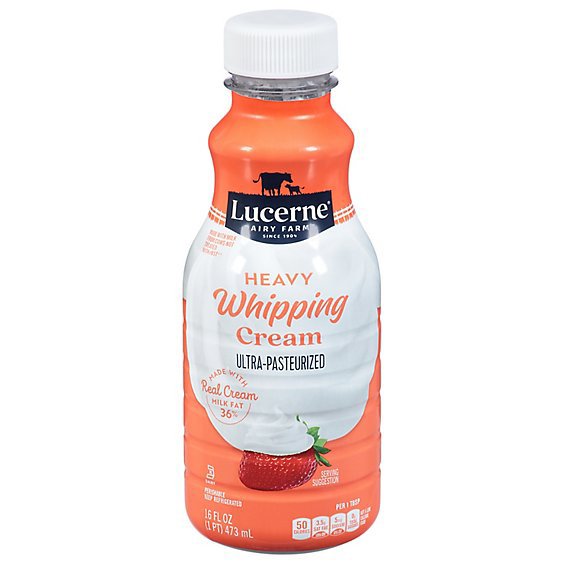
Heavy Cream vs. Whipping Cream
Heavy cream and heavy whipping cream are the same product. Both names mean at least 36% milkfat under the federal standard, so a recipe that calls for one is satisfied by either carton. Light whipping cream is the separate tier, defined at 30% to 36% fat.
The fat is what makes whipping possible. Whipped cream is a foam of air bubbles, and the fat droplets in the cream are what hold those bubbles in place. Below about 30% fat there isn't enough of it to hold the structure, and the foam collapses no matter how long you beat it. Above 35% the foam gets tighter and steadier, which is why heavy whipping cream holds stiff peaks longer and more reliably than the lighter tier.
Label on the carton | Milkfat required | Will it whip? |
|---|---|---|
Heavy cream / heavy whipping cream | At least 36% | Yes, holds stiff peaks |
Light whipping cream | 30% to 36% | Yes, softer and less stable |
Light cream | 18% to 30% | No |
Half-and-half | 10.5% to 18% | No |
Buttermilk (as sold at Safeway) | 1.5% to 2% | No |
Safeway's case jumps from half-and-half straight to heavy whipping cream, with no light cream or light whipping cream cartons in between. If a recipe says "whip until stiff peaks," heavy whipping cream is the carton that gets you there. Shoppers who whip the Lucerne carton back that up: one review titled "Nice peaks" reports it "whps up nicely," and another, "Best whipping cream," describes "just good whipped cream texture."
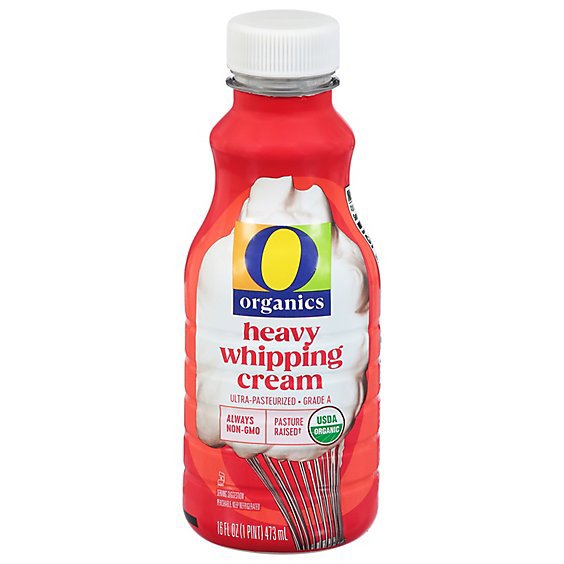
O Organics Whipping Cream Heavy
What Half-and-Half Is For
Half-and-half sits between milk and cream, at 10.5% to 18% milkfat. That's enough fat to round out coffee and enrich a pan sauce, and far too little to whip. Safeway stocks more versions of it than of the other three, from pints to 64-ounce cartons, across Lucerne, O Organics, Horizon Organic, and Knudsen. In the reviews, coffee is the near-universal use. One regular buyer, under the headline "Quality," writes, "I love this half and half. Use half gallon a week, in my coffee."
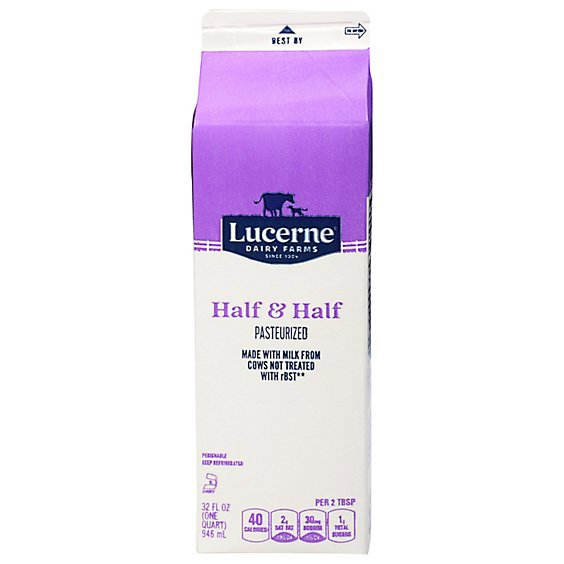
Lucerne Half And Half Pasteurized
Fat-free half-and-half can't meet the 10.5% legal floor, so it's a separate formulation sold under a familiar name. If the fat is what your recipe needs, read the ingredient list before swapping it in.
Once opened, USDA guidance is to use half-and-half within about 7 days, kept at 40°F or below in its original container. For the unopened carton, go by the sell-by date printed on it.
Why Recipes Insist on Buttermilk
Recipes call for buttermilk because of its acid. The lactic acid in cultured buttermilk reacts with baking soda to release carbon dioxide, and that gas is what lifts biscuits and pancakes. The same acid weakens the gluten in the dough, so buttermilk baked goods come out more tender than the same recipe made with milk. In King Arthur Baking's testing, a cake made with plain milk in place of buttermilk came out darker and denser.
Buttermilk sold today is cultured milk, which means a dairy adds bacteria that thicken and sour it, and the milk underneath is low in fat. Safeway stocks three cartons of it: two sizes of Lucerne at 1.5% milkfat and a Knudsen quart at 2%. Reviewers of the Lucerne carton put it to exactly that use. One headed "Buttermilk cornbread" says "my cornbread cooks well and moist," and another, "Tangy goodness!!!," uses it "to make salad dressing and biscuits."
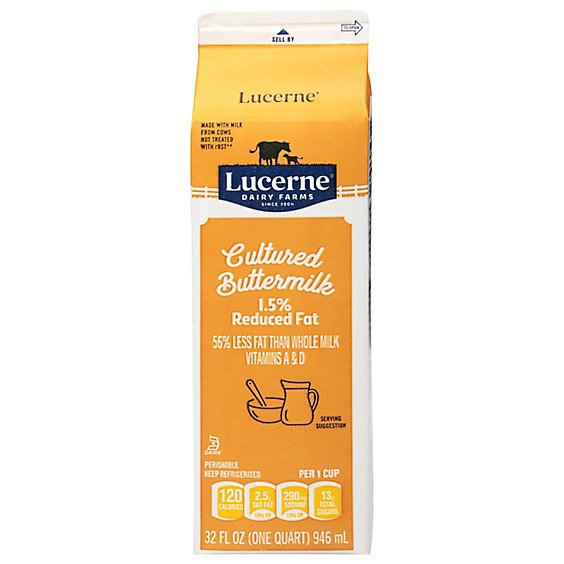
Lucerne Buttermilk Cultured Reduced Fat 1.5%
Substitutes That Have Been Tested
Every ratio below comes from King Arthur Baking's or Cook's Illustrated's kitchen testing. Whole milk and butter are the base for most of them.
Recipe calls for | Mix instead | How it performs |
|---|---|---|
1 cup heavy cream | 1 cup whole milk blended with 8 tablespoons melted butter | Works in scones, biscuits, sauces, puddings, and glazes. Will not whip. |
1 cup half-and-half | 1 tablespoon melted butter, then whole milk to fill the cup | For coffee, equal parts whole milk and heavy cream also works. |
1 cup buttermilk | 1 tablespoon white vinegar or lemon juice, then milk to fill the cup; rest 10 to 15 minutes | Works, though King Arthur's testers found the flavor flatter in biscuits. |
2 cups buttermilk | One 5.3-ounce container of plain Greek yogurt whisked with 1⅓ cups milk | Came closest to real buttermilk in biscuits and was the best-performing substitute in pancakes. |
The milk-and-butter cream substitute needs a blender. Two minutes at high speed emulsifies the butter into the milk so it doesn't separate in the recipe. For ganache, use about 25% less of the substitute by weight than the cream the recipe calls for.
The one thing no substitute can do is whip. King Arthur tested the milk-and-butter version for exactly this and found it won't form peaks, or even mounds, no matter how long it's beaten. It lacks the fat structure of real cream. A recipe that ends in whipped cream needs the real carton.
Whipped Topping Is a Different Product
The tubs of whipped topping in the same section are built on vegetable fat. Lucerne's Whipped Topping line (Original, Extra Creamy, Chocolate Light, Strawberry) is mostly water, hydrogenated coconut and palm kernel oil, and corn syrup, with less than 2% actual cream. That's why a tub keeps 3 to 4 months in the freezer and doesn't melt the way real whipped cream does. On a pie that needs to sit out, that stability is the point, and it's what reviewers of the Lucerne tubs single out: one "Extra creamy is dreamy" review notes it "holds up better than the thinner stuff." In a recipe that says "whipped cream," the two won't behave the same.
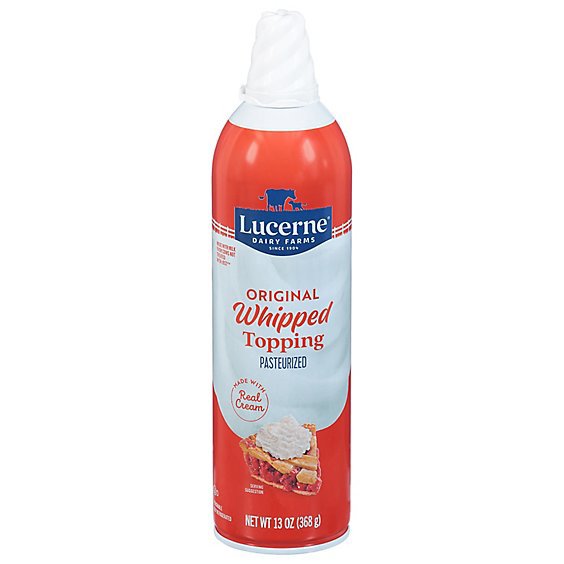
Lucerne Whipped Topping Original
Open Nature also sells a dairy-free heavy whipping cream made from coconut. It carries no milkfat, so the fat percentages above don't describe it. Check the carton's own directions for whipping.
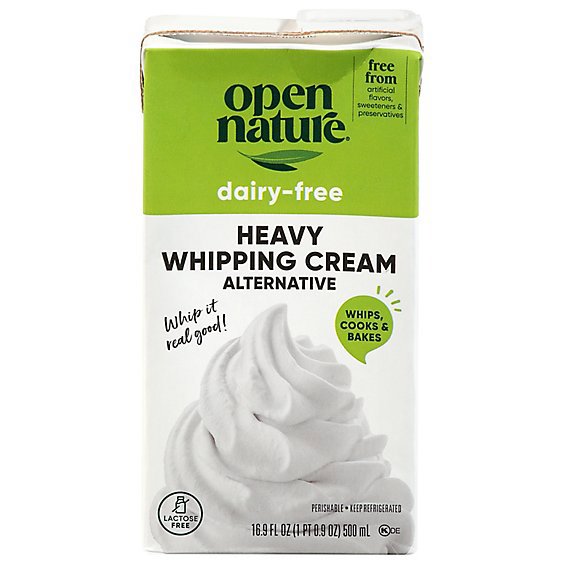
Open Nature Heavy Whipping Cream Dairy Free
FAQ
Is heavy cream the same as heavy whipping cream?
Yes. Both names are held to the same federal standard of at least 36% milkfat.
Can you whip half-and-half?
No. Whipping needs at least about 30% fat to hold air bubbles in a stable foam, and half-and-half tops out at 18%. The foam collapses instead of holding peaks, no matter how long you beat it.
What can I use instead of buttermilk in pancakes?
Whisk one 5.3-ounce container of plain Greek yogurt with 1⅓ cups of milk for about 2 cups of substitute. It was the best-performing substitute in King Arthur Baking's pancake testing. The quicker method, 1 tablespoon of vinegar or lemon juice per cup of milk rested 10 to 15 minutes, also works, with a flatter flavor.
Can I make heavy cream from milk and butter?
For baking and sauces, yes: blend 1 cup of whole milk with 8 tablespoons of melted butter for 2 minutes. It stands in for cream in scones, ganache, puddings, and glazes. It cannot be whipped.
How long does half-and-half last after opening?
USDA guidance is about 7 days once opened, refrigerated at 40°F or below in the original container, and no more than 2 hours out at room temperature. The sell-by date on the carton is the authoritative number for the unopened product.
Is whipped topping the same as whipped cream?
No. Whipped topping is made mostly from water, hydrogenated vegetable oils, and corn syrup, with less than 2% cream. It holds up longer at room temperature and stores in the freezer for months, and it tastes and melts differently than cream whipped from a carton.