


Vinegar Types and What 5% Acidity Means
Every vinegar bottle prints its strength in the ingredient line, but that number is not the same across every variety. On Safeway shelves, Signature SELECT white, cider, and red wine vinegars show 5%, while its seasoned rice vinegar says 4%.
Vinegar requires two fermentations to make. In the first step, natural sugars become alcohol. In the second step, that alcohol becomes acetic acid.
The starting liquid gives each type its color, flavor, and name. In the first fermentation, yeasts convert natural sugars from fruits, grains, or other agricultural bases into ethanol. In the second fermentation, acetic acid bacteria, primarily from the genus Acetobacter, oxidize that alcohol into acetic acid in the presence of oxygen. Whether you start with crushed apples, grape wine, malted grain, or rice, the biology follows that exact two-stage path. Yeasts handle the initial fermentation, and Acetobacter completes the transformation into acetic acid.
Why 5% acidity matters for pickling and canning
An acidity of 5% means the vinegar contains 5 grams of acetic acid per 100 mL. That concentration gives vinegar its characteristic sharp punch, but it also provides the chemical strength needed for safe food preservation. FDA guidance says diluted vinegar must state its acid strength on the label as "diluted with water to ___ percent," and that strength must be at least 4 grams per 100 mL.
The word "grain" is another way of stating vinegar strength. It is an older term from commercial vinegar making that still appears on retail packaging. Penn State Extension says 5% acidity is the same as 50 grain, which is why the Signature SELECT apple cider vinegar label reads, "Uniform Pickling and Table Strength of 5% (50 Grain) Acidity."
On the traditional grain scale, 10 grains equal 1% acetic acid. Multiplying the percentage of acetic acid by 10 gives the grain rating, meaning 5% vinegar is 50 grain and 4% vinegar is 40 grain. Once you know that 10-to-1 conversion, seeing grain on a bottle tells you the exact percentage right away. If a bottle reads 50 grain, you know it delivers 5% acidity. If a bottle reads 40 grain, you know it contains 4% acidity.
For home canning, it is best to use the strength named in the tested recipe. Home food preservation is a precise science where balance matters. The National Center for Home Food Preservation recommends white distilled or cider vinegar at 5% acidity, also called 50 grain, and says not to change the vinegar, food or water proportions.
That rule exists because safety depends on an exact balance. Penn State Extension calls 5% the "Gold Standard" for pickling because acidity below that level may not adequately control microbial growth. Tested canning recipes rely on enough acid to keep Clostridium botulinum, the bacterium that causes botulism, from growing in sealed jars, so diluting the vinegar or cutting back on it is a food safety risk. When a recipe balances vinegar, water, and produce, altering those ratios lowers the overall acidity and allows dangerous bacterial spores to thrive in an airtight jar.
How you preserve your vegetables determines what rules you must follow. Quick pickles (refrigerator pickles) are not heat processed, so they are not shelf stable and must be kept cold at 40°F or below. In the refrigerator, low temperature works alongside the acidic brine to keep food safe. Canned pickles are heat processed for pantry storage, which is why they need a tested recipe with the specified vinegar strength. Heat processing vents air and seals the jar, while the calibrated 5% brine prevents spore germination during months on the shelf.
Your pots and tools also require attention. University extension pickling guides recommend unchipped enamelware, glass or stainless steel for pickling, and say to avoid copper, brass, iron and galvanized utensils because they can react with the acid and salt and affect color, flavor or safety. Acid corrodes reactive metals, leaching off-flavors and discoloration into your brine. Non-reactive cookware protects both the flavor of your produce and the safety of the batch.
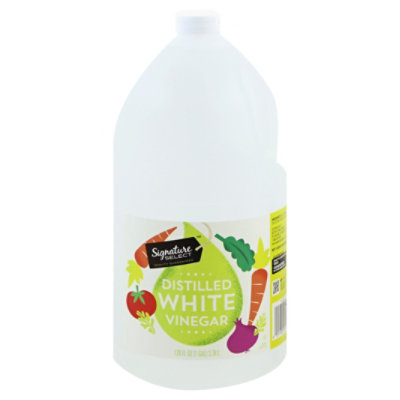
Signature SELECT distilled white vinegar ingredient line says it is diluted with water to 5% acidity, the strength required by tested canning recipes. Having that large jug on hand ensures you have enough standard-strength acid to complete a full canning batch without guessing.
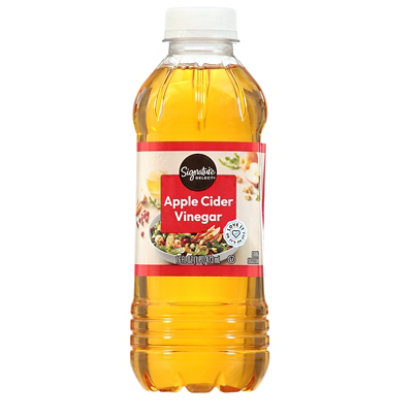
The Signature SELECT apple cider vinegar also prints 5% and 50 grain on its label. Either white or cider vinegar can be used when a recipe permits both and the bottle is labeled 5%, though the finished color and flavor can differ. Apple cider vinegar contributes a rounded fruit taste, whereas distilled white vinegar provides a sharp, neutral profile.
It pays to read the fine print on every bottle you buy. University of Wisconsin-Madison Extension warns that 4% store-brand vinegars are becoming more common and may not be strong enough to preserve food safely. If you pick up a 4% bottle thinking all vinegar is identical, your finished jars will lack the acid required to protect against spoilage. Specialty wine, malt, balsamic and flavored vinegars should be used for home preservation only when the tested recipe requires them.
Choose vinegar by its starting ingredient and flavor
Distilled white vinegar begins with dilute distilled alcohol, commonly grain alcohol. It is clear, sharp and neutral enough that it does not change the color of pale fruits and vegetables or compete with herbs and spices in a brine. This makes it useful for pickling as well as household cleaning. The "distilled" in the name refers to the starting alcohol, which is distilled before it is fermented into vinegar. Because the alcohol is distilled first, almost no residual flavor carries over, leaving pure, direct acidity.
Apple cider vinegar begins with apple juice. Penn State Extension describes it as being light golden, with a tart fruit flavor and tasting milder than distilled white vinegar. Its color can therefore darken pale produce, turning pickled onions or cauliflower a light amber. For details beyond the basic difference between cider and white vinegar, read what apple cider vinegar is and what it does.
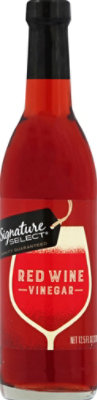
Red wine vinegar begins with grape wine. The Signature SELECT version has 5% acidity and lists potassium metabisulfite as a preservative, with its label warning that it contains sulfites. Red wine vinegar works in salad dressings when you want its wine-based flavor. The bold, tangy profile pairs naturally with olive oil, garlic, and hearty greens.
White wine vinegar offers a lighter alternative made from white grape wine. It has a clean, tangy taste with delicate fruity notes. Its pale color suits hollandaise, vinaigrettes, and poultry or fish marinades where red wine vinegar would impart an unwanted pink tint. It brings bright acidity to delicate sauces without overpowering gentle flavors.

Malt vinegar is made from malted barley. Sprouted barley starches are fermented into an unhopped beer, which acetic acid bacteria convert into vinegar. It has a dark color and a toasted, nutty malt flavor popular on fish and chips, chutneys, and marinades. Because it is brewed from barley, malt vinegar contains gluten, so people with celiac disease should avoid it. For anyone managing celiac disease, checking vinegar labels for malt is an essential kitchen habit.
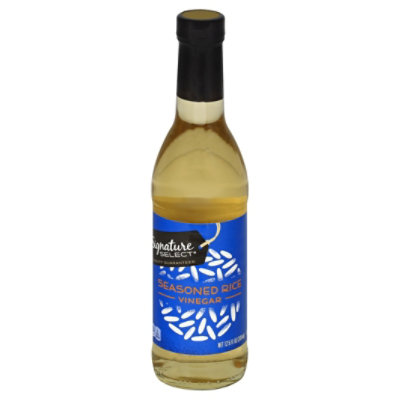
As the name suggests, rice vinegar starts with rice. Three rice vinegars on the shelf print strengths from 4% to 4.3%: Signature SELECT seasoned rice vinegar is 4%, Mizkan rice vinegar is 4.2% and Marukan rice vinegar is 4.3%. These are the strengths specific to the bottles, not a rule for every rice vinegar. The lower acidity gives rice vinegar a noticeably gentler taste than Western table vinegars.

Seasoned rice vinegar adds sugar and salt. The Signature SELECT ingredient line lists rice vinegar, sugar, salt and brown sugar, making it useful for sushi rice. The pre-balanced sweetness saves time when folding acid into warm steamed grains.
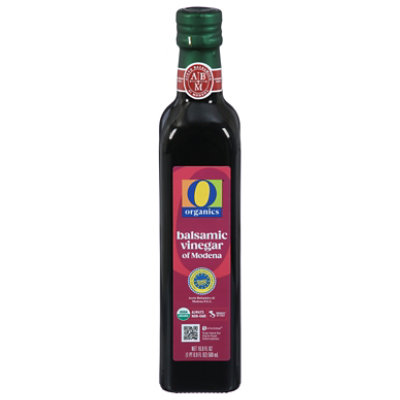
Balsamic Vinegar of Modena is a Protected Geographic Indication variety of balsamic vinegar, meaning it follows a protected European specification. It combines cooked, concentrated or partly fermented grape must with wine vinegar, then spends at least 60 days in wood. The specification requires at least 20% grape must, at least 10% wine vinegar and total acidity of at least 6%. Aging in wood casks softens the bite and adds depth to the sweetness.
O Organics is also a Safeway own brand. Its Balsamic Vinegar of Modena is made with organic cooked grape must and organic wine vinegar, and the bottle carries the Protected Geographical Indication wording. Its ingredient line does not print an acidity figure.
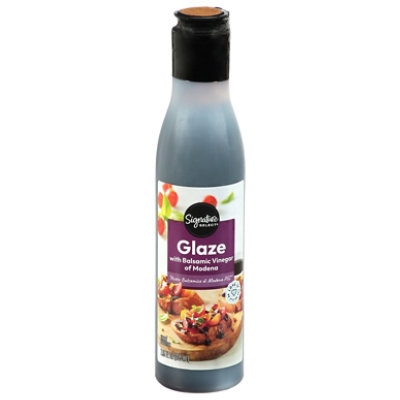
Balsamic glaze is a sauce. The Signature SELECT glaze contains 61% Balsamic Vinegar of Modena, followed by cooked grape must, sugar and xanthan gum, which thickens it. That syrupy texture lets you drizzle it over roasted vegetables, grilled meats, or sliced fruit without pooling at the bottom of the plate.
Keep cleaning vinegar out of food
Cleaning vinegar is stronger than regular table vinegar, with acidity above 5%, and is meant for household cleaning. University of Wisconsin-Madison Extension says vinegars intended as household cleaners should not be used in cooking or preserving, while Penn State Extension notes that some cleaning and horticultural vinegars range from 11% to 30% acidity with one reaching 75%. Higher-strength cleaning vinegars are not meant for food and can burn skin and eyes. Using a product labeled for cleaning in a food recipe risks both chemical contamination and severe acid burns.
Open Nature cleaning vinegar is the bottle to keep under the sink, not in the pantry.

Regular white vinegar is also used to loosen soap scum and mineral deposits, but avoid it on marble, limestone and travertine. The acid reacts with the calcium carbonate in these stones and leaves permanent dull spots. When the acetic acid contacts calcium carbonate, it dissolves the mineral surface immediately. No amount of wiping or polishing will restore that original shine once the stone is etched, so save vinegar for non-stone surfaces like glass, tile, or chrome.
Vinegar lasts, but its appearance can change
Vinegar does not need refrigeration. The Vinegar Institute says its shelf life is "almost indefinite" because its acid makes it self-preserving, meaning haze, sediment or color changes in some vinegars are completely harmless. The high concentration of acetic acid creates an environment where typical food-spoilage organisms cannot take hold. On the other hand, Penn State Extension states white and cider vinegars remain stable for "up to two years" in a cool place and should be discarded after "one year for best quality" if there is no date.
For best quality, Penn State Extension says to store vinegar in a cool location away from light and to discard it at the end of the manufacturer's "best used by" date. A dark pantry cupboard works well. Tightly closing the cap keeps air out and preserves the aromatic punch of the acid.
Cloudiness or stringy sediment can be the ‘mother’, a form of cellulose produced by harmless vinegar bacteria during fermentation. The O Organics apple cider vinegar label describes the mother as brownish sediment that occurs naturally when unpasteurized vinegar has not been processed. While being harmless, you can filter it out if you want. A simple pour through a coffee filter catches the cellulose strands and leaves the liquid clear. Fuzzy mold on the surface is different and is a reason to discard the vinegar. Mold forms a velvety bloom on top of the liquid, signaling contamination that means the bottle belongs in the compost or trash.

Common vinegar questions
What does 5% acidity mean on vinegar?
It means the vinegar contains 5 grams of acetic acid per 100 mL. Tested canning recipes require that strength because their vinegar, food or water proportions are designed to provide enough acid for safe preservation, so a 4% bottle cannot replace a 5% bottle in those recipes. Without that full 5% strength, a sealed jar cannot reliably prevent dangerous bacterial growth.
Can you use apple cider vinegar instead of white vinegar?
The Signature SELECT apple cider and white vinegars are both labeled 5% acidity. A tested canning recipe may allow either when both meet that strength. Cider vinegar adds a tart fruit flavor and can darken pale produce, while white vinegar stays clear and has a sharper flavor. Check your recipe instructions to see whether a specific color or flavor is intended.
Is rice vinegar the same as white vinegar?
No. Rice vinegar starts with rice, while distilled white vinegar starts with dilute distilled alcohol. The Signature SELECT rice-vinegar labels print 4% to 4.3% acidity, compared with 5% on the Signature SELECT white vinegar. Rice vinegar is noticeably milder, which is why it cannot substitute for white vinegar in tested canning brines.
Is balsamic glaze the same as balsamic vinegar?
No. The Signature SELECT glaze is a sauce made from 61% Balsamic Vinegar of Modena as well as cooked grape must, sugar and xanthan gum. Balsamic vinegar is a pourable liquid aged for at least 60 days in wood, while the glaze is sweetened and thickened for drizzling directly onto finished dishes.
Can you cook with cleaning vinegar?
No. Cleaning vinegar is stronger than 5% acidity and is intended for household cleaning, not cooking or preserving. University of Wisconsin-Madison Extension specifically advises against using cleaning vinegar in food, and Penn State Extension notes that some cleaning and horticultural vinegars reach 11% to 75% acidity, which can burn skin and eyes.
Does vinegar go bad?
The Vinegar Institute calls vinegar's shelf life "almost indefinite" and says it needs no refrigeration. Its natural acidity keeps it self-preserving. For peak flavor, Penn State Extension says white and cider vinegars stay stable for "up to two years" and recommends "one year for best quality" when the bottle has no date, suggesting storage in a cool, dark cabinet until the "best used by" date.
What is the difference between quick pickles and canned pickles?
Quick pickles (refrigerator pickles) are not heat processed, so they are not shelf stable and must stay refrigerated at 40°F or below. Canned pickles are heat processed for shelf-stable pantry storage and need a tested recipe with the specified vinegar strength. That heat processing and 5% acid level work together to keep canned jars safe at room temperature.