


Which Tea Helps with Sleep and Stress?


Bestsellers for Tea Bags
A warm cup of tea before bed helps a lot of people wind down, and most of why it works has nothing to do with the herb in the bag. The tea is caffeine-free, and the act of making it and sipping it is part of slowing down for the night.
The herbs themselves are gentle. Chamomile and the rest can take the edge off for some people, but the studies behind them mostly used concentrated extracts in capsules, not a tea bag in hot water. What matters most when you shop is a caffeine-free cup you'll look forward to at night.
Start with Caffeine-Free
Caffeine has a half-life of about five hours, so a cup from mid-afternoon can still be half-active when you're trying to fall asleep. Cutting it out in the evening is the one change here that reliably helps, and unlike the herbs, it doesn't depend on anything working.
The catch is that "tea" covers two different drinks. Real tea, from the Camellia sinensis plant, has caffeine: green, black, white, oolong, matcha, and most chai (which is built on black tea). An eight-ounce cup of black tea runs roughly 40 to 70 milligrams of caffeine, green tea a bit less. None of those belong in your evening if sleep is the goal.
What people call herbal "tea" is an infusion of other plants, and those are naturally caffeine-free: chamomile, peppermint, rooibos, lavender, lemon balm, valerian, ginger, hibiscus. The word to find on the box is simply "caffeine-free." If a bedtime blend has a green or black tea base, it will say so, and it isn't the one you want at night.
What the Calming Herbs Do
The herbs are real, just gentler than the packaging suggests, and they don't all do the same thing.
Chamomile is the most-studied and the easiest to recommend as a nightly cup. A few small trials found it improved sleep or eased mild anxiety. But the strongest studies used standardized chamomile extract in capsules, often 200 to 1,500 milligrams a day, while a cup of tea delivers a small fraction of that. The one trial that used tea, in postpartum women in 2016, found better sleep quality over two weeks. Treat chamomile as a mild, pleasant aid, not a strong sedative.
Valerian root shows up in stronger "bedtime" blends, often paired with hops or lemon balm. The evidence is genuinely mixed: a 2006 review of 16 trials found people were more likely to report better sleep on valerian, but the studies were inconsistent and the objective sleep measures didn't move much. Valerian also has a strong, musty smell and a bitter taste, which is exactly why it's almost always blended with mint and other herbs rather than sold on its own.
Lavender has less behind it than its reputation suggests. The impressive anxiety research used a concentrated lavender-oil capsule taken by mouth, not a lavender tea bag, and the tea itself has little direct study behind it. What the tea does offer is real: it's caffeine-free, the smell alone is calming, and it makes a good part of winding down.
L-theanine is the calming amino acid people associate with green tea, and the studies that show a real effect use about 200 milligrams. A brewed cup has maybe 5 to 25 milligrams, and green tea is caffeinated, so it works better as a calm-but-alert daytime drink than as a bedtime one.
Passionflower and lemon balm round out a lot of sleep and stress blends. The research is small and preliminary, a few short studies pointing in a positive direction. They make a fine part of a blend; just keep expectations modest.
The Routine Matters as Much as the Herb
A warm, caffeine-free drink is one of the simplest wind-down cues there is, and the routine does real work independent of the herb. Sleep researchers treat a consistent pre-bed ritual as legitimate sleep hygiene: the warmth, the pause, and the signal to your body that the day is ending all help you settle.
Safeway shoppers describe this more plainly than any study does. One reviewer of Bigelow Sweet Dreams calls it "always a part of the nightly decompression ritual," and another, "a great part of a nightly routine." A quiet cup in the evening, as one of them put it, is simply "very relaxing." That routine is reason enough to keep a calming tea in the cupboard, even when the herb dose itself is small.
 Bigelow Sweet Dreams
Which Calming Tea to Pick
Most of the calming shelf is some mix of chamomile, mint, and a few supporting herbs, all caffeine-free. The differences come down to whether you want plain chamomile, a sleep blend with valerian, or something aimed at daytime stress.
For a plain, reliable cup, chamomile on its own is the place to start. Safeway's O Organics organic chamomile is the most-reviewed calming tea on the shelf, with 63 reviews and a 4.8-star average. Shoppers reach for it as an end-of-day cup and keep coming back: "Love the taste! Have tried many different brands, but keep coming back to this one," and "Relaxing, good help me sleep better." One reviewer notes chamomile's other old use, "Great tea for soothing your stomach."
 O Organics Organic Chamomile
Celestial Seasonings Sleepytime is the familiar one, a chamomile-and-spearmint blend that's been a bedtime staple for decades. If you want valerian in the mix, Sleepytime Extra adds it.
 Celestial Seasonings Sleepytime
For a fuller sleep blend, look for the ones that add valerian, passionflower, or lemon balm. O Organics Rest pulls several of these together, chamomile with lemon balm, lavender, passionflower, and skullcap, and it has the reviews to match at 4.9 stars across 28. One shopper sums up both reasons people buy a calming tea: "Great tea, after a stressful day, this tea totally relaxes me and I sleep great!" Another keeps it brief: "It relaxes me before bedtime and taste great."
 O Organics Rest
Yogi Bedtime and Traditional Medicinals Nighty Night are two more in this group, both built on passionflower, chamomile, and valerian-family herbs. Nighty Night Extra swaps in valerian and skips the chamomile, which is useful if you're allergic to ragweed or daisies and want to avoid the chamomile family.
 Yogi Bedtime
For daytime stress rather than sleep, a caffeine-free blend you can drink anytime makes more sense. Yogi Honey Lavender Stress Relief pairs chamomile, lavender, and lemon balm on a rooibos base, so there's no caffeine to fight later. It's the kind of thing to keep at a desk for the late-afternoon stretch.
 Yogi Honey Lavender Stress Relief
If you specifically want the L-theanine that green tea is known for, plain green tea like O Organics organic green is where it comes from. Just remember it's caffeinated, so it's a morning or early-afternoon cup, not a bedtime one.
What to Look for on the Box
The box tells you what you need in a few seconds.
Find "caffeine-free." It's the single most useful word for an evening tea. If a blend uses a green or black tea base, it will be labeled with caffeine, and that's a daytime drink.
Read the herb list for what you want. Chamomile for a mild, plain cup. Valerian, passionflower, or lemon balm for a fuller sleep blend. Lavender or lemon balm for a stress blend you can sip in the afternoon.
Single herb or blend, your call. Plain chamomile is one ingredient and tastes mild. Blends layer mint and other herbs to round out flavor and cover valerian's stronger taste. Neither is better; it's a matter of what you'll enjoy.
FAQ
What is the best tea for sleep?
Chamomile is the easiest place to start: it's caffeine-free, mild, and has the most (if still modest) research behind it. For a stronger blend, look for caffeine-free teas that add valerian, passionflower, or lemon balm, like O Organics Rest, Yogi Bedtime, or Traditional Medicinals Nighty Night. The most important thing on the label is simply "caffeine-free," because caffeine is the part most likely to keep you up.
Does chamomile tea help you sleep?
It can help some people relax into sleep, but think of it as a mild aid, not a sleeping pill. A few small studies found better sleep with chamomile, though the strongest ones used concentrated extract capsules rather than tea, so a cup delivers a gentler dose. A lot of the benefit is the warm, caffeine-free, wind-down ritual, which is real and worth having either way.
What tea helps with stress and anxiety?
For daytime stress, a caffeine-free blend with chamomile, lavender, or lemon balm, such as Yogi Honey Lavender Stress Relief, lets you sip without caffeine working against you later. The evidence for these herbs as teas is modest, and the strongest anxiety research is for a lavender-oil capsule rather than lavender tea. None of these replace care from a doctor if anxiety is affecting your daily life.
Is valerian or chamomile better for sleep?
They suit different people. Chamomile is mild, pleasant, and easy to drink nightly. Valerian is the stronger-acting traditional sleep herb, but the evidence is mixed and it has a musty smell and bitter taste, which is why it's usually blended. If a plain cup of chamomile isn't enough, a valerian blend like Sleepytime Extra or Nighty Night is the next step to try.
Does the tea have to be caffeine-free?
For an evening cup, yes, that's the part that matters most. Caffeine's half-life is about five hours, so an afternoon or evening dose of green, black, or chai tea can still be working at bedtime. Herbal infusions like chamomile, rooibos, and peppermint are naturally caffeine-free, which is what makes them bedtime teas.
Can I drink calming tea every night?
For most people, a nightly cup of caffeine-free herbal tea is fine and makes a good wind-down habit. A few cautions: chamomile is in the daisy family, so skip it if you're allergic to ragweed or daisies; valerian can add to drowsiness, so don't combine it with alcohol or sedatives; and if you're pregnant, breastfeeding, or taking medication, check with your doctor before making any herb a daily habit.
Safeway Buying Guide
Signature SELECT Black Tea - 100 Count



Signature SELECT Black Tea comes in a 100 count family pack and is quality guaranteed.
Signature SELECT Black Tea is a great choice for tea drinkers looking for convenience. It comes in a 100 count family pack, so it's perfect for households that love to enjoy tea on a regular basis. The quality of the product is guaranteed, making it safe and reliable. Plus, the easy-to-follow brewing instructions make preparing hot or iced tea simple and hassle-free. With its fresh flavor and convenient size, Signature SELECT Black Tea is an excellent addition to any pantry!
- Rich Flavor: Many reviewers love the full-bodied, robust flavor of Signature SELECT Black Tea.
- Affordable: Customers appreciate the great value for money this tea provides.
- Quantity: The 100 count box is highly praised as it ensures you have tea for a long time.
- Great Aroma: Users commend the strong, pleasing aroma that enhances the overall tea-drinking experience.
- Smooth Taste: Reviewers often mention the smooth, non-bitter taste of this black tea.
- Quality Packaging: The packaging is appreciated for being sturdy and keeping the teabags fresh.
- Versatile: Several reviews mention how well this tea works for both hot and iced preparations.
Lipton Iced Tea Family Size Bags - 24 Count


This Lipton Iced Unsweetened Tea is a great way to maintain heart health and is made with real tea leaves. It contains flavonoids that can help support a healthy heart, no added sugars or sweeteners, and is certified by the Rainforest Alliance. With the family size bags, you can easily brew delicious iced tea for large gatherings. Plus, it has 0 calories per serving and 45 mg of caffeine per 8 fl oz serving.
- Easy to prepare: Many users love the convenience that these tea bags offer. They are simple and quick to use, making them perfect for busy individuals.
- Great taste: Customers consistently mention the delicious flavor of this Lipton Iced Tea. It's a hit at family gatherings and daily meals.
- Family size: The size of each bag is appreciated by many customers. They can make a large amount of iced tea at once, which is perfect for large families or gatherings.
- Affordable: Reviewers often mention the affordability of this product. They feel they get excellent value for their money.
- Quality product: Many customers speak highly of the quality of Lipton Iced Tea. They trust the brand and are pleased with the consistent quality of the tea.
- Refreshing: Users find this iced tea to be very refreshing, especially during hot summer days. It's a perfect thirst quencher.
- Versatile: Some reviewers appreciate the versatility of these tea bags. They can be used to make both hot and cold beverages.
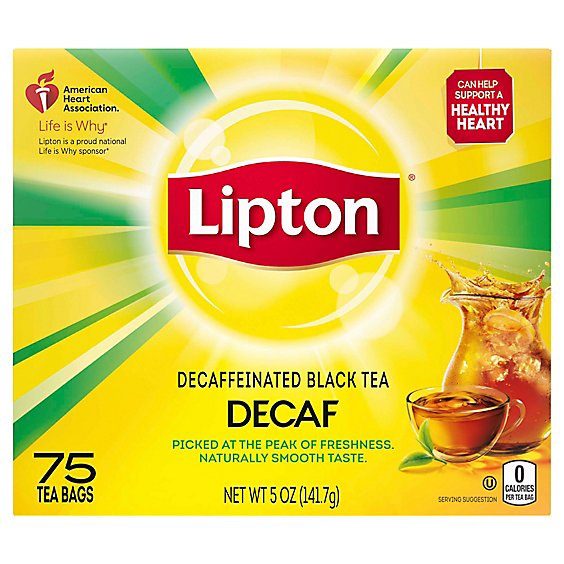
Lipton Tea Decaffeinated Bags - 75 Count


Lipton Decaffeinated Black Tea Bags offer a flavorful, classic blend of tea leaves. This tea is made with carefully selected and fresh-pressed leaves that capture the natural taste. It has no calories and is sustainably sourced, making it a great choice for those looking to support a healthy heart. Furthermore, Lipton has been crafting quality tea for over 130 years and their black tea is just as hydrating as water.
- Decaffeinated: Many customers love that this tea is decaffeinated, making it a perfect choice for those avoiding caffeine.
- Quantity: The pack comes with 75 tea bags, providing excellent value for money.
- Brand Trust: Customers trust and appreciate the Lipton brand for its consistent quality.
- Taste: Reviewers rave about the delicious taste of this decaffeinated tea.
- Easy to Brew: Users find it easy and convenient to brew, making it perfect for quick preparation.
- Versatility: This tea can be enjoyed hot or cold, according to customer preferences.
- Packaging: The packaging is sturdy and keeps the tea fresh for a long time.


