


What's the Difference Between Crushed, Diced, Whole, and Pureed Canned Tomatoes?
Whole peeled tomatoes give you control over the final texture. Diced tomatoes keep distinct pieces, crushed tomatoes are already close to a sauce, and puree is smooth from the start. Sauce adds seasoning, while paste supplies concentrated tomato flavor a spoonful at a time.
Most recipes will specify the type because it changes how the finished dish tastes and how long it needs to cook. Most canned tomatoes can still fill in for one another if you adjust the texture, seasoning, or amount of liquid.
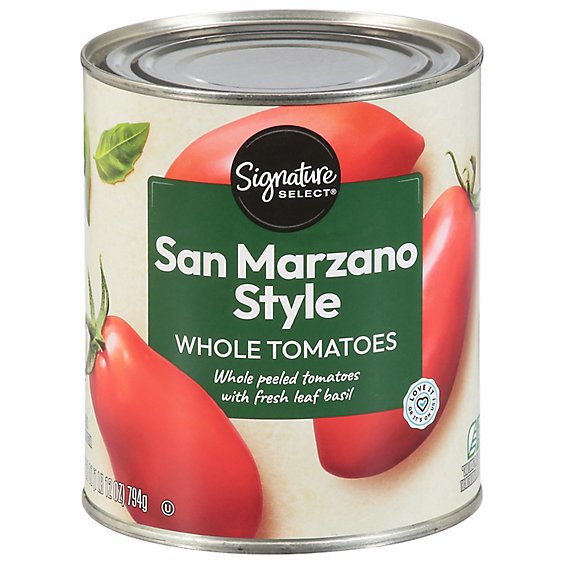
Signature SELECT Whole San Marzano Style Tomatoes
What Each Can Does
Whole peeled tomatoes are skinned and packed intact in juice or puree. In a slow-cooked sauce, you can crush them by hand, break them up with a spoon, or leave some larger pieces in the pot. Diced tomatoes come ready-cut and usually remain visible as they cook, with petite diced giving you the same firm texture in a smaller cut.
For a thicker starting point, crushed tomatoes combine chopped tomatoes with puree or paste. The smooth tomato base gives a quick pasta sauce useful body without a long simmer.
Puree is cooked tomato strained to a smooth, pourable texture. Under the FDA definition, it contains at least 8% but less than 24% tomato soluble solids. Tomato paste begins at 24%, so a small amount can add concentrated tomato flavor to a soup, stew, braise, or sauce.
Tomato sauce is smooth and already seasoned. Since salt, herbs, or other seasonings may be in the can, taste the dish before adding more.
Format | Texture | Useful for |
|---|---|---|
Whole peeled | Intact tomatoes in juice or puree | Slow sauces where you control how far the tomatoes break down |
Diced | Separate pieces that hold their shape | Chili, salsa, soups, and chunky sauces |
Crushed | Chopped tomatoes in a smooth tomato base | Quick pasta sauces and dishes that need body |
Puree | Smooth and pourable | Soups, braises, and smooth sauces |
Sauce | Smooth and seasoned | Fast sauces and recipes that need little adjustment |
Paste | Thick and concentrated | Small additions to soups, stews, braises, and sauces |
Why Diced Tomatoes Keep Their Shape
The ingredient list on a can of diced tomatoes commonly includes calcium chloride. It's a firming agent that helps the pectin in the tomato's cell walls stay joined, allowing the cut pieces to remain intact through canning and simmering.
Whole peeled tomatoes usually omit calcium chloride or use less of it. Without the same firming effect, they soften and break down more readily in a sauce. That's useful when a recipe starts with whole tomatoes and expects them to become smooth over time.
If you substitute diced tomatoes for whole peeled, the flavor will be similar but the sauce will usually remain chunkier, even after a long simmer. Blending or mashing the diced tomatoes can reduce the difference, although the pieces may still resist breaking down completely.
Petite diced is mainly a difference in cut size. The pieces are about a quarter inch, compared with roughly half an inch to an inch for regular diced, so they spread more evenly through soup or sauce. One review of the Signature SELECT petite diced, headed "Reliable quality," says they "work well in homemade vegetable soup" and the "tomato pieces do not get mushy."
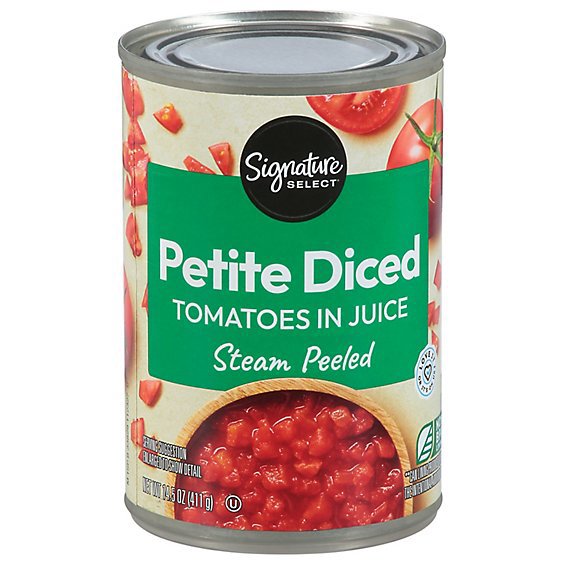
Signature SELECT Diced Petite Tomatoes
What Fire-Roasted Changes
Fire-roasted tomatoes are charred over an open flame before they are diced or crushed and canned. The direct heat caramelizes some of their natural sugars, adding a smoky note and slightly deeper sweetness.
Fire-roasting doesn't change the texture. Fire-roasted diced tomatoes can replace plain diced tomatoes, and the crushed version can replace plain crushed tomatoes in the same amount. They fit chili, salsa, shakshuka, and other dishes where a little smoke belongs with the other flavors.
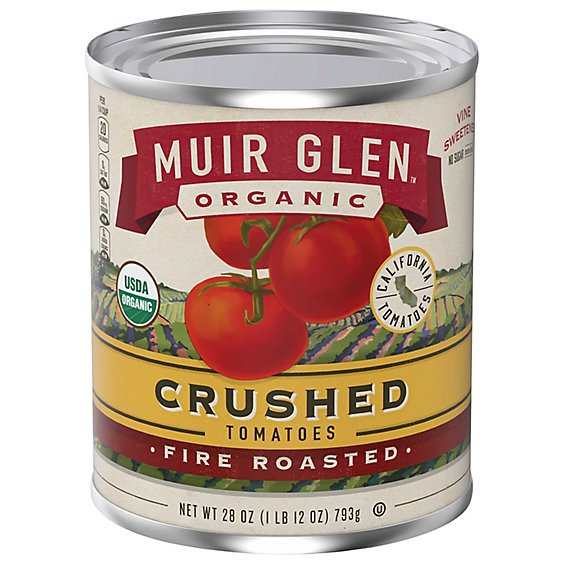
Muir Glen Organic Crushed Fire Roasted Tomatoes
San Marzano and San Marzano Style
DOP San Marzano tomatoes carry a protected European designation. To qualify, they must be the San Marzano plum variety, come from a defined growing area near Mount Vesuvius in Italy's Agro Sarnese-Nocerino region, and receive certification from the consortium that oversees the designation. An authentic label uses the wording "Pomodoro San Marzano dell'Agro Sarnese-Nocerino DOP."
"San Marzano style" carries no DOP certification or geographic requirement. It refers to a similar type of plum tomato processed in the same general tradition, and the tomatoes may be grown in the United States or another region.
Signature SELECT Whole San Marzano Style Tomatoes use the style wording. They remain suitable for everyday tomato sauce, while shoppers seeking the protected Italian product can check the label for the full DOP name and certification. One review headed "great for sauce" calls the Signature SELECT tomatoes "great flavor for Italian dishes, slightly tart and flavorful."
Why Canned Tomatoes Contain Citric Acid
Citric acid keeps canned tomatoes safely acidic. Penn State Extension and Michigan State University Extension explain that some tomato varieties may have a pH close to or above 4.6, the threshold used for safe shelf-stable canning. Below pH 4.6, the bacteria that cause botulism cannot grow in the sealed container.
Manufacturers add citric acid to bring each batch below that threshold regardless of natural variation between tomatoes. That's why organic canned tomatoes may contain it too.
Substituting One Type for Another
If you have | If you need | What to do |
|---|---|---|
Whole peeled | Crushed | Crush by hand or pulse briefly in a food processor |
Diced | Crushed | Blend or mash. Expect a little more texture because calcium chloride helps the pieces stay firm |
Crushed | Diced | Substitute equal amounts and expect a smoother result with fewer distinct pieces |
Puree | Sauce | Season the puree with salt, garlic, or herbs to suit the recipe |
Paste | Sauce | Add water until pourable, then season |
Paste | Crushed | Mix one part paste with two parts water. The result will taste more concentrated than crushed tomatoes |
Whole peeled tomatoes are the closest substitute for crushed because you can control how much texture remains. Diluted paste is useful when no other canned tomatoes are available, but its concentrated flavor and smoother body make it an approximation.
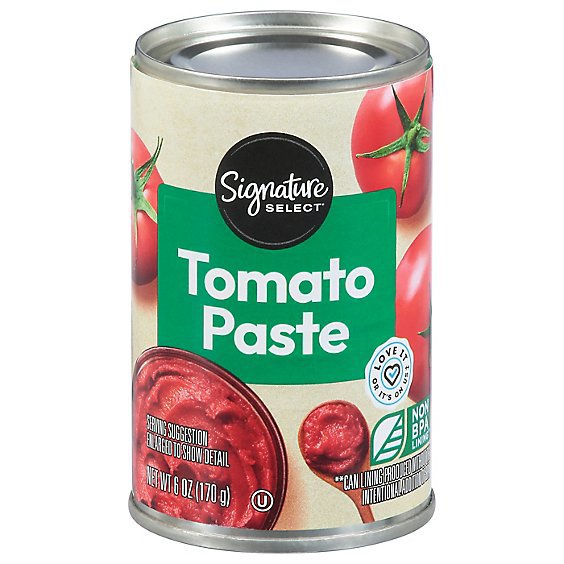
One reviewer of the Signature SELECT paste notes it "melds very well in a sauce or tomato based topping."
Common Questions
Can I use diced tomatoes instead of crushed?
Yes, but the result will be chunkier. Crushed tomatoes have puree or paste blended in, while diced tomatoes commonly contain calcium chloride to help the pieces stay firm. Pulse the diced tomatoes in a blender or mash them by hand if you want a smoother texture.
What's the difference between tomato puree and tomato sauce?
Tomato puree is smooth and generally unseasoned. Tomato sauce is seasoned and ready to use with less adjustment. If you replace sauce with puree, add seasoning to taste. If you replace puree with sauce, check the dish before adding more salt.
Is "San Marzano style" the same as DOP San Marzano?
No. DOP San Marzano tomatoes come from a defined Italian growing region and carry protected certification. "Style" tomatoes don't have that geographic requirement or DOP certification.
Why do canned tomatoes contain citric acid?
Food-safety extension services at Penn State and Michigan State give the reason: below pH 4.6, the botulism bacterium can't grow in a sealed can. Citric acid helps each batch stay below that threshold.
What can replace crushed tomatoes?
Whole peeled tomatoes crushed by hand are the closest match. Blended diced tomatoes also work but may keep more texture. If neither is available, mix one part tomato paste with two parts water and expect a more concentrated taste.
What is tomato paste used for?
Tomato paste adds concentrated tomato flavor in small amounts. Stir it into soups, stews, braises, or sauces rather than using it alone as the main tomato ingredient.