


Ginger for Nausea at Safeway: Chews, Teas, and Ginger Beers with Real Ginger
Ginger genuinely helps with nausea, better than almost any other food remedy. Safeway carries it in more forms than most people realize: brewed ginger beer, ginger chews, real ginger tea, and concentrated ginger shots. To get the benefit, you want the ones made with real ginger root, and a quick look at the ingredient list tells you which those are.
The amount matters. Studies that found ginger works used around a gram of it a day, which is a real dose. You get there with a strong ginger tea, a couple of ginger chews, a brewed ginger beer, or a ginger shot, the products built around actual ginger.
Which one to reach for comes down to where you are: chews in a moving car, a pot of tea at home, a ginger beer or a shot when you want the biggest hit.
Does Ginger Actually Help Nausea?
Yes, for some kinds of nausea, and the evidence is strongest where you might least expect it: pregnancy.
A 2014 review that combined 12 trials and nearly 1,300 pregnant women found that ginger significantly reduced nausea compared with a placebo. It worked about as well as vitamin B6, the standard recommendation. The American College of Obstetricians and Gynecologists lists ginger as a reasonable option for the nausea and vomiting of early pregnancy. If you are pregnant, talk to your doctor before adding it, but the science here is real and well documented.
Across these studies, one honest detail recurs: ginger reliably reduces the feeling of nausea, but it doesn't consistently cut down on actual vomiting. It settles the queasiness more than it stops the worst-case event. A shopper named J left exactly this experience on the Dramamine ginger chews page: "Great for morning sickness." Another, who tried them at her sickest, was honest the other way: "Didn't work on me... they unfortunately didn't do anything to help with my nausea and vomiting." Relief, not a cure, and not guaranteed for everyone.
Beyond pregnancy, the picture is more mixed. The dose used in studies is around 1 to 1.5 grams of ginger a day, and more is not better. A large study of chemotherapy patients found that half a gram to a gram worked better than a gram and a half. For motion sickness the research is genuinely split: a famous 1982 study found ginger beat the leading medicine, while several later studies found no effect. Mention it to anyone who gets carsick and someone will swear by it; the evidence just doesn't settle the question.
What ginger is not is a rehydration tool. If someone is actively vomiting or losing fluids to a stomach bug, the priority is replacing sodium and water, which ginger does nothing for. That is a job for an oral rehydration solution, and we cover those options in our guide to electrolyte drinks.
How to Spot Real Ginger
The ingredient list tells you in a second. Products made with real ginger name it, usually near the top: "ginger root," "ginger," or "ginger extract." Ingredients are listed in order of weight, so the higher up it sits, the more is in the bottle. That's the dose you're after.
Brewed ginger beer is one of the easiest places to find a real amount.
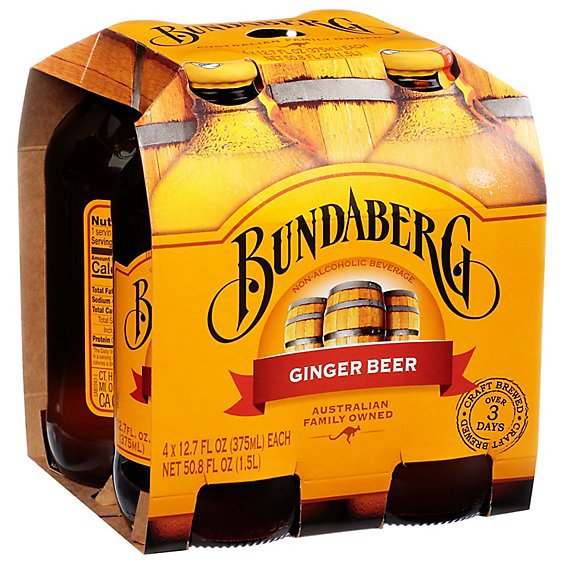
Bundaberg lists ginger root third, after carbonated water and sugar, and brews it over several days. Reed's puts the number right on the bottle: its Extra brew uses 26 grams of fresh ginger root, and you can taste it.
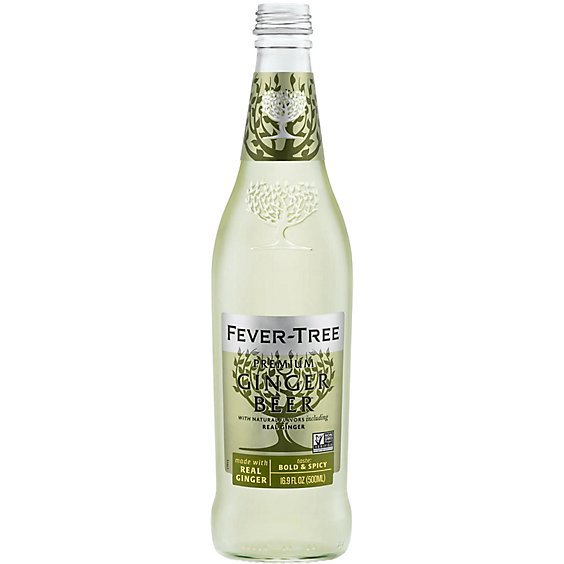
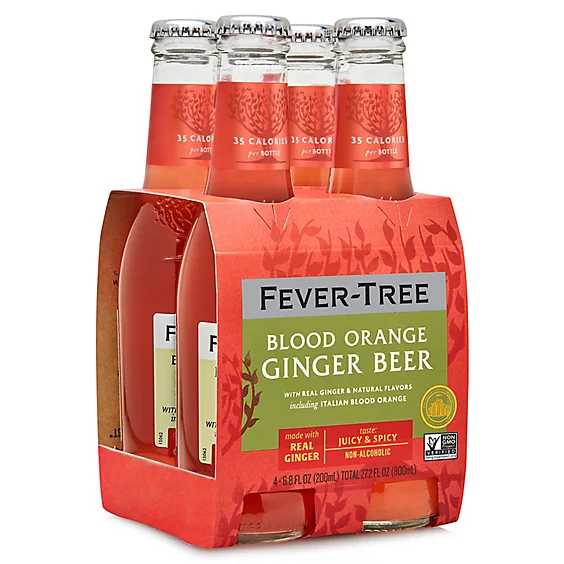
Fever-Tree Blood Orange Ginger Beer
Fever-Tree's ginger beer is brewed with real ginger root too. Shoppers notice the kick. On the Bundaberg page one review reads "Love the ginger beer... Helps calms the stomach," and another calls it "flavorful with a zippy bite." That bite is the ginger. Intensity varies even among the real ones, which is the whole reason to match the format to what you need.
Flavored ginger ale has its place alongside these. It's lighter on ginger and built more for refreshment, and on a queasy day the cold liquid, the fizz, and the comfort of a familiar drink can settle a mild stomach on their own. For ginger's actual anti-nausea effect, reach for one of the products with real ginger root.
Which Format for Which Situation
Real ginger comes in chews, tea, brewed soda, and concentrated shots. They are not interchangeable, and the right one depends on where you are and how strong a hit you want.
For the car, the bag, and travel, reach for chews. They are portable, they don't spill, and you can keep them where you need them.
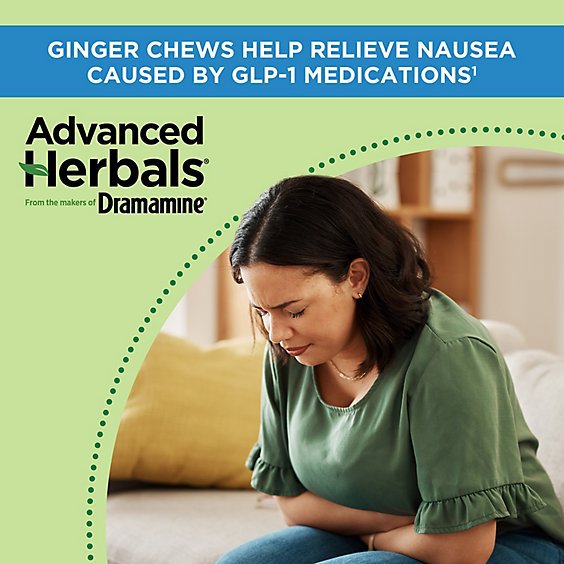
Dramamine Ginger Chews, Nausea Relief
These are the most-reviewed ginger product on the shelf, at 4.5 stars across 277 reviews, and worth a note on what they are: a ginger supplement, not the original Dramamine motion-sickness drug. There is no drowsy antihistamine here, just ginger extract. One reviewer put the appeal plainly: "Tastes Great w/o Aftertaste... no getting sleepy when I'm nauseous." Another keeps them in two places: "I keep it in my purse and by my bed." The same mother used them across two situations, "for myself during pregnancy, and my 10 year old during car rides, for motion sickness." A few find the ginger strong, which a carsick kid may refuse, so taste is worth keeping in mind.
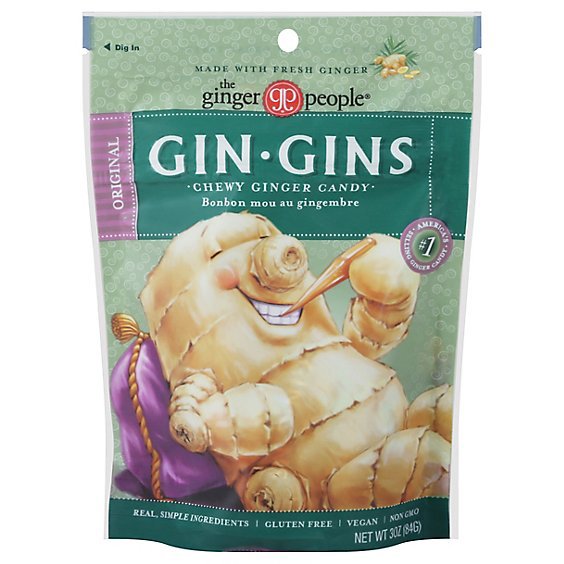
Gin-Gins are the candy version, made with 10 percent fresh ginger, more intense than most chews and useful when you want a real hit of it.
To sip and settle, brew real ginger tea. Warm liquid is its own comfort, and a tea made from ginger root gives you a steady, mild dose over a few minutes.
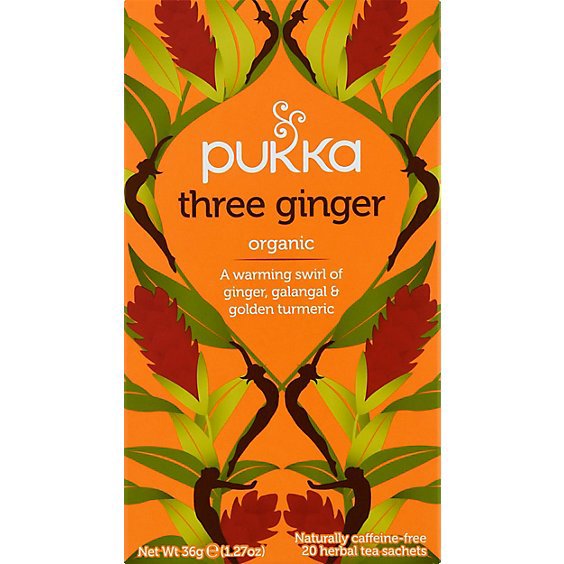
Pukka's Three Ginger leads with ginger root at just over half the blend. The one trick the reviews keep repeating is patience: "After brewing for five minutes this tea is so strong and delicious," and "Let that tea steep 10-15 minutes... and you should have plenty of flavor." Steep it short and you will wonder what the fuss is about. One caution worth reading the box for: this blend also contains licorice, which can raise blood pressure in some people. A reviewer flagged it after the fact: "You have to find the ingredients list on the back to learn that this contains licorice."
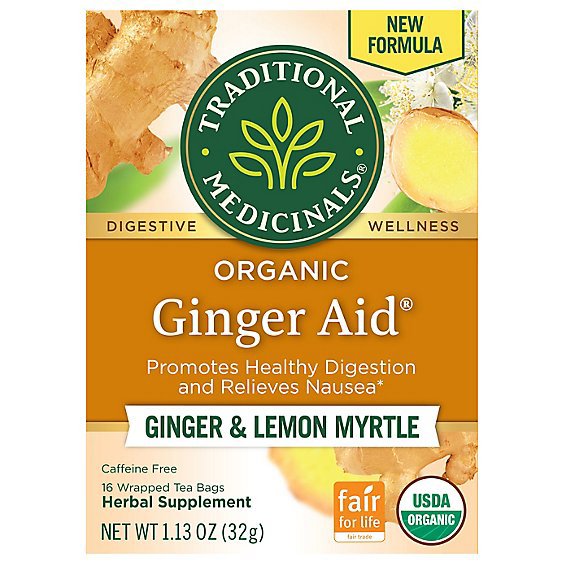
Traditional Medicinals Ginger Aid
Traditional Medicinals builds its Ginger Aid around ginger root and markets it for occasional nausea, at home or on the go.
For the strongest real-ginger hit, go to ginger beer or a shot. A brewed ginger beer like Bundaberg, Reed's, or Fever-Tree gives you the most ginger per sip among the drinks. Concentrated ginger shots go further still.

The Ginger People Organic Ginger Juice
The Ginger People juice is close to straight pressed ginger. Suja's digestion shot packs about 700 milligrams of ginger into a single bottle. These are the concentrated end of the shelf, for when you want the dose without drinking a full glass.
What to Look for on the Label
The whole guide comes down to a few seconds of label-reading.
Find ginger in the ingredients by name. "Ginger root," "ginger," or "ginger extract" means there is real ginger in there. "Natural flavor" with no ginger named usually means there isn't.
Check where it sits. Ingredients run from most to least. Ginger near the top means a real dose; ginger in the "less than 2%" tail means a trace.
Let the ingredient list be your guide. The front of a package tells you the flavor; the ingredients tell you what's actually in it. Find ginger root named there, ideally near the top.
Watch the sugar if that matters to you. Most ginger sodas are sweet, and a few ginger chews carry added sugar to soften the bite. Neither is a problem unless you are watching it, but it is on the label if you want to know.
FAQ
Does ginger ale help with nausea?
A cold ginger ale can help settle a mild stomach, mostly through the fluid, the fizz, and the comfort of a familiar drink. Most ginger ale is light on actual ginger, so for ginger's anti-nausea effect specifically, reach for a product made with real ginger root: brewed ginger beer, real ginger tea, ginger chews, or a ginger shot.
How much ginger do you need for nausea?
Studies generally used about 1 to 1.5 grams of ginger a day, often split into smaller doses. More is not better; in one large trial, lower doses worked as well or better than higher ones. You reach that range with a strong ginger tea, a couple of ginger chews, a brewed ginger beer, or a ginger shot.
Is ginger safe during pregnancy?
Ginger is generally considered safe in moderate amounts for pregnancy nausea, and major doctors' groups including ACOG list it as a reasonable option. That said, pregnancy is exactly the time to check with your own doctor before adding any supplement, and to be cautious with high-dose concentrated forms. We can tell you the evidence is solid; your doctor knows your situation.
Ginger chews, tea, or ginger beer, which is best?
It depends on where you are. Chews travel well and are easy to keep in a bag or car, which makes them the usual pick for motion sickness. Tea is for sitting and sipping something warm, and it gives a milder, steadier dose. Brewed ginger beer and ginger shots deliver the strongest hit of real ginger. All of them work only if real ginger is actually in the ingredients.
Does ginger beer have real ginger in it?
Many do. Brewed ginger beers like Bundaberg, Reed's, and Fever-Tree list ginger root in the ingredients, and Reed's even prints the grams on the bottle. To check any bottle, look for ginger root named in the ingredient list, ideally near the top.
Are Dramamine ginger chews the same as the Dramamine drug?
No. The original Dramamine is an antihistamine (dimenhydrinate) that can make you drowsy. The Dramamine ginger chews are a ginger supplement, with ginger extract as the active ingredient and no antihistamine. Several reviewers specifically like that they don't cause drowsiness. They are sold under the same brand but they work differently.