


What's the Difference Between Whitening Strips, Toothpaste, and Charcoal?
Whitening strips use peroxide to lighten tooth color. Whitening toothpaste and charcoal toothpaste work differently, they scrub stains from the surface but don't change the color of the tooth. If coffee or tea has left a film on your teeth, either approach may make them look brighter, but only a peroxide product bleaches the tooth itself.
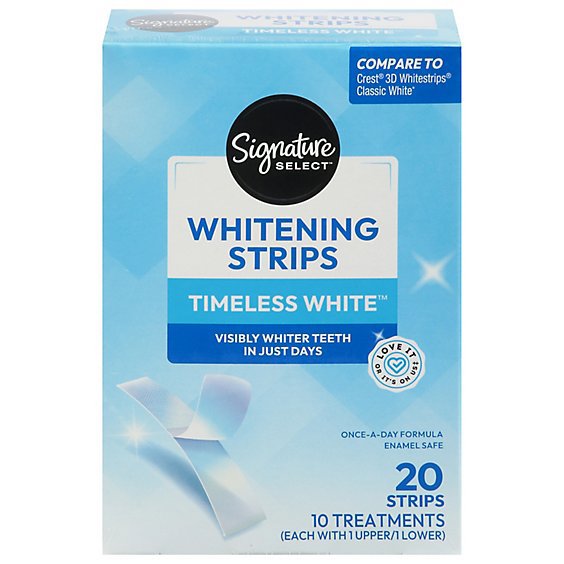
Signature SELECT Teeth Whitening Strips Timeless
Bleaching and Surface-Stain Removal Aren't the Same
The American Dental Association separates stains into two types. Extrinsic stains sit on the surface and can come from coffee, tea, wine, or tobacco. Brushing and mild abrasives can remove some of that discoloration.
Intrinsic stains are within the tooth, in the enamel or the dentin beneath it, so they don't brush off. Hydrogen peroxide and carbamide peroxide can reach those colored compounds and break them apart through oxidation, changing the tooth's intrinsic color. Strips, trays, and peroxide gels all use this type of bleaching.
Whitening toothpaste relies mainly on mild abrasives such as silica. It can remove surface stains and slow their buildup with regular brushing, but the ADA says it won't have a significant effect on intrinsic tooth color. A toothpaste may make coffee-stained teeth look cleaner without producing the shade change associated with peroxide strips.
What Each Whitening Format Does
Most at-home bleaching products differ in how they keep peroxide against the teeth and how long it stays there.
Format | How it works | What it can change |
|---|---|---|
Whitening strips | Flexible strips hold peroxide gel against the teeth for a set wear time | Intrinsic tooth color |
Trays and gel | A tray keeps peroxide gel over the teeth | Intrinsic tooth color |
Whitening pen | A brush tip applies a thin coat of gel | Intrinsic color if the gel contains peroxide, with less contact than strips |
LED kit | A tray combines peroxide gel with a small light | Peroxide does the bleaching. An added benefit from the light isn't established |
Whitening toothpaste | Mild abrasives remove discoloration from the outside of the tooth | Surface stains only |
Safeway's whitening shelf centers on strips, including Signature SELECT Timeless and Gentle White. If you want a tray, pen, or LED kit, check availability at your store.
Strips are straightforward to compare because the box gives a wear time and treatment schedule. It also lists the peroxide type and strength, which the product name alone doesn't tell you.
Reading the Peroxide Number
Hydrogen peroxide is the working bleach. Carbamide peroxide breaks down after application and releases hydrogen peroxide more gradually. According to the ADA, it releases about one-third of its content as hydrogen peroxide.
That means percentages only make sense when you know which peroxide the label are referring to. A 10% carbamide peroxide gel delivers about 3.5% hydrogen peroxide, so it isn't equivalent to a product containing 10% hydrogen peroxide. Compare products with the same peroxide type before treating a larger number as a stronger formula.
Higher concentrations generally bleach faster, but they also make temporary sensitivity more likely. Compare the percentage together with the wear time and treatment schedule on the box.
Tooth Sensitivity
Temporary tooth sensitivity is the most common effect of peroxide whitening. The ADA says mild to moderate sensitivity can occur in up to two-thirds of users during the early stages of bleaching. With strips or trays, it often appears within two or three days and settles by the fourth day.
Sensitivity is more likely with a higher peroxide concentration. Products may be formulated with sensitivity in mind, but a word such as "Gentle" in a product name doesn't reveal a particular concentration. Check the active ingredient information and follow the stated wear time.
If you already have sensitive teeth or have concerns about whitening, ask your dentist what is appropriate for your teeth and dental history.
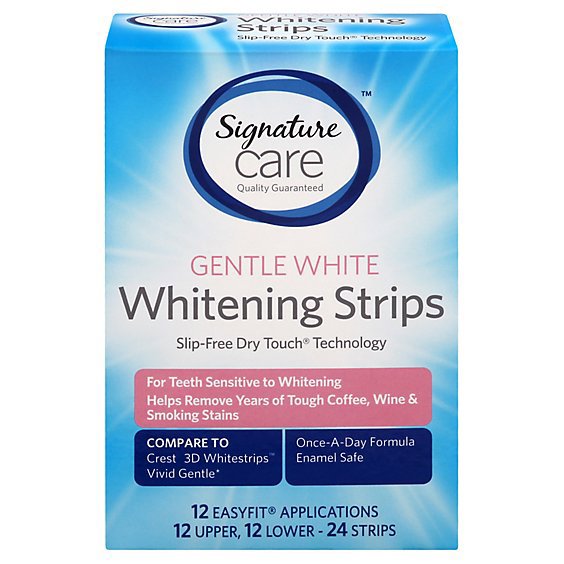
Signature SELECT Whitening Strips Gentle White
One reviewer of the store-brand strips, headed "Stickers," notes they "really stay in place when used."
What the ADA Seal Means
For a product to carry the ADA Seal of Acceptance, the manufacturer submits safety and effectiveness data for review. The ADA evaluates whether that specific product does what its label claims when it's used according to the directions.
The Seal applies to individual products rather than every item sold under a brand name. Some Crest 3D Whitestrips lines carry it, but check the package or ADA product database for the exact box. Because the program is voluntary, the absence of a Seal doesn't establish that a product is unsafe or ineffective.
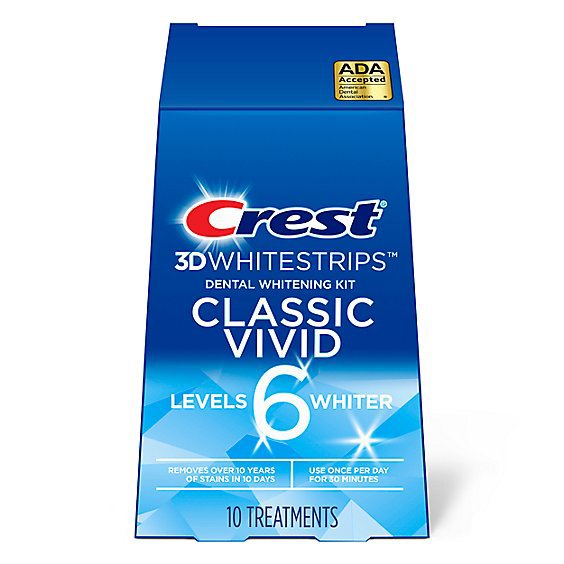
Crest 3D Whitestrips Classic Vivid
One reviewer of Crest 3D Whitestrips, headed "Great results!," writes that after five days "my teeth are already noticeably whiter."
Enamel-Safe, Natural, and Charcoal
"Enamel-safe" isn't an ADA-defined term. It may appear on a lower-concentration product or a gel formulated to limit sensitivity, but the words alone don't establish how every person will respond. The wear-time instructions and any independently reviewed claim give you more information.
"Natural" has no fixed meaning in this category either. Read the ingredient list. If it contains no hydrogen peroxide or carbamide peroxide, it won't bleach intrinsic tooth color and is likely working on surface stains instead.
Charcoal toothpaste belongs in the surface-stain group. It removes discoloration through abrasion rather than bleaching the tooth. The ADA says there isn't enough evidence to show that charcoal products whiten teeth safely and effectively, and research it cites has raised concerns about abrasiveness. Many charcoal toothpastes also omit fluoride.
Check the label for peroxide, fluoride, and abrasive ingredients on any charcoal toothpaste.
Shopping for Whitening Products at Safeway
Start with the result you want. Peroxide strips or tray gel can change intrinsic tooth color, while whitening toothpaste works on surface stains. Once you've identified the format, check the peroxide type, treatment schedule, and wear time on the package. Look for the ADA Seal if you want a claim that has gone through the association's voluntary review.
Safeway's Signature SELECT line includes Timeless and Gentle White whitening strips. The box identifies the peroxide type and strength. Availability varies by store.
Whitening toothpastes sit in the surface-stain category, including formulas designed for people who also experience sensitivity.
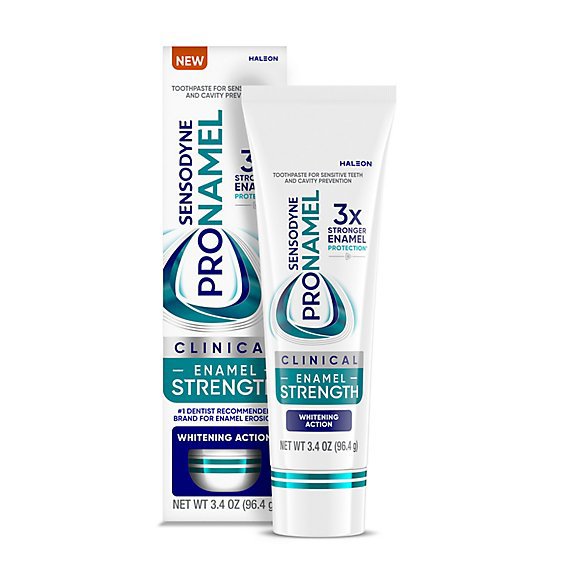
Sensodyne Pronamel Clinical Whitening Toothpaste
Continue brushing and flossing as usual when using a whitening product.
Common Questions
Does whitening toothpaste whiten teeth?
It removes surface stains with mild abrasives, which can make stained teeth look brighter. The ADA says whitening toothpaste doesn't significantly change intrinsic tooth color. That requires a peroxide bleach such as strips or tray gel.
What's the difference between hydrogen and carbamide peroxide?
Hydrogen peroxide bleaches directly. According to the ADA, only about a third of carbamide peroxide becomes hydrogen peroxide, so equal percentages of the two ingredients don't indicate equal bleaching strength.
Do whitening strips damage teeth?
Temporary sensitivity is the usual effect. The ADA estimates that it affects as many as two out of three people early in bleaching and generally settles within days. Higher peroxide concentrations make it more likely, so follow the wear time and ask a dentist about individual concerns.
Does the LED light in a whitening kit help?
The peroxide gel does the bleaching. Whether the small LED light provides a meaningful additional benefit isn't established.
Does charcoal toothpaste whiten teeth?
Charcoal can remove some surface discoloration through abrasion, but it doesn't bleach the color inside a tooth. The ADA hasn't found adequate evidence that charcoal products whiten safely and effectively, and it cites concerns about abrasiveness.
What does the ADA Seal mean on a whitening product?
It means the ADA reviewed evidence for that exact product and accepted its whitening claim when used as directed. Participation is voluntary, and approval doesn't extend to every product made by the same brand.