


How to Read a Moisturizer Label
Every moisturizer, from a basic store lotion to a department-store face cream, works through the same three kinds of ingredient. Humectants draw water into the skin, emollients smooth and soften it, and occlusives seal the water in. Most products blend all three. Once you can spot which ingredient does which job, you can read most of the label yourself.
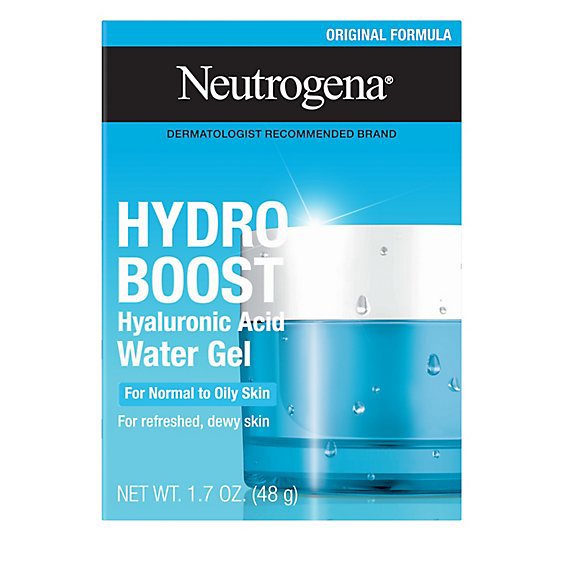
Neutrogena Hydro Boost Hyaluronic Acid Water Gel
Humectants, Emollients, and Occlusives
Humectants pull moisture into the outer layer of skin from deeper down and, in humid air, from the surroundings. The common ones are glycerin, usually near the top of the ingredient list, and hyaluronic acid, which holds a lot of water for its weight and is a molecule the body already makes.
The soft, less-flaky feel comes from emollients, which fill the gaps between surface skin cells. Plant oils and butters like shea and jojoba, and fatty alcohols like cetyl alcohol, sit here.
To keep that water from evaporating back out, occlusives form a thin layer on the surface. Petrolatum is the most effective and the base of the thickest ointments. Mineral oil is lighter. Dimethicone, a silicone, seals lightly and gives a smooth, non-greasy slip, which is why it shows up in "fast-absorbing" and "oil-free" lotions.
The ingredients near the top of the list tell you which way a product leans, toward a watery, humectant-forward formula or a rich, occlusive one.
Common Added Ingredients
Front labels increasingly name one star ingredient.
Label word | What it is |
|---|---|
Hyaluronic acid | A water-binding molecule the body makes; in a bottle, a humectant |
Glycerin | The most common humectant, cheap and well studied |
Ceramides | Lipids that occur naturally in the skin's outer barrier; formulas add the same family of fats the skin already uses |
Shea or cocoa butter | Plant fats that smooth and soften |
Dimethicone | A silicone that gives smooth slip and lightly seals |
Niacinamide | A form of vitamin B3 used as a skin-conditioning ingredient |
"Fragrance-Free" vs. "Unscented"
"Fragrance-free" means no fragrance or masking scent was added. Any smell is just whatever the base ingredients have. "Unscented" means the product is meant to have no noticeable smell, but it may contain a masking fragrance added to cover the raw scent of other ingredients. The difference matters most for reactive skin, since fragrance is a common irritant.
Neither word is federally regulated, and checks have found that many moisturizers labeled "fragrance-free" still contain a fragrance ingredient. If you're avoiding fragrance, treat "fragrance-free" as the target and read "unscented" as a cue to read the ingredients for "fragrance" or "parfum." One reviewer of a Signature Select fragrance-free cream, headed "Signature moisturizing cream," notes it's "not scented, fragrance free which is good for sensitive people."
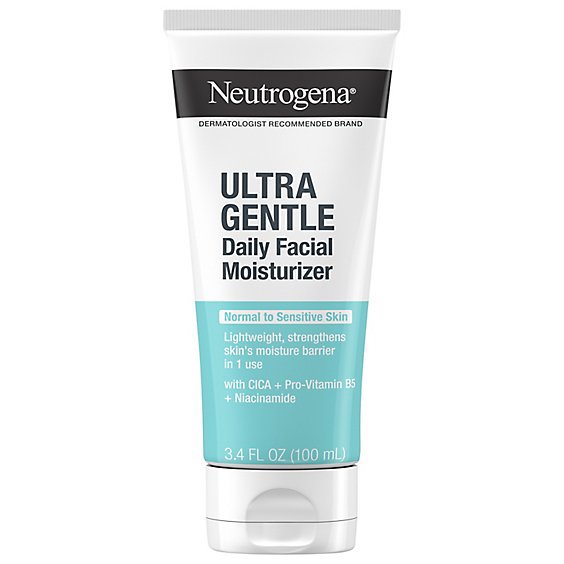
Neutrogena Fragrance-Free Facial Moisturizer
Skin-Type Labels and Texture
"For oily skin" or "for dry skin" isn't a regulated category, just shorthand for a texture-and-ingredient balance you can check on the back panel. A dry-skin formula leans richer, with more emollients and occlusives and a thicker texture. An oily-skin formula leans lighter, often "oil-free" and humectant-forward in a gel or light lotion. Sensitive-skin formulas mostly just cut the fragrance and shorten the ingredient list.
Texture tracks the oil-to-water ratio, thinnest to thickest.
Format | Feel | Leans toward |
|---|---|---|
Gel | Lightest, watery, absorbs fast | Humectant-forward, oily or combination skin |
Lotion | Light, pumps easily | Everyday face and body |
Cream | Thicker, richer, in a jar or tube | Drier skin, more emollient and occlusive |
Ointment | Thick, greasy, very sealing | Very dry or cracked areas, heaviest occlusive |
The oil-to-water splits are rough rules of thumb, not fixed standards, so one brand's "cream" can be lighter than another's "lotion." Use the format word to predict the feel. If a greasy finish bothers you, reach for a gel or lotion. If skin feels tight and flaky, reach for a cream or ointment. One reviewer of the Signature Select cocoa butter lotion, at the richer end, headed "Rich and creamy," writes it has "a good consistency and is long lasting."
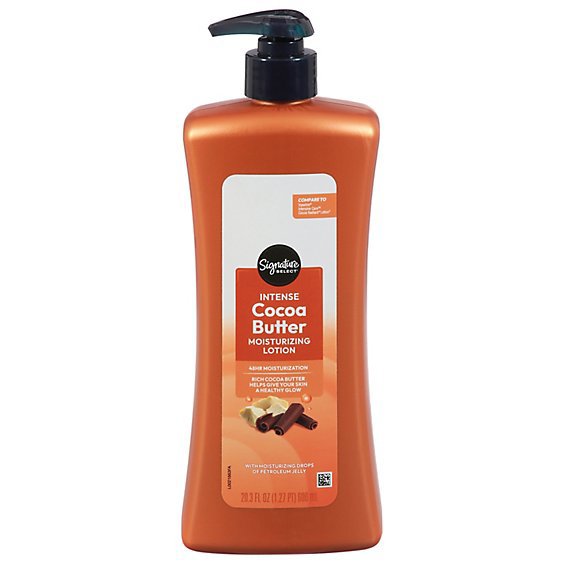
Signature SELECT Moisturizing Cocoa Butter Lotion
When a Moisturizer Adds SPF
Some daily facial moisturizers add sunscreen and print an SPF number. Sunscreen is an over-the-counter drug, so those products carry a Drug Facts panel, and the moisturizer is the cosmetic part around it.
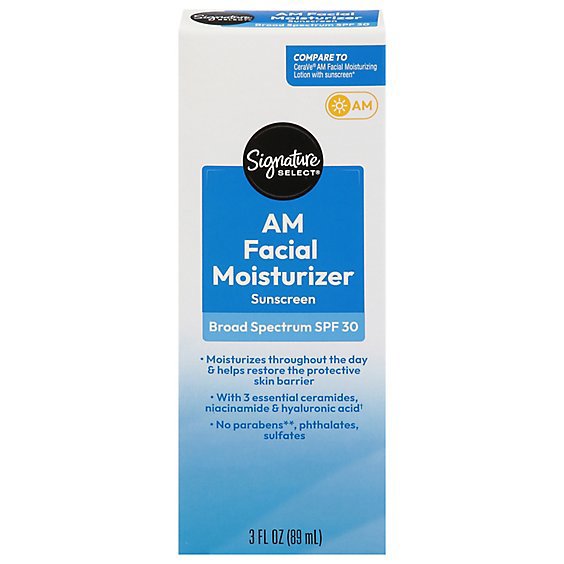
Signature SELECT Facial Moisturizer AM with SPF 30
"SPF 30" rates protection against the UVB rays that burn, though SPF 30 isn't double SPF 15. "Broad spectrum" is the FDA-regulated term meaning the product also protects against UVA, the rays behind longer-term sun damage, so that's the phrase to look for. But the SPF on the label is only reached at the full sunscreen amount, and people apply far less moisturizer than that and don't reapply it. A daily SPF moisturizer gives real everyday incidental protection, but for deliberate time in the sun, use a dedicated sunscreen at the full amount.
When a Moisturizer Is a Drug
A plain moisturizer is a cosmetic that moisturizes, softens, and hydrates the skin's surface. The moment a product claims to treat a condition, like an "eczema relief" or "psoriasis" cream, it's legally a drug and carries a Drug Facts panel with an active ingredient, even when it sits on the same shelf. If a lotion says it treats something, read the Drug Facts panel for the active ingredient.
Buying It at Safeway
Start with your skin, then read the label for the three jobs and the fragrance status. Tight or flaky skin does better with a richer cream or a dry-skin jar that leans occlusive. If you're oily or breakout-prone, pick an oil-free gel or light lotion that leans on humectants instead. And if fragrance sets your skin off, look for "fragrance-free" on the front and confirm it on the ingredient list.
Safeway's own store brands, Signature Select and the Spascriptions skincare line, run across the range, including a cocoa butter lotion, fragrance-free lotions and creams, a dry-skin cream jar, and hyaluronic and vitamin C lotions.
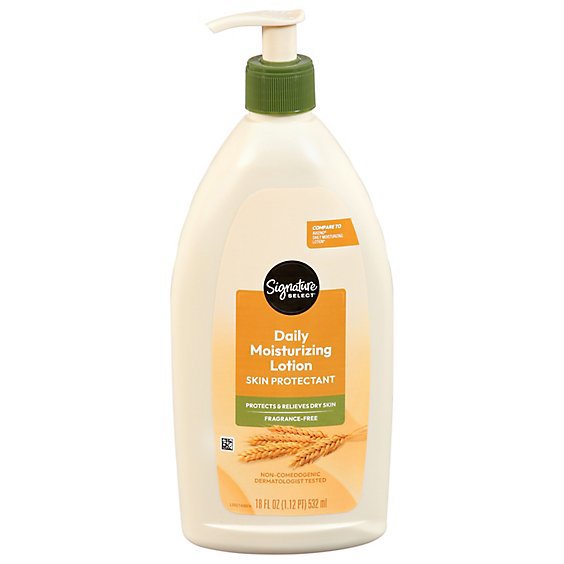
Signature SELECT Daily Moisturizing Fragrance Free Lotion
One reviewer of the store-brand fragrance-free lotion, headed "Best Hand Lotion," writes it's their "favorite" for "very dry hands."
Ingredient lists and formats vary by product, so check the back panel. Availability varies by store, so check your Safeway's shelf or the app.
Common Questions
What's the difference between a humectant, an emollient, and an occlusive?
A humectant draws water into the skin (glycerin, hyaluronic acid). An emollient smooths and softens it (shea butter, plant oils). An occlusive seals water in with a thin surface layer (petrolatum, mineral oil, dimethicone). Most moisturizers use all three, and reading which sit near the top of the ingredient list tells you how the product is balanced.
Is "fragrance-free" the same as "unscented"?
No. "Fragrance-free" means no fragrance was added. "Unscented" means the product has no noticeable smell but may contain a masking fragrance to cover the scent of other ingredients. If you're avoiding fragrance, look for "fragrance-free" and check the ingredient list for "fragrance" or "parfum," since neither word is regulated.
Does "non-comedogenic" mean a moisturizer won't break me out?
Not as a guarantee. "Non-comedogenic" means the product was formulated with the intent not to clog pores, but there's no FDA definition, no required test, and no outside verification. The word tells you what the maker was aiming for, not a tested result. Whether a product breaks you out still depends on your skin and the full ingredient list.
What does hyaluronic acid do in a moisturizer?
It's a humectant, a water-binding ingredient that pulls moisture into the outer layer of skin. It's a molecule the body already makes. It works best paired with an occlusive to seal that water in, which is why most hyaluronic products also contain other ingredients rather than the acid alone.
Is an SPF moisturizer enough sun protection?
For everyday incidental sun, it helps. For deliberate time outdoors, no. The SPF number is only reached at the full sunscreen dose, and most people apply far less moisturizer and don't reapply it. Look for "broad spectrum" for UVA coverage, and use a dedicated sunscreen at the full amount when you'll be in the sun.
Gel, lotion, cream, or ointment: which should I pick?
By texture and how sealing you want it. Gels are lightest and absorb fast, good for oily or combination skin. Lotions are everyday all-purpose. Creams are richer for drier skin. Ointments are thick and very sealing for cracked or very dry areas. Thicker means more oil and more occlusive.