


What's the Difference Between Deodorant and Antiperspirant?
An antiperspirant reduces how much you sweat. A deodorant only fights the smell. That one difference decides which product does what you want, and the U.S. government treats the two as different kinds of product. An antiperspirant is a classified as a drug and a deodorant is a cosmetic and both will be clear on the packaging. And often antiperspirant and deodorant are the same product.
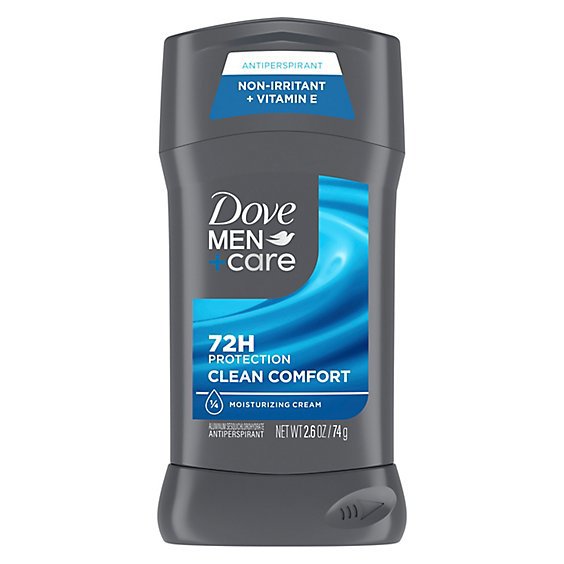
Dove Men+Care Antiperspirant Deodorant Clean Comfort
Sweat vs. Odor
Sweat and odor are two problems. An antiperspirant handles the first. It contains an aluminum compound that reacts with moisture at the opening of each sweat duct and forms a temporary plug, so less sweat reaches the skin. Because it changes how your body works, the FDA calls it an over-the-counter drug.
A deodorant leaves your sweating alone. It works on the smell, which comes from bacteria breaking down sweat on the skin. A deodorant either makes the skin less hospitable to those bacteria or covers the odor with fragrance. Because it only affects smell, the FDA calls it a cosmetic.
So if you sweat through your shirts and want that to stop, you need an antiperspirant. If you sweat a normal amount and only want to smell clean, a deodorant does the job.
How to Read the Label
The front of the package tells you which one you're holding, and the back confirms it. There are three cases.
Front of package | What it is | Reduces sweat? | Panel on the back |
|---|---|---|---|
Antiperspirant / Deodorant | Drug and cosmetic | Yes | Drug Facts box with an aluminum active ingredient |
Antiperspirant | Drug | Yes | Drug Facts box with an aluminum active ingredient |
Deodorant | Cosmetic | No, odor only | Ingredients list, no Drug Facts box |
Most sticks and sprays on the shelf are the combo, labeled "Antiperspirant / Deodorant." They do both jobs and legally have to meet the rules for both a drug and a cosmetic. Secret, Old Spice, Degree, Dove's antiperspirant lines, Arrid, and Gillette Clinical all sit in this group.
The surest check isn't the marketing word on the front. It's the Drug Facts box on the back. If the package has one, with an "Active ingredient" line naming an aluminum compound, the product reduces sweat. If there's no Drug Facts box, only an ingredients list, it's a deodorant and you'll sweat as you normally do.
Dove Men+Care makes the split easy to see. The same brand, in the same Clean Comfort scent, sells both. One stick is labeled Antiperspirant Deodorant and carries the Drug Facts box. The other is labeled Deodorant, with no aluminum and no Drug Facts box.
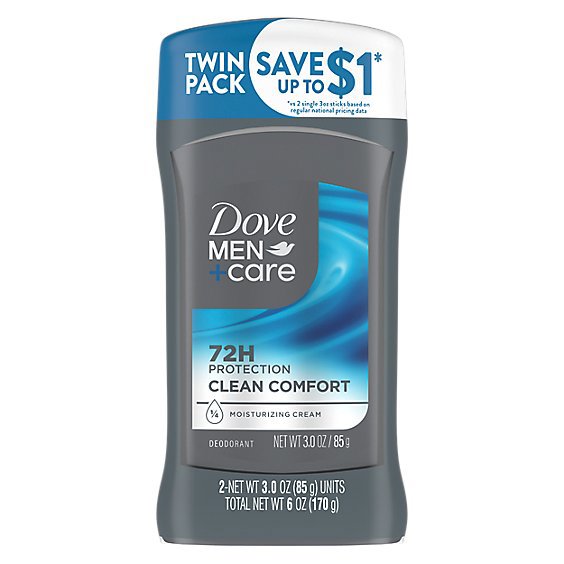
Dove Men+Care Deodorant Clean Comfort
What's Inside Each One
Every antiperspirant active is an aluminum compound. On the Drug Facts line you'll see names like aluminum chlorohydrate or aluminum zirconium tetrachlorohydrex GLY. The FDA's rules allow this specific list of aluminum salts and nothing else as a sweat reducer, and they cap how much a product can contain. All of them work the same way, by forming that temporary plug at the sweat duct. The plug wears and washes off, which is why you reapply.
A deodorant has no aluminum active. Instead it fights odor with cosmetic ingredients. Alcohol in a spray makes the skin briefly less friendly to odor bacteria. Baking soda or magnesium hydroxide shift the skin's surface so those bacteria are less active, and they're the base of most aluminum-free sticks. Fragrance covers whatever smell is left. None of these reduce how much you sweat.
"Clinical Strength" and When to Apply It
Clinical strength is an antiperspirant formulated near the top of the FDA-allowed aluminum concentration, commonly around 20% active against a lower level in a regular one. The FDA has no separate "clinical" category, so it's still an ordinary over-the-counter product, a step below the prescription-strength antiperspirants a doctor gives for heavy sweating.
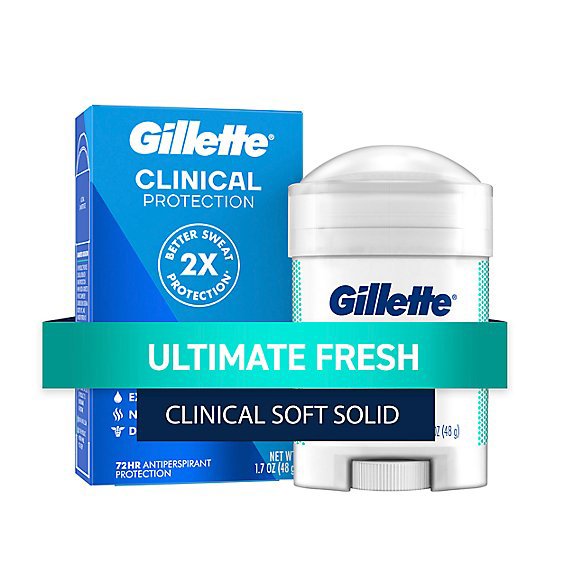
Gillette Clinical Soft Solid Ultimate Fresh
Apply an antiperspirant to dry skin at night, not in the morning. The aluminum active needs several hours on dry skin to form the plug, and you sweat least while you sleep, so the plug sets fully by morning. Put it on damp skin after a morning shower and sweat dilutes the active before it can work. It still keeps you dry the next day, even after you shower in the morning. This helps most with clinical formulas, but it works for a regular antiperspirant too.
Aluminum-Free and "Natural" Deodorant
Aluminum-free means the product is a deodorant, not an antiperspirant. With no aluminum active, there's no plug at the sweat duct, so it will not reduce sweat. It controls odor and lets you sweat the amount you naturally do. A shopper moving from a combo antiperspirant to an aluminum-free deodorant should expect to feel wetter which is the trade off.
"Natural" on these products is a marketing word with no set standard behind it. What's consistent is the aluminum-free formula: baking soda, magnesium, plant oils, and starches doing the odor work. Native and Schmidt's are the common examples at Safeway, labeled "Deodorant" with no Drug Facts box. A reviewer of the Native deodorant, headed "Smooth Application and Great Scent," writes it "goes on smoothly and doesn't leave behind a sticky or heavy feeling."
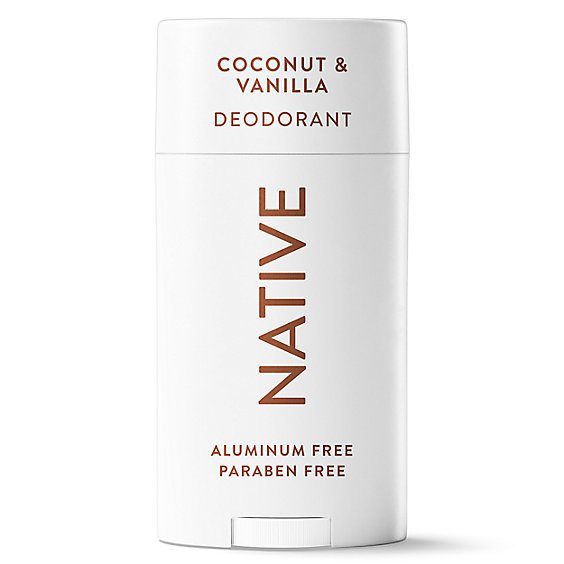
Native Coconut & Vanilla Deodorant
Baking soda is the ingredient most likely to irritate skin, so several brands sell a baking-soda-free "sensitive" version. Native's Sensitive Sandalwood & Shea is one. It's a formulation option, and it fights odor the same way the rest of the aluminum-free line does.
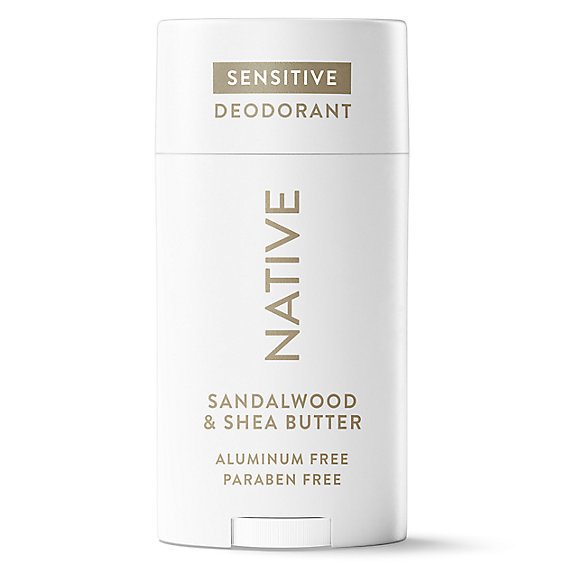
Native Sensitive Sandalwood & Shea Deodorant
Men's and Women's
The active ingredients are the same. A men's antiperspirant and a women's antiperspirant use the same class of aluminum salts at comparable strengths. There's no men's aluminum and no women's aluminum since it is the same thing.
What differs is scent, format, and marketing. Men's lines run to sport and clean scents, often in larger sticks or aerosols. Women's lines run to floral and powder scents, often in invisible solids or dry sprays meant not to show on clothes. Clinical versions exist on both sides. Pick by the scent you want, the format you want, and whether you want sweat reduction or odor control. The gender on the label doesn't change what's inside, and you can cross the aisle. One reviewer of Native's deodorant, headed "Clean," writes: "It's fresh and perfect for everyone, no matter your gender."
Buying It at Safeway
Decide the sweat question first, then pick a scent and type. If you want to sweat less, look for "Antiperspirant" on the front and confirm the Drug Facts box on the back. If you sweat a normal amount and want odor control without aluminum, look for a product labeled only "Deodorant."
For a combo that does both, the shelf is full of them. One reviewer of the Secret vanilla antiperspirant, headed "Smells delicious and keeps me feeling fresh!," calls it a "perfect antiperspirant if you want to smell great and keep your sweating in check."
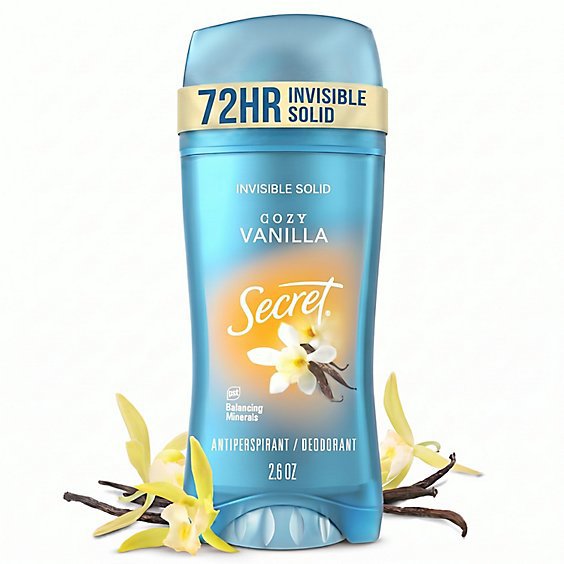
Secret Invisible Solid Vanilla Scent Antiperspirant Deodorant
For a dry-spray combo, Dove Advanced Care goes on as an aerosol and still reduces sweat.
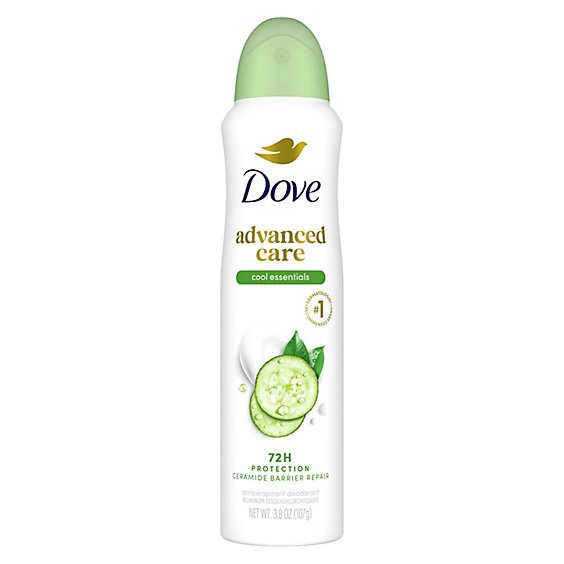
Dove Advanced Care Cool Essentials Dry Spray Antiperspirant Deodorant
Availability and scents vary by store. Check your Safeway's shelf or the app for what's in stock near you.
Common Questions
Is deodorant or antiperspirant better?
Neither is better in general; they do different jobs. An antiperspirant reduces sweat and controls odor. A deodorant controls odor only and lets you sweat normally. Choose an antiperspirant if you sweat through your clothes, a deodorant if you only care about smell.
How do I know if a product is an antiperspirant?
Look for a Drug Facts box on the back with an "Active ingredient" line naming an aluminum compound. That means it reduces sweat. If the package has only an ingredients list and no Drug Facts box, it's a deodorant.
Does aluminum-free deodorant stop sweat?
No. Aluminum is the ingredient that reduces sweat, so an aluminum-free product doesn't. It fights odor only, and you'll sweat the amount you normally do.
When should I apply antiperspirant?
Put it on dry skin at night, not in the morning. The aluminum active needs several hours on dry skin to form the plug that blocks sweat, and you sweat least overnight, so it sets by morning. It keeps you dry the next day even if you shower in the morning.
What does "clinical strength" mean?
It's an over-the-counter antiperspirant formulated near the top of the aluminum concentration the FDA allows, commonly around 20%. There's no separate FDA "clinical" category, so it's a stronger regular antiperspirant, a step below a prescription. Applying it to dry skin at night is what makes it work best.
Can men use women's deodorant, and the other way around?
Yes. The active ingredients are the same across men's and women's products. The differences are scent, format, and packaging, so pick by those, not by the label's gender.