


What's the Difference Between Parchment, Wax Paper, Foil, and Freezer Paper?
Wax paper can melt and smoke when it goes into a hot oven. The mistake is easy to make because wax paper and parchment paper look much the same on the shelf. Parchment has a silicone coating that takes oven heat, so it's the one for lining pans, baking, and roasting. Wax paper has a paraffin coating that melts. It's for counter and fridge work. Never put it in the oven.
Plain aluminum foil covers food, wraps it, and lines pans. It's fine in the oven, but it must never go in a microwave. Freezer paper is plastic-coated on one side to block the air that causes freezer burn. That same coating is why freezer paper cannot go in the oven either.
Which Roll for Which Job
If you're... | Reach for | Oven? | Microwave? |
|---|---|---|---|
Lining a sheet pan, roasting, baking | Parchment paper | Yes, to the limit on the box | Check the box; most parchment is labeled safe |
Rolling dough, wrapping cheese, separating cookies | Wax paper | No | Only if the box says so |
Covering, tenting, wrapping, lining pans | Aluminum foil | Yes | No, metal does not belong in a microwave |
Grilling, wrapping bulky roasts, handling anything that might tear | Heavy-duty foil | Yes | No |
Baking sticky foods | Non-stick foil | Yes | No |
Wrapping meat for the freezer | Freezer paper | No | Not labeled for it |
Wrapping brisket and ribs partway through a smoke | Pink butcher paper | Yes, up to 300°F | Yes |
Covering a bowl or a plate of leftovers | Plastic wrap | No | Check the box |
Parchment Paper vs. Wax Paper
Parchment paper has a silicone coating that withstands oven heat. Boxes commonly set the limit around 420 to 425°F, but follow the temperature printed on the box you have. Keep the paper away from the broiler, open flame, heating elements, and oven walls. Parchment can still burn when it touches those heat sources.
Use parchment to line sheet pans and cake pans, roast vegetables, or seal food inside a packet for steaming in the oven. It gives food a non-stick surface and saves cleanup. A Signature SELECT parchment reviewer wrote, "Works well in the oven for baking all kinds of foods!" under the headline Helpful Tips.
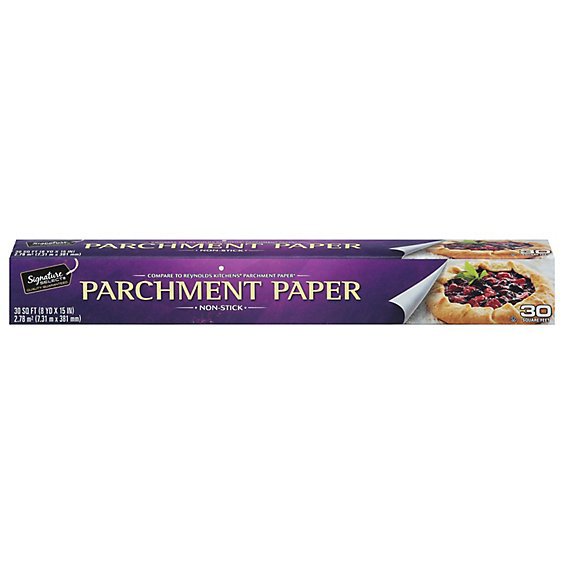
Signature SELECT Non-Stick Parchment Paper, 30 sq ft
Signature SELECT Parchment Paper Sheets come flat and pre-cut. They lie flat without curling back into a roll. That can help on a sheet pan or in an air fryer when you follow the appliance and paper directions. One shopper wrote, "I use a half of one of these sheet in my airfryer, so easy and convenient."
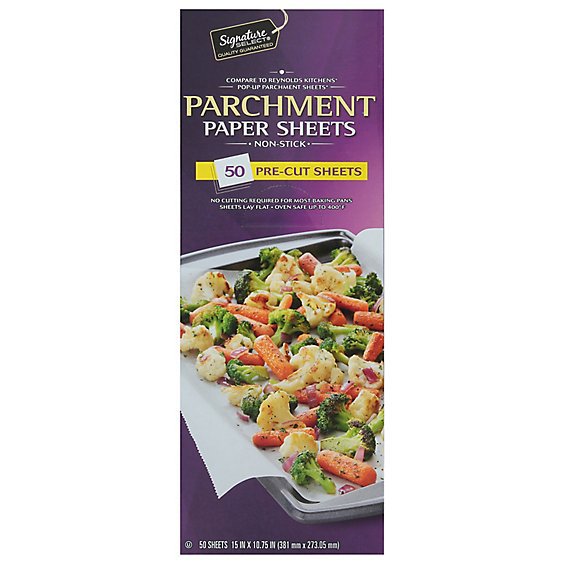
Signature SELECT Parchment Paper Sheets, 50 ct
Wax paper has a paraffin coating. Paraffin melts around 115 to 154°F, well below normal oven temperatures. In an oven, the coating can melt, smoke, and catch fire. A short baking time does not make wax paper suitable for the job.
Wax paper works well on the counter and in the refrigerator. Use it beneath dough while rolling, around cheese in the fridge, between chicken and a mallet, or between layers of cookies. One shopper focused on how the paper handles, writing under Only Choice: "Easy dispensing, wax coating is sufficient when applied."
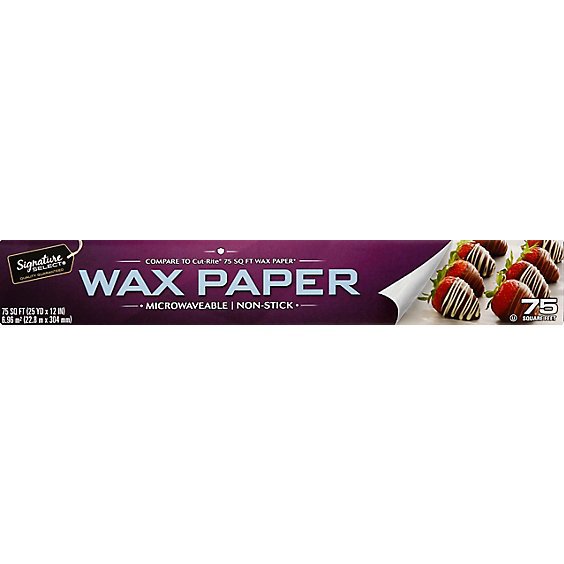
Signature SELECT Microwaveable Non-Stick Wax Paper, 75 sq ft
Both Signature SELECT wax paper and Reynolds Cut-Rite wax paper are labeled microwave safe. That label applies only to microwave use under the directions on the box. It does not permit either paper to go into an oven.
Bleached vs. Unbleached Parchment
Bleached and unbleached parchment work the same for baking. The difference is color and processing. Reynolds Kitchens Parchment Paper states that it is made with 75% unbleached fibers and no chlorine bleaching. Its box also labels the paper non-stick, oven safe, and microwave safe.
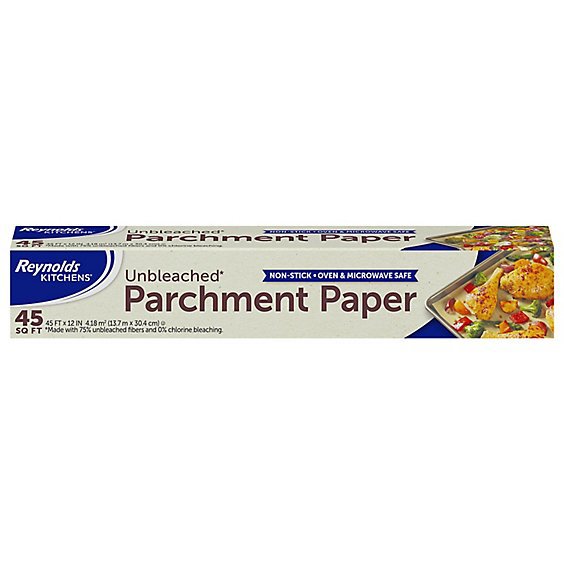
Reynolds Kitchens Parchment Paper Roll, 45 sq ft
A reviewer went to the baking rather than the processing, writing under Reynolds parchment roll unbleached: "Very good. Parchment used for baking and use in oven is great! Excellent brand."
Foil: Regular, Heavy-Duty, and Non-Stick
Regular foil and heavy-duty foil are made from the same aluminum. Heavy-duty foil is roughly 50% thicker than regular foil, which makes it harder to puncture or tear.
Regular foil is enough for covering a bowl, wrapping a sandwich, tenting a dish, or lining a pan for easier cleanup. One Signature SELECT foil review, titled Aluminum foil 75 ft, says, "I love the product because it's easy to tear and it lasts quite a while."
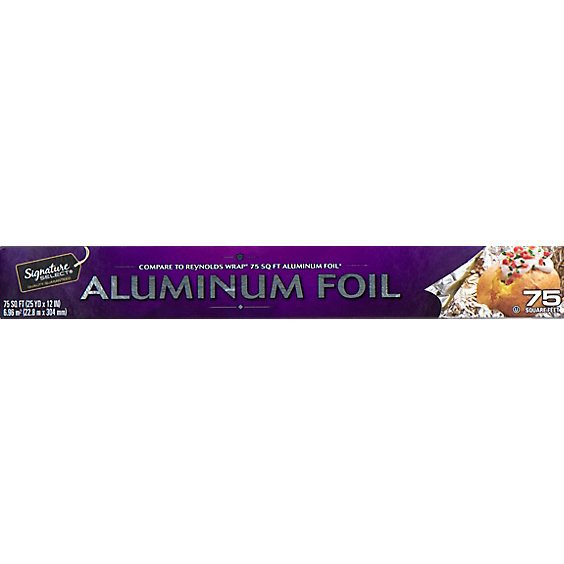
Signature SELECT Aluminum Foil, 75 sq ft
Use heavy-duty foil for grilling, bulky roasts or ribs, freezer wrapping, and pans where regular foil might puncture.
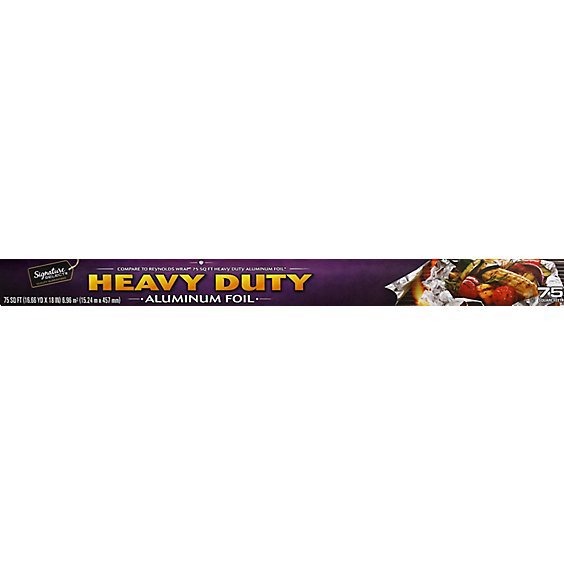
Signature SELECT Heavy Duty Aluminum Foil, 75 sq ft
On plain foil, the shiny and dull sides work the same. The two finishes form when sheets of foil are milled together in pairs. Either side can face the food.
Non-stick foil is the exception. It has a coating on one side, and the box identifies which side should touch the food, check the label to be sure.
Plastic Wrap: Cling vs. Press-and-Seal
Standard cling wrap holds by clinging to itself and to a smooth bowl rim. You press the air out by hand. A review of Signature SELECT Plastic Wrap summarizes this: "Always unrolls easily and sticks to the bowl making a tight seal," under the headline Best sealing wrap ever.
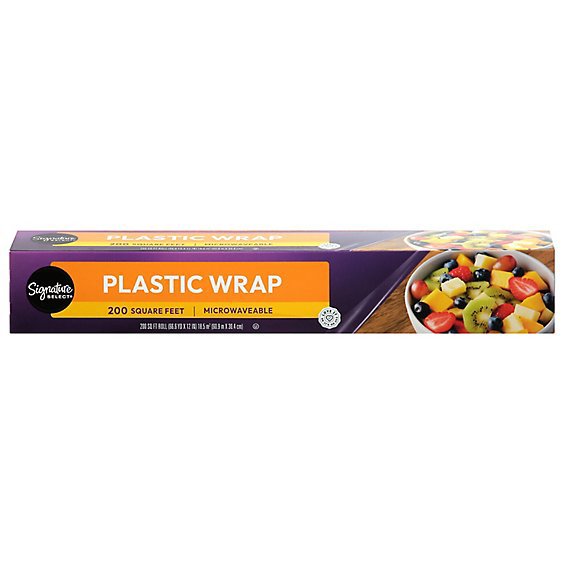
Signature SELECT Plastic Wrap, 200 sq ft
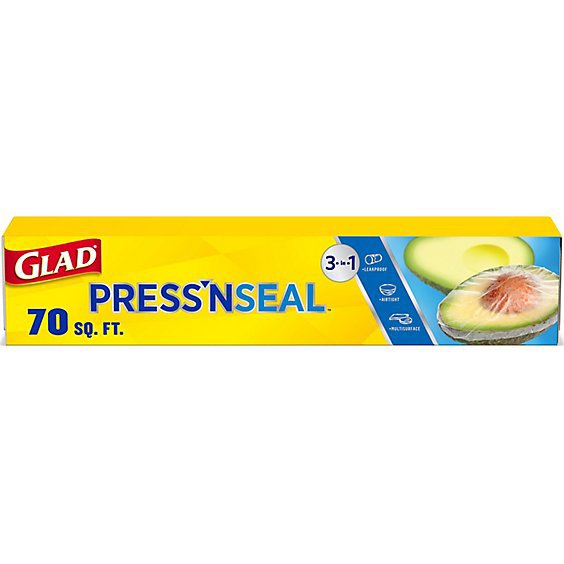
Press-and-seal wrap grips to itself and to smooth surfaces, so it seals a bowl or an odd shape without needing a rim to grab. The Glad Press'n Seal box prints a "3-in-1" badge listing LEAKPROOF, AIRTIGHT, MULTISURFACE. A shopper noted its convenience with the headline Press & Seal On The Spot! and wrote, "I wrap my bowls of food to microwave preventing spatters."
Read the label on whether the specific plastic film can be microwaved. Signature SELECT Plastic Wrap has "MICROWAVEABLE" on the front.
Freezer Paper and Freezer Burn
The USDA says food kept continuously frozen at 0°F stays safe indefinitely, so freezer burn costs you quality rather than safety. You can trim away grayish-brown leathery spots before or after cooking. Severe freezer burn can make the food unpleasant enough to discard.
That guidance assumes the food stayed frozen. Freezer-burn marks cannot tell you whether food thawed or spent time at an unsafe temperature.
Air touching the food dries its surface. Freezer paper helps by fitting closely around meat and blocking air. Place the shiny, plastic-coated side against the food. Here, the coated side matters, unlike with foil. Press out the air and wrap the food tightly according to the package directions. The plain paper side faces out. Write the cut and freezing date on that surface before storing it. Do not use freezer paper in the oven, as its plastic coating will melt.
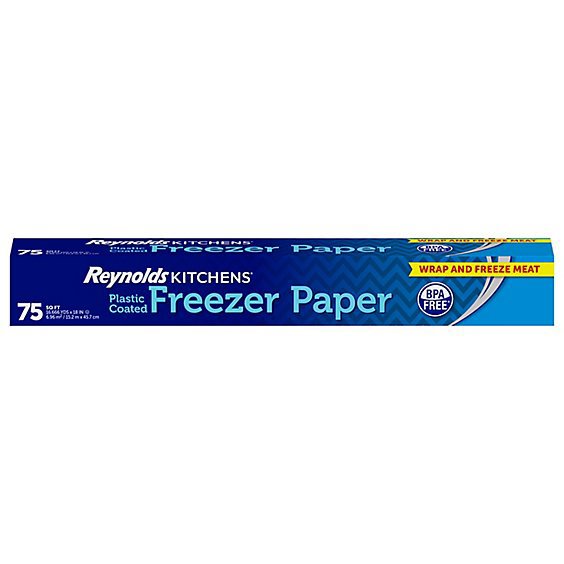
Reynolds Kitchens Freezer Paper, Plastic Coated, 75 sq ft
Butcher Paper Is Not Freezer Paper
Pink butcher paper is uncoated and breathes, unlike freezer paper which is plastic-coated to block air. Barbecue cooks wrap brisket and ribs in it partway through a smoke because it holds moisture in while still letting steam escape, so the bark stays firm instead of going soggy. One reviewer summed it up with the headline The only way to Brisket. The Reynolds Kitchens Pink Butcher Paper box says "PERFECT FOR SMOKERS" and has a slide cutter for easy dispensing.
Reynolds states its butcher paper is microwave-safe and safe in the oven up to 300°F, well below parchment's roughly 425°F, so butcher paper is not a parchment substitute for baking. Keep butcher paper away from the grill, open flames, and direct heat sources. It should also never go under a broiler, in a toaster oven, or in a halogen light oven.
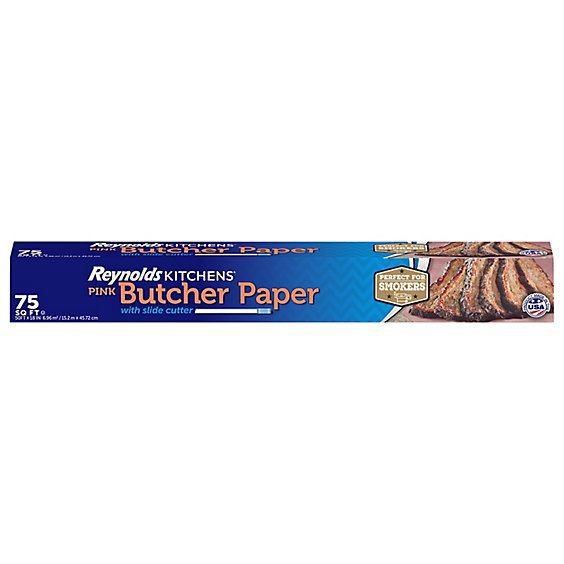
Reynolds Kitchens Pink Butcher Paper, 75 sq ft
Common Questions
Can I use wax paper in the oven?
No. Oven heat can melt the wax and produce smoke or flames. Choose parchment rated for your baking temperature.
What's the difference between parchment and wax paper?
Parchment uses heat-resistant silicone for baking. Paraffin-coated wax paper is for refrigerator and countertop work.
Is freezer-burned food safe to eat?
Yes, if it remained continuously frozen at 0°F, according to the USDA. Freezer burn dries food and damages its flavor and texture, but it does not make frozen food unsafe. Trim small dried patches. If the food thawed or became warm, judge it by the storage guidance for that food, not by the freezer burn.
Do I need heavy-duty foil, or is regular enough?
Regular foil is good enough for light wrapping, covering, and tenting. Choose heavy-duty foil for grilling, heavy food, freezer wrapping, or any job likely to puncture a thinner sheet.
Does the shiny side of foil go up or down?
Either direction works for plain foil. For non-stick foil, place the side identified on the package against the food.
Can I microwave plastic wrap?
Check the box for a microwave-safe label. If the label permits microwave use, keep the wrap off the food surface and vent one corner so steam can escape.
What's the difference between butcher paper and freezer paper?
Freezer paper has a plastic coating that blocks the air that dries meat out in the freezer. Pink butcher paper has no coating, letting steam escape during a barbecue smoke. This breathability means butcher paper cannot protect food during long freezer storage.
What should I use for wrapping a sandwich or covering leftovers?
Plastic wrap seals tightly against bowls and plates. If you prefer not to use plastic, regular aluminum foil also covers bowls well and shapes easily around sandwiches.