
Jarred marinara, tomato basil, Alfredo and pesto differ in more than flavor: the label serving, added sugars and sodium change from jar to jar. Here is how to compare them, followed by the history and techniques behind making pasta sauce at home.
Quick reference
| Tomato-Based | Simmer 35-45 minutes |
|---|---|
| Cream-Based | Cook 10-15 minutes |
| Oil-Based | Heat 3-5 minutes |
| Rest Time | 5-10 minutes |
| Too Acidic | Add 1/4 teaspoon baking soda or 1 tablespoon butter |
| Too Watery | Continue simmering uncovered or add 1-2 tablespoons tomato paste |
| Sauce Breaking | Lower heat immediately and add 1-2 tablespoons cold butter, whisking constantly |
| Bland Flavor | Add salt gradually, finish with fresh herbs, or incorporate 1 teaspoon anchovy paste |
| Bitter Taste | Add 1/2 teaspoon sugar or a grated carrot to naturally sweeten |
| Scorched Bottom | Transfer unburned portion to new pan, add splash of water or stock, avoid scraping bottom |
Shoppable recipes
Rather start from a proven recipe? These are ready to shop in one click.


Jarred pasta sauce: marinara, tomato basil, Alfredo and pesto
Red sauces: marinara and tomato basil
Marinara and tomato basil are both red tomato sauces; "tomato basil" tells you basil is the lead herb. The FDA has no standard of identity for tomato sauce, so "marinara" on a jar describes a style rather than a fixed recipe, and the ingredient list is what separates one red sauce from another. Tomatoes are naturally sweet, so every red sauce shows a few grams on the Total Sugars line; the "Includes Added Sugars" line underneath shows what the maker added. Red sauces are labeled per ½ cup. Signature SELECT, O Organics and Signature Reserve make marinara and tomato basil jars as an alternative to the name brands, and one shopper's review of Signature SELECT Marinara, headlined "Sauced", called it "not too sweet, seasoned well".
Pro tip: Shape Match: For which pasta suits each sauce, see our guide to pasta shapes and which sauce fits each one.
Alfredo and pesto jars
Jarred Alfredo is the American cream version: a cream and cheese sauce, unlike the butter, Parmigiano-Reggiano and pasta-water emulsion described under Creamy Alfredo below. Pesto blends basil, oil, cheese and nuts into a concentrated green sauce, and a single ¼ cup coats a large portion of pasta. Both are labeled per ¼ cup, half the red-sauce portion, which can make a cream or pesto jar look lighter than it is. Bertolli Alfredo with Aged Parmesan lists 90 calories and 390 mg of sodium per ¼ cup; at the ½ cup you might pour from a marinara jar, that comes to 180 calories and 780 mg. Double the ¼-cup figures to compare equal amounts.
Pro tip: Opened Jars: USDA FoodKeeper gives opened spaghetti sauce 4 days in the fridge and opened pesto 3 days. Brands print their own limits, so follow the jar, and go with the shorter window when they differ.
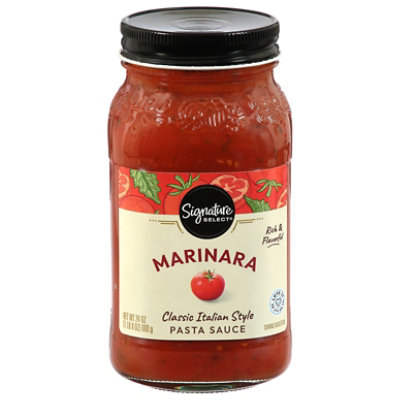
Ingredients Tomato Purée (Water, Tomato Paste), Diced Tomatoes (Tomatoes, Tomato Juice, Calcium Chloride, Citric Acid), Dehydrated Onions, Salt, Sugar, Canola Oil, Spices, Extra Virgin Olive Oil, Vinegar, Dehydrated Garlic.
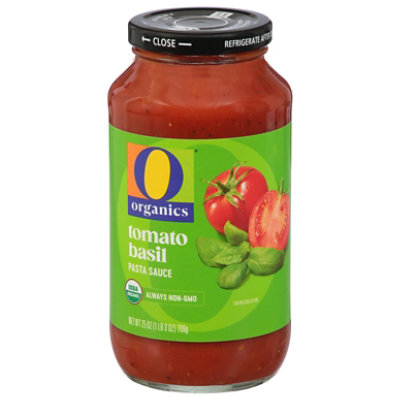
Ingredients Organic Diced Tomatoes in Juice, Water, Organic Tomato Paste, Organic Extra Virgin Olive Oil, Organic Basil, Sea Salt, Organic Dehydrated Onions, Organic Vinegar, Organic Garlic Powder, Organic Spices.
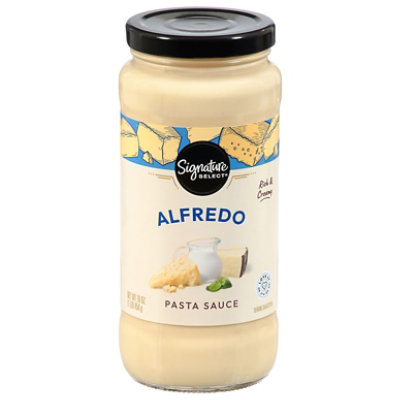
Ingredients Water, Soybean Oil and/or Canola Oil, Cream, Organic Corn Starch, Dairy Product Solids, Parmesan Cheese (Milk, Cheese Cultures, Salt, Enzymes), Modified Egg Yolk (Egg Yolks, Salt, Enzymes), White Wine, Salt, Whey Protein Concentrate, Natural Flavor, Romano Cheese (Cow's Milk, Cheese Cultures, Salt, Enzymes), Xanthan Gum, Yeast Extract, Black Pepper, Onion Powder.
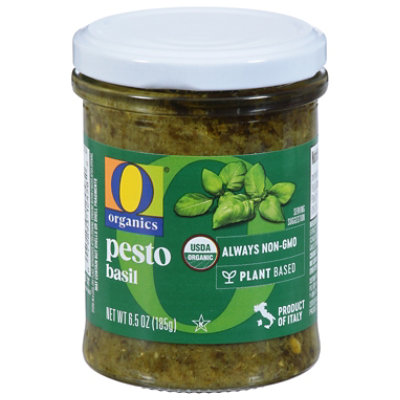
Ingredients Basil (Organic), Sunflower Oil (Organic), Cashew (Organic), Potato Flakes (Organic) (Potatoes (Organic), Rosemary Extract (Organic), Tofu (Organic) (Water, Soybeans (Organic), Magnesium Chloride [Coagulant]), Extra-Virgin Olive Oil (Organic), Pine Nuts (Organic), Salt, Cane Sugar (Organic), Garlic Powder (Organic), Citric Acid.
Pasta sauce origins & evolution
Beginnings
Pasta sauces have roots dating back to ancient Rome, where cooks combined garum (fermented fish sauce) with spices, herbs, and olive oil to dress early pasta forms. These primitive condiments bore little resemblance to modern sauces, but established the Mediterranean flavor profile that would influence subsequent developments. Early Italian cookbooks from the 13th century mention simple butter and cheese dressings for pasta.
Pro tip: Historical Note: Tomatoes, now central to Italian pasta sauces, weren't introduced to Europe until the 16th century following Spanish exploration of the Americas
Tomato Revolution
The introduction of tomatoes to Italy in the 1500s transformed pasta sauce forever, though tomatoes were initially considered poisonous and used only ornamentally. By the late 1700s, the first documented tomato sauce recipes appeared in Italian cookbooks. The iconic marinara sauce emerged from Naples in the early 19th century, named after mariners (marinai) who could quickly prepare this simple sauce during brief port stops.
Pro tip: Etymology Origins: The term 'marinara' doesn't indicate seafood content but refers to the sauce's naval origins—a quick, preservable sauce created by Italian sailors
Regional Diversity
Italy's regional pasta sauces developed according to local ingredients and cultural influences. Northern regions like Emilia-Romagna created rich ragù Bolognese with finely chopped meats and minimal tomato. Central regions emphasized pecorino cheese and guanciale in dishes like Amatriciana and Carbonara. Southern Italy and Sicily developed tomato-forward sauces with olive oil, garlic, and local herbs, reflecting the warmer climate's abundant produce.
Pro tip: Regional Distinction: Authentic Bolognese contains milk or cream added gradually during cooking—a technique that distinguishes it from southern Italian meat sauces
Italian-American Adaptations
Italian immigrants to America in the late 19th and early 20th centuries adapted traditional recipes based on available ingredients and new cultural influences. Italian-American sauces typically feature longer cooking times, more abundant meat, increased garlic, and additional herbs compared to their Italian counterparts. The iconic 'Sunday gravy'—a slow-cooked tomato sauce with multiple meats—became a cultural institution in Italian-American communities.
Pro tip: Cultural Evolution: Italian-American 'Sunday gravy' traditionally simmers for 4-6 hours and often contains meatballs, sausage, and braciole—a technique rarely found in traditional Italian cooking
Modern Innovations
Contemporary pasta sauces reflect global influences, health considerations, and culinary experimentation. Chef-driven innovations include incorporating international ingredients like miso, harissa, or coconut milk. Health-conscious adaptations feature vegetable-forward recipes, reduced cooking times to preserve nutrients, and alternatives to dairy and gluten. Commercial sauce production has grown from local family businesses into global operations; the jarred-sauce section above covers how to read those labels.
Pro tip: Contemporary Approach: Modern chefs often skip the traditional step of removing tomato seeds and skins, instead using immersion blenders for quick sauce preparation while retaining more nutrients
The fundamentals of a great pasta sauce
The Sauce Foundation
Every successful pasta sauce begins with a flavor base—the foundational ingredients that establish the sauce's character. For tomato sauces, this typically means soffritto (sautéed onions, carrots, and celery) in olive oil, while cream sauces begin with a roux (butter and flour). The quality of these initial ingredients disproportionately affects the final result, making this early stage critical for developing depth of flavor.
Pro tip: Foundation Principle: Cook your soffritto on medium-low heat until vegetables are translucent but not browned—about 7-10 minutes—to develop sweetness without bitterness
Tomato Selection & Treatment
For tomato-based sauces, the variety and processing method significantly impact flavor and texture. San Marzano tomatoes, with their sweet flavor and low seed count, are prized for sauce-making. Whole canned tomatoes generally provide better flavor than pre-crushed or pureed varieties. Fresh tomatoes require blanching and peeling when used for traditional sauces, though some modern recipes incorporate unpeeled tomatoes for rustic texture and added nutrition.
Pro tip: Acidity Control: Taste tomatoes before adjusting acidity—modern varieties are often less acidic than traditional ones, sometimes requiring a splash of red wine vinegar rather than sweetener
Aromatics & Herbs
Aromatics and herbs provide signature flavor profiles that distinguish various sauce traditions. Most Italian sauces begin with garlic, while French-influenced sauces often start with shallots. Herb timing is crucial: woody herbs like rosemary and thyme are added early, while delicate herbs like basil and parsley are incorporated just before serving to preserve their volatile oils. Fresh versus dried herbs dramatically alter flavor development and cooking times.
Pro tip: Critical Factor: When using dried herbs, crush them between your palms before adding to release essential oils and reduce cooking time by 5-7 minutes
Simmering Technique
Proper simmering develops flavor while achieving ideal consistency. Tomato-based sauces benefit from longer cooking (30-90 minutes) at a gentle simmer to concentrate flavors and break down cellular structures. Cream and butter sauces require constant attention at lower temperatures to prevent separation. The cooking vessel matters significantly—heavy-bottomed pots distribute heat evenly, while wider pans accelerate reduction and evaporation for more concentrated flavors.
Pro tip: Texture Indicator: A properly reduced tomato sauce leaves a clear path when you draw a wooden spoon across the bottom of the pan, with no immediate liquid rush to fill the space
Essential Pasta Sauce Varieties
Classic Marinara
Marinara is the quintessential tomato-based sauce, characterized by its bright flavor and relatively quick preparation. Unlike more complex sauces, authentic marinara contains just five key ingredients: olive oil, garlic, tomatoes, salt, and fresh basil. The sauce cooks for only 20-30 minutes, preserving the fresh tomato flavor while allowing the garlic to mellow. Regional variations may include the addition of dried oregano (Southern Italian) or a small amount of grated carrot for natural sweetness (Northern Italian).
Pro tip: Authentic Technique: For traditional marinara, crush whole tomatoes by hand rather than blending for a more rustic texture with small chunks remaining
Ragù Bolognese
Bolognese sauce, originally from Bologna in Emilia-Romagna, is a slow-cooked meat sauce with minimal tomato presence. The authentic recipe, registered with the Bologna Chamber of Commerce in 1982, contains finely chopped beef and pork, pancetta, soffritto, white wine, milk, and just a small amount of tomato concentrate. The sauce simmers for 3-4 hours, developing deep flavor as the meat breaks down and fat emulsifies. Traditional Bolognese is paired with fresh egg tagliatelle rather than spaghetti.
Pro tip: Regional Authenticity: In Bologna, Bolognese sauce is never served with spaghetti—the sauce's thick texture is designed to cling to the flat surface of tagliatelle
Creamy Alfredo
Contrary to common belief, authentic Alfredo sauce contains no cream or flour. Created by Alfredo di Lelio in Rome in 1914, the original consists solely of butter, Parmigiano-Reggiano, and pasta cooking water, creating a silky emulsion when tossed with fresh fettuccine. American adaptations introduced heavy cream for stability and easier preparation. The sauce depends entirely on technique: vigorously tossing hot pasta with room-temperature butter and freshly grated cheese creates the characteristic creamy texture without actual cream.
Pro tip: Emulsion Secret: For authentic Roman Alfredo, butter must be at room temperature and cheese freshly grated—pre-grated cheese contains anti-caking agents that prevent proper emulsification
Fresh Pesto Genovese
Pesto Genovese originates from Liguria in northwestern Italy, traditionally made by hand-grinding basil, garlic, pine nuts, Parmigiano-Reggiano, Pecorino Sardo, and olive oil in a marble mortar. The sauce remains uncooked, with heat from the pasta gently warming the ingredients. Authentic pesto uses young Genovese basil leaves, which have a more delicate flavor than mature plants. The sauce's bright green color comes from proper technique—immediately tossing with hot pasta and adding a splash of cooking water.
Pro tip: Color Preservation: Blanch basil leaves for 5-10 seconds and immediately shock in ice water before making pesto to preserve the vibrant green color
Amatriciana & Carbonara
These two Roman classics exemplify minimal-ingredient pasta sauces. Amatriciana combines guanciale (cured pork jowl), tomatoes, Pecorino Romano, and chili flakes. Carbonara contains just guanciale, eggs, Pecorino Romano, and black pepper—no cream or garlic. Both rely on precise technique over complex ingredients. The rendered fat from guanciale provides richness, while cooking pasta to the exact al dente stage ensures it can finish cooking in the sauce, absorbing flavors while releasing starch that creates the characteristic silky texture.
Pro tip: Temperature Control: For perfect carbonara, remove the pan from heat before adding egg mixture and use residual heat to gently cook eggs without scrambling—never return to direct heat
Frequently asked questions
What is the difference between marinara and pasta sauce?
There is no legal difference, since marinara has no federal definition. "Pasta sauce" covers the whole category, while marinara usually means a simple recipe built from tomatoes, garlic and herbs. The ingredient panel shows which oils, vegetables and seasonings each brand uses.
Why does Alfredo sauce have a smaller serving size?
The FDA puts pasta sauces into two portion groups. Spaghetti sauce is a major main entree sauce (125 g, about ½ cup on the jar), while Alfredo and pesto are minor main entree sauces set at ¼ cup, so their calories, fat and sodium cover half as much sauce.
How long is pasta sauce good after opening?
FoodKeeper advises finishing refrigerated spaghetti sauce within 4 days and pesto within 3. Jar labels range from 3 to 7 days after opening, so follow your jar, or choose the shorter limit when in doubt.