


What Do Extra Virgin, Pure, and Light Mean On an Olive Oil Bottle?
Extra virgin olive oil tastes like olives. Pure and extra light are milder, which makes them useful when you want the oil to stay in the background. All three are olive oil, and the right bottle depends mostly on what you are cooking and how much olive flavor you want.
Extra virgin suits dressings, dipping bread, marinades, and food finished with a pour of oil before serving. It also works for sautéing and roasting. Pure is a good fit for the same everyday cooking when you want less olive flavor, while extra light is the most neutral option for frying, cakes, and quick breads.
Extra Virgin: When You Want to Taste the Oil
Extra virgin olive oil is made by crushing and pressing olives without refining the oil afterward. This preserves more of the fruit's original taste and aroma, although the result varies from bottle to bottle. One may taste grassy or peppery, while another is fruity or mild.
The grade has technical requirements too. Under the U.S. federal standard, extra virgin olive oil can contain no more than 0.8 grams of free fatty acid per 100 grams. A trained panel also checks for flavor defects and confirms that the oil has olive fruitiness. Those tests help show how the fruit and oil were handled, but the difference a shopper notices first is taste.
Use extra virgin where that taste belongs in the food. It can go into salad dressing or a marinade, sit beside bread for dipping, or finish vegetables, pasta, and other cooked dishes. One review of the Signature SELECT extra virgin, headed "Great EVOO!," calls it "perfect for dressings and marinades."
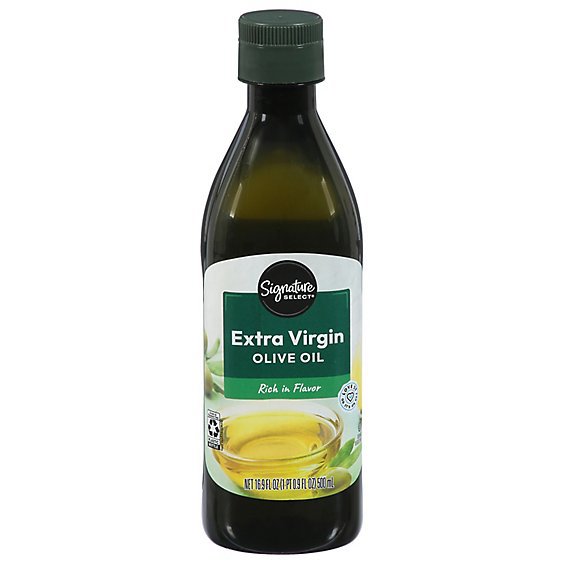
Signature SELECT Extra Virgin Olive Oil
O Organics Extra Virgin Olive Oil meets the same grade requirements. Organic certification concerns how the olives were grown, while extra virgin describes the finished oil's grade. Neither label tells you exactly how strong or peppery the oil will taste.
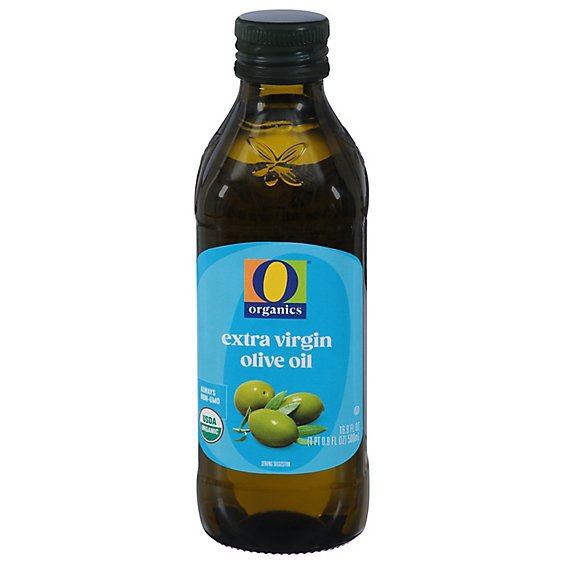
O Organics Extra Virgin Olive Oil
Pure Olive Oil: A Milder Option for Everyday Cooking
“Pure olive oil” is the traditional commercial name for refined olive oil blended with some virgin oil for taste and color. Refining removes much of the original flavor, aroma, and pigment, producing an oil that is paler and milder than extra virgin. The small amount of virgin oil added afterward gives the blend some olive character.
That makes pure olive oil easy to use in everyday cooking. It suits sautéing and roasting when you do not want the oil's flavor to stand out, and its higher heat tolerance also makes it useful for searing or frying. In a tomato sauce with garlic and herbs, or a pan of strongly seasoned vegetables, the difference between pure and extra virgin is likely to matter more for taste than for the basic cooking method.
Signature SELECT Pure Olive Oil is Safeway's store-brand example. The name does not mean that it is a more concentrated form of extra virgin. It is a different style of olive oil made for a milder result.
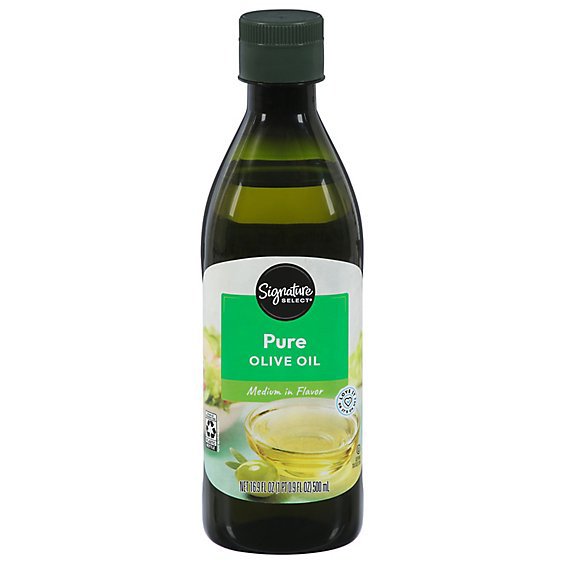
Signature SELECT Pure Olive Oil
Extra Light Means Light in Flavor
Extra light olive oil does not contain less fat or fewer calories. A tablespoon has roughly the same 120 calories as a tablespoon of extra virgin olive oil. “Light” describes its pale color and neutral taste.
The Signature SELECT bottle makes that clear in its full name: Extra Light In Flavor Olive Oil. It works well in cakes and quick breads that call for a neutral oil, since it will not add a strong olive taste to the batter. The same mildness can be useful for frying, searing, and other dishes where the ingredients should supply the dominant flavors. One reviewer writes that it "does not add a flavor to my cooking, and it does not burn."
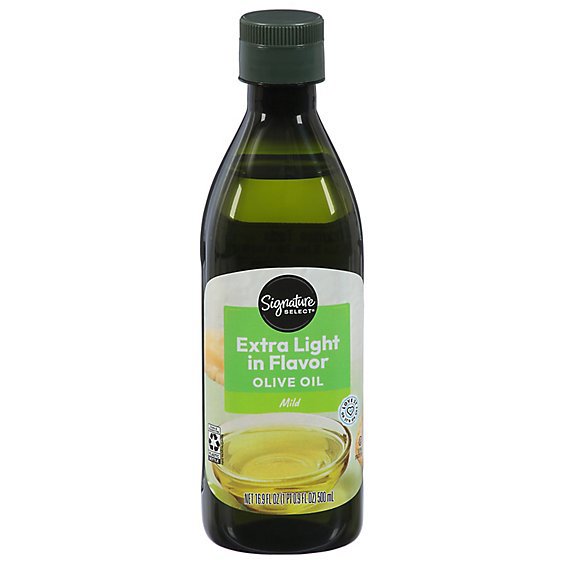
Signature SELECT Extra Light In Flavor Olive Oil
Can You Cook with Extra Virgin Olive Oil?
Yes. Extra virgin olive oil can be used for sautéing, roasting, and moderate frying. Its smoke point varies with the individual oil, including its free fatty acid level and age, so there is no single temperature that applies to every bottle.
Smoke point does not tell the whole story about cooking performance. In a 2018 study, researchers heated ten common cooking oils at sustained high temperatures and measured the compounds that formed as the oils broke down. Extra virgin olive oil produced the lowest amount among the oils tested, even though it did not have the highest smoke point. The researchers attributed that performance to antioxidant compounds that help protect unrefined oil as it heats.
The study was about how the oils performed during cooking. It did not test health outcomes. Its result supports using extra virgin in a hot pan, but it does not make extra virgin the automatic choice for every recipe.
Pure and extra light remain useful when you want a neutral taste, need several cups of oil for frying, or plan to cook at high heat for a sustained period. Cost can matter as well when a recipe uses most of the bottle. One review of the Signature SELECT extra virgin, headed "A New Family Favorite to Cook With," says the household has "given up cooking spray" for it, which shows how some shoppers use extra virgin as an everyday cooking oil.
Choosing a Bottle for the Recipe
What you are making | Suitable olive oil | What decides it |
|---|---|---|
Dressing, dipping bread, or finishing a dish | Extra virgin | You want to taste the olive oil |
Sautéed food or roasted vegetables | Extra virgin or pure | Choose the stronger or milder flavor |
Searing or frying | Pure or extra light. Extra virgin can also work within a suitable heat range | Consider flavor, heat, volume, and cost |
Cakes and quick breads | Extra light in flavor | The recipe needs a neutral oil |
These are uses, not strict rules. An olive oil cake needs the flavor of extra virgin, while a strongly seasoned roast may work equally well with extra virgin or pure. For most recipes, the better question is not whether one grade is superior, but whether you want to taste the oil in the finished food.
Reading the Label at Safeway
The name on the bottle gives you the quickest indication of flavor. Extra virgin is unrefined and keeps more olive character. Pure is a milder blend of refined and virgin olive oils. Extra light in flavor is the most neutral of the three.
A bottle labeled plain “olive oil,” without another grade name, is the same general refined-and-virgin blend sold commercially as pure olive oil. Organic certification is separate. It describes farming practices rather than flavor, processing, or grade.
Safeway's product data includes Signature SELECT Extra Virgin, Pure, and Extra Light In Flavor olive oils, along with O Organics Extra Virgin Olive Oil. Bottle sizes and availability vary by store.
Common Questions
Does light olive oil have fewer calories?
No. Light describes flavor and color. A tablespoon of extra light olive oil has roughly the same 120 calories as a tablespoon of extra virgin.
Can you cook with extra virgin olive oil?
Yes. Extra virgin works for sautéing, roasting, and moderate frying. Pure or extra light may fit better when you want no noticeable olive flavor, need a large amount of oil, or plan to use sustained high heat.
What is pure olive oil?
Pure olive oil is refined olive oil blended with some virgin oil for flavor and color. It is milder and more heat-tolerant than extra virgin, making it useful for sautéing, roasting, searing, and frying.
Is extra virgin always the best olive oil?
It depends on the recipe. Extra virgin is a good fit when you want olive flavor. Pure and extra light work well when the oil should taste milder or neutral.
Is organic olive oil a different grade?
No. Organic certification concerns how the olives were grown. The oil receives its extra virgin or other grade separately, using the same grading measures as a conventional oil.
Which olive oil is best for baking?
Extra light in flavor suits cakes and quick breads that call for neutral oil. Extra virgin is the better fit when olive flavor is part of the recipe, as it is in an olive oil cake.