Bestsellers for Cooking Sauces

Thai curry paste is a wet blend of chilies and fresh aromatics, curry powder is a dry turmeric-based spice blend, and garam masala is a dry Indian blend of warm spices such as cardamom, cinnamon, cloves, and black pepper. While these three seasonings are found near each other in grocery aisles, they have completely different cooking purposes.
Thai curry paste provides a moist, fibrous foundation of fresh herbs and chilies that require hot fat to soften and bloom. Curry powder delivers an earthy seasoning that comes from ground seeds and roots. Garam masala is a fragrant finishing blend whose aroma fades under prolonged heat. You therefore can’t simply swap one for another in a recipe.
The cooking order differs too. You should fry Thai curry paste first, while garam masala usually should be added near the end. Curry powder is used in between, being warmed in fat before adding to simmering liquids. Frying the wet paste in fat at the start cooks out water and releases fat-soluble flavors, while garam masala stirred in at the end helps keep its warm aroma.
A wet paste holds crushed plant fibers and water that must cook down, while a dry powder contains shelf-stable ground spices ready to season a sauce. A jar of garam masala holds delicate aromatics meant to give your food a final burst of fragrance right before serving.
What Red, Green, and Yellow Thai Curry Pastes Contain
Thai curry paste combines chilies with ingredients such as garlic, shallot, lemongrass, galangal, and lime peel. The specific list depends on the color and the maker. Galangal is a relative of ginger, but its aroma is sharper and similar to camphor. Fresh lemongrass brings a clean herbal scent, while garlic and shallots provide savory depth.
When inspecting paste jars on the shelf, you should look at the ingredient panel. Ingredients appear in descending order by weight, so the first items tell you what ingredients predominantly make up the mix.
Signature Select, Safeway's own brand, lists its red paste as "Water, Red Chili Pepper, Garlic, Shallot, Canola Oil, Lemongrass, Sugar, Salt, Galangal, Concentrated Lemon Juice" followed by vegetable broth concentrate, thickeners, lime leaves, color, spice, and preservative. Its green paste starts with "Water, Garlic, Green Chili Pepper, Lemongrass, Galangal" before salt, sugar, spices, oil, lemon juice, lime leaves, color, thickener, and preservative.
The descriptions of ‘red’ and ‘green’ refer to the chilies named on these labels. Red paste uses red chili pepper, while green paste uses green chili pepper. Both pastes share a base of water, garlic, lemongrass, and galangal, but the chili used determines color and pepper flavor.

Ingredients Water, Red Chili Pepper, Garlic, Shallot, Canola Oil, Lemongrass, Sugar, Salt, Galangal, Concentrated Lemon Juice, Vegetable Broth Concentrate [Vegetable Juices (Tomato, Mushroom, Onion, Carrot, Celery), Sugar, Maltodextrin, Salt, Autolyzed Yeast Extract, Natural Flavor], Polysorbate 80, Xanthan Gum, Lime Leaves, Paprika Extract (Color), Spice, Potassium Sorbate (Preservative).

Ingredients Water, Garlic, Green Chili Pepper, Lemongrass, Galangal, Salt, Sugar, Spices, Canola Oil, Concentrated Lemon Juice, Lime Leaves, Turmeric (Color), Xanthan Gum, Potassium Sorbate (Preservative).
Thai Kitchen's red formula is shorter, reading: "Spices (Including Red Chili Pepper), Garlic, Lemongrass, Salt, Shallot, Coriander Root, Makrut Lime Peel." Here, coriander root and makrut lime peel supply traditional aromatics without added water or vegetable broth concentrate.
Thai Kitchen calls its red paste "Spicier than its cousin, green curry paste." Heat varies by maker, so you should read the heat label on the jar. Color alone does not guarantee spice level.
Both brands sell a green paste as well, so you can compare red and green pastes from the same maker.
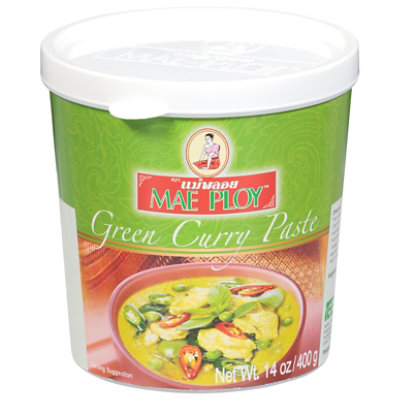
Ingredients Green Chili, Lemongrass, Garlic, Salt, Galangal, Shrimp Paste (Shrimp, Salt), Kaffir Lime Peel, Coriander Seed, Pepper, Cumin, Turmeric.

Ingredients Green Chili Pepper, Garlic, Lemongrass, Spices, Salt, Shallot & Lime Peel.
Yellow curry paste has a distinct flavor profile. The Mae Ploy yellow label lists dried red chili along with curry powder, cumin, cinnamon, turmeric, cardamom, and nutmeg, giving it a different dry-spice mix. Turmeric gives yellow paste its color.
Dietary labels also warrant inspection. Under FDA rules (21 CFR 101.91), foods labeled "gluten-free" must contain less than 20 parts per million (ppm) of gluten. That standard gives shoppers with celiac disease or gluten sensitivity a reliable benchmark. Thai Kitchen labels its red paste gluten-free, however other brands may not be, so read the ingredient panel. When a jar lacks that claim, scan the allergen statement and the ingredient list for wheat flour, modified wheat starch, or soy sauce brewed with wheat.
Fry Curry Paste Before Adding Coconut Milk
Cooking a Thai curry starts with proper heat management. Heat the paste in a little oil until it smells fragrant, then add the coconut milk. You can also skim the thick cream from the top of the can and cook it until the oil separates, then fry the paste in that fat.
This second method uses the natural separation inside the can. Coconut oil solidifies at about 76°F (24°C), so in an unshaken can the fat rises and sets as a thick cream. Simmering that cream evaporates its water and leaves the oil. As the cream simmers, water boils off as steam, leaving clear coconut oil pooled across the pan. That hot fat is ready to fry your paste.
Many aroma compounds in chilies, garlic, and lemongrass dissolve in fat, so frying paste in oil or separated coconut fat builds more flavor than simmering it in liquid alone. Wet paste contains moisture from fresh aromatics and added water. As long as water remains in the pan, the temperature stays near boiling, steaming the ingredients rather than frying them. Once the moisture evaporates, the paste will cook directly in hot fat, softening the fibrous lemongrass and galangal while releasing fat-soluble flavor compounds.
If you pour raw paste straight into cold coconut milk, the aromatics remain raw and taste harsh. Frying first mellows that sharpness and distributes flavor evenly through the sauce.
Tested recipe ratios keep flavors balanced. McCormick's Thai Kitchen recipe uses "1 tablespoon Thai Kitchen® Gluten Free Red Curry Paste" with "1 can (13.66 ounces) Thai Kitchen® Unsweetened Coconut Milk." Its first step says to "Add curry paste; stir fry 1 to 1 1/2 minutes or until fragrant." The coconut milk is added after this.
That is the can the recipe uses, with a light coconut milk giving a thinner sauce.
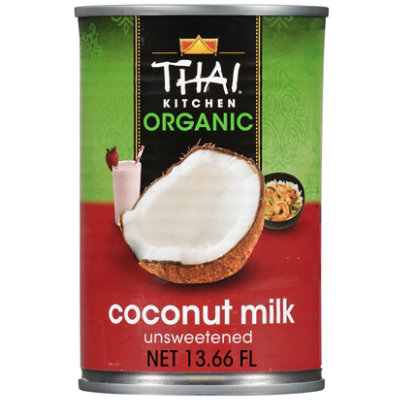
Ingredients Organic Coconut, Water & Organic Guar Gum.

Ingredients Purified Water, Coconut, Guar Gum, Sucrose Esters of Fatty Acids, Sodium Carboxymethyl Cellulose.
Mae Ploy's website gives "a tablespoon or two" per can. That range lets you adjust the dish to your taste. One tablespoon gives a milder sauce where coconut milk leads, while two tablespoons produce a deeper color and stronger spice kick.
Check the allergen and diet lines before choosing a paste. Mae Ploy red lists "Shrimp Paste (Shrimp, Salt)," and warns that it may contain traces of fish.

Signature Select red and green curry paste each carry a may-contain line for fish and shrimp. Thai Kitchen red and green curry pastes are tagged vegan, and neither ingredient list names shrimp or fish.
Under the Food Allergen Labeling and Consumer Protection Act (FALCPA), enforced by the FDA, crustacean shellfish is a major food allergen, and the species, such as shrimp, must be named in the ingredient list or a "Contains" statement. Pastes made with shrimp paste are not suitable for people with shellfish allergies or vegan diets. FALCPA does not address "may contain" advisory warnings, so they are voluntary.
If you see the line "Contains: shrimp," shrimp paste is an intentional ingredient. A voluntary "may contain" line means the paste shares a facility with seafood. For shellfish allergies or vegan cooking, choose a paste labeled vegan to avoid ambiguity.
Curry Powder Is a Dry Blend, Not a Paste Substitute
Curry powder is a dry spice mixture adapted by British settlers in India from Indian home blends, according to Encyclopaedia Britannica. Turmeric supplies its familiar yellow color, while coriander and cumin commonly form part of the blend.
Because each brand creates its own recipe, heat and flavor vary widely. McCormick lists "Coriander, Fenugreek, Turmeric, Cumin, Black Pepper, Bay Leaves, Celery Seed, Nutmeg, Clove, Onion, Ginger, and Red Pepper." Whether a curry powder is spicy depends on the pepper in its blend, so read the list. Blends with black pepper offer gentle warmth, while heavy chili brings sharp heat.

McCormick's Hot Madras blend is the spicier version of the same powder.

O Organics, another Safeway own brand, lists "Coriander (Organic), Turmeric (Organic), Cumin (Organic), Fenugreek (Organic), Salt, Cayenne (Organic), Ginger (Organic), Cinnamon (Organic), Cardamon (Organic), Cloves (Organic), Nutmeg (Organic)." This blend includes organic cayenne for heat, along with salt, cinnamon, cardamon, and cloves.

There is no conversion between curry powder and Thai curry paste because the powder does not have the same water, fresh aromatics, and texture as the paste. Dry powder cannot replicate crushed lemongrass, galangal, shallots, or fresh chili moisture. Stirring curry powder into coconut milk yields an earthy sauce lacking the bright citrus notes of Thai paste.
Cooking with curry powder requires a different approach in the pan. Cooks often bloom curry powder by warming it in oil, butter, or ghee for 30 to 60 seconds before adding liquids. Ground spices scorch easily, so use gentle heat.
Warming the powder in fat dissolves its essential oils and spreads flavor through the dish. Keep the heat low and stir constantly. The spices should toast and smell fragrant without burning. If burned, spices turn bitter and will likely ruin the sauce. Once fragrant, add your liquids or vegetables to stop the dry cooking.
Japanese curry roux differs from both. Brands like S&B Foods sell solid roux blocks made with wheat flour, fats, curry powder, and seasonings. Melted into simmering broth, the roux thickens it into a gravy.
These roux blocks come packaged as solid bars divided into cubes. While curry powder remains loose and Thai paste forms a wet base, Japanese curry roux acts as a thickener. The wheat flour and fat melt into simmering broth, turning it into a thick, glossy stew.
Add Garam Masala Near the End and Refrigerate Open Paste
Garam masala is a dry Indian spice blend built around warm aromas. Britannica describes the classic northern Indian mixture as cardamom seeds, cinnamon, cloves, and black pepper, with some versions adding coriander and cumin.
It does not contain the turmeric that makes many curry powders yellow. That absence gives garam masala a deeper brown color and a sweet, fragrant warmth, unlike the earthy base of curry powder.
Frontier Co-op says garam masala is "often added towards the end of cooking to preserve its flavor and aroma," and McCormick similarly directs cooks to stir its blend in "at the finish." Aroma compounds in cinnamon and cloves, such as cinnamaldehyde and eugenol, are volatile and fade during long cooking.
When spices simmer in an open pot, steam carries volatile compounds into the air. If you add garam masala early, the cinnamaldehyde and eugenol escape before serving. Stirring the blend in at the finish preserves those aromas in the dish.
The O Organics jar lists organic spices "Including *Coriander, *Cumin, *Black Pepper, *Cardamom, and *Cinnamon." McCormick Gourmet lists "Spices (Including Coriander, Black Pepper, Cumin, Cardamom, and Cinnamon)." Both formulas focus on sweet, peppery aromatics without turmeric.

Proper storage protects each product, with wet pastes and dry spices following different guidelines.
You should refrigerate curry paste after opening. Every paste label here says to. Because curry paste contains fresh moisture, an opened container left at room temperature spoils quickly.
USDA FoodKeeper lists five days in the refrigerator after opening for Thai red curry paste, while Mae Ploy says its red paste lasts "several weeks" when properly stored. Its yellow paste maintains quality for "several months." Those are different sources and different claims, so follow the label on your container.
A 4.5 oz jar of Signature Select or a 14 oz tub of Mae Ploy holds multiple servings. If you cook curry only occasionally, finishing a container within five days is difficult.
For this reason, cooks who use paste only occasionally sometimes freeze it in ice cube trays, roughly one tablespoon per well, then keep the cubes in an airtight freezer bag for about three to six months. This is a common kitchen practice, not a USDA FoodKeeper timeline.
To freeze paste at home, spoon single tablespoons into clean ice cube compartments. Once frozen solid, transfer the cubes to an airtight freezer bag. When cooking, drop a frozen cube directly into your warm pan of oil or separated coconut fat.
Curry powder and garam masala stay with other ground spices. Our spice-storage guide explains how to keep dry blends and tell when their aroma has faded.
McCormick gives ground spices about 2 to 4 years. They lose potency rather than becoming unsafe, so if a pinch rubbed between your fingers smells faint, replace the jar. Grinding exposes spice oils to air, causing flavor to dissipate.
Common Questions About Curry Paste and Dry Spice Blends
What is the difference between curry paste and curry powder?
Thai curry paste is a wet blend of chilies and fresh aromatics such as garlic, lemongrass, galangal, and lime peel. Fry it in oil or separated coconut cream before adding coconut milk. Curry powder is a dry mixture that uses turmeric, coriander, and cumin, stirred in as a ground spice. Curry powder lacks the moisture and fresh aromatics of paste, so neither substitutes for the other.
What is the difference between red and green curry paste?
Red paste labels name red chili, while green paste labels name green chili. Other ingredients differ by product, so read the full label for aromatics, heat descriptions, and allergens. Both pastes share garlic, lemongrass, and galangal, but heat depends on the maker rather than color. Check the heat label on the jar.
How much curry paste do you use per can of coconut milk?
Thai Kitchen uses one tablespoon with a 13.66-ounce can of coconut milk. Mae Ploy's website recommends "a tablespoon or two" per can. Start with one tablespoon for a milder dish, or use two tablespoons if you prefer deeper color and stronger heat.
Is garam masala the same as curry powder?
No. Garam masala does not use turmeric in the sourced blends here and is commonly stirred in near the end to preserve its flavor and aroma. Curry powder relies on turmeric for its yellow color and earthy base, and cooks bloom it in fat or simmer it earlier in cooking.
Does Thai curry paste contain shrimp?
Some do. Mae Ploy red paste names shrimp paste, while Signature Select carries a may-contain warning for shrimp and fish. Thai Kitchen red and green pastes are tagged vegan, with neither list naming shrimp or fish. Under FDA FALCPA rules, crustacean shellfish must be declared in the ingredient list or a "Contains" statement. Pastes with shrimp paste do not suit vegan diets or shellfish allergies.
How long does curry paste last once opened?
Keep opened curry paste in the refrigerator. USDA FoodKeeper lists five days for opened Thai red curry paste, while Mae Ploy gives "several weeks" for red and "several months" for yellow. Cooks who use paste occasionally freeze tablespoon portions in ice cube trays for about three to six months.
Why fry Thai curry paste in oil or coconut cream first?
Many aroma compounds in chilies, garlic, and lemongrass dissolve in fat. Frying evaporates the paste's water and carries those flavor compounds into the hot oil, spreading flavor through the sauce. Simmering paste in liquid without frying leaves the aromatics raw and tasting harsh.
Why does canned coconut milk separate into liquid and solid layers?
Coconut oil solidifies at about 76°F (24°C), so the fat rises and sets as a thick cream layer in an unshaken can. Simmering that scooped cream evaporates its water, leaving pure coconut oil to fry your curry paste.
How does Japanese curry roux differ from curry powder and Thai paste?
Japanese curry uses solid roux blocks made with wheat flour, fats, curry powder, and seasonings, sold by brands like S&B Foods. Melted into simmering broth, the roux thickens it into a gravy, unlike loose powder or wet Thai paste.
Are curry pastes and curry powders gluten-free?
Under FDA rules (21 CFR 101.91), foods labeled "gluten-free" must contain less than 20 ppm of gluten. Thai Kitchen labels its red paste gluten-free. For other pastes and powders, check the ingredient panel for wheat.