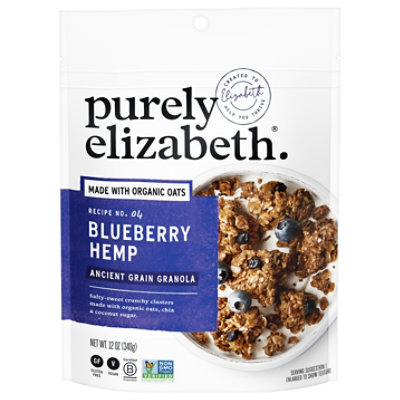
Bestsellers for Granola & Muesli


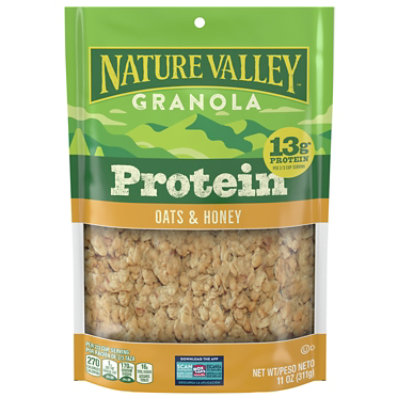
When looking in the cereal aisle, the shelves may all look the same. Boxes are labeled with phrases such as whole grains, fiber, and an easy breakfast. However, when making cereal, all the differences between these foods are apparent. While granola is baked into clusters, muesli is a loose mix that is not baked or toasted. Flake cereal is made with grain that is cooked, pressed thin and toasted.
These structural differences influence how each cereal absorbs milk, its texture, and the nutrition in each serving. Because these grains are processed differently, their Nutrition Facts panels also measure different volumes.
Open Nature Nut Honey Granola lists 240 calories and 11 g added sugars for 0.5 cup, while Bob's Red Mill Old Country Style Muesli lists 140 calories and 0 g added sugars for 0.25 cup. Half a cup of granola may be a small portion, while a quarter cup of muesli is only a snack. This shows how nutrition facts do not display the same amount between different cereals, and therefore eating a full serving can mean consuming an unknown amount of grain, calories, and sugar.
What Granola Is Made Of
Granola is cereal made from rolled oats mixed with ingredients such as sweeteners, dried fruit, nuts and oil. It is then baked. The US Environmental Protection Agency outlines the process, with the mixture first being spread in an even layer in an oven and baked, and then "the toasted layer is then broken into chunks."
The baked sweetener layer creates clusters. When oats and nuts are tossed with liquid sweeteners and oil, every flake gets coated. As the mixture bakes, moisture evaporates and the sugars concentrate. Once the baking sheet cools, these sugars harden into a glaze that binds the oats, seeds, and nuts together. When the sheet is broken apart, there are crunchy clusters rather than loose grain.
Open Nature Nut Honey Granola starts its ingredient list with "Whole Rolled Oats, Cane Sugar, Whole Rolled Wheat, Expeller Pressed Canola Oil." Open Nature is one of Safeway's own brands. Because ingredients are listed in descending order by weight, listing cane sugar and canola oil among the first four items shows that the binding glaze makes up a substantial part of the recipe. The oil toasts the oats, while the sugar locks the wheat and oats into crunchy clusters.
O Organics, also one of Safeway's own brands, uses rolled oats and crisp brown rice. Its label reads "Organic Whole Rolled Oats, Organic Cane Sugar, Organic Crisp Brown Rice" and later lists canola oil, molasses and honey. The puffed rice adds lightness to the clusters, while the cane sugar, molasses, and honey are used for the coating. The serving is 0.67 cup, with 290 calories, 5 g fiber, 12 g total sugars and 11 g added sugars. Of those 12 grams of total sugar, 11 grams are added sugars, meaning only 1 gram occurs naturally in the oats and brown rice.

What Muesli Is and How to Eat It
Muesli is a loose mixture of grains, dried fruit, nuts and seeds. It is not baked or glazed, so there is no baked sweetener layer holding it in clusters. The oats in muesli are steamed and flattened when they are rolled, and nothing is baked after that.
Commercial rolled oats are heat-treated with steam before they are flattened, which inactivates enzymes in the grain that would otherwise turn the oat fats rancid. This is why muesli made with rolled oats is sold ready to eat without further cooking. Whole oats contain natural enzymes that break down fats once rolled. Steaming halts this breakdown, stabilizing the natural oils so the oats remain safe and digestible straight from the package.
Bob's Red Mill describes its Old Country Style Muesli as "a blend of whole grain wheat, rolled oats, raisins, almonds and walnuts." The full ingredient list adds dates, sunflower seeds, whole grain rye, barley, whole grain triticale and flaxseed. It does not list sugar, honey, syrup or oil. The sweetness comes directly from the raisins and dates, and the only fats present are the natural oils inside the seeds, nuts, and whole grains.

Bob's Red Mill also makes a fruit and seed muesli, and Alpen's Swiss-style box is another unbaked option.
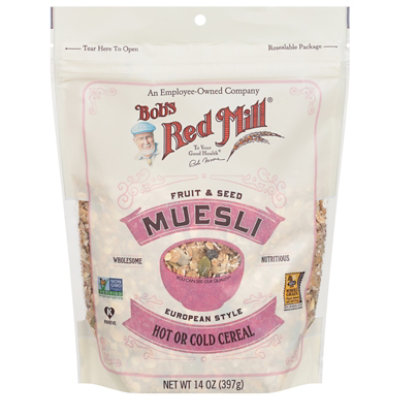
Ingredients Whole Grain Wheat, Whole Grain Rye, Barley, Whole Grain Oats, Whole Grain Triticale, Sliced Almonds, Sunflower Seeds, Raisins (Raisins, Sunflower Oil), Sorghum, Pumpkin Seeds, Cranberries (Cranberries, Sugar, Sunflower Oil), Blueberries, Red Tart Cherries (Cherries, Sugar, Sunflower Oil), Coconut Flakes, Hemp Seed, Flaxseed Meal.
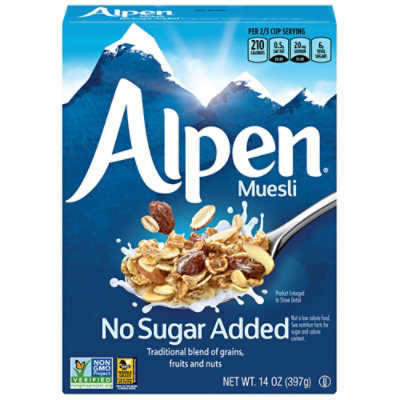
Ingredients Whole Grain Oats, Whole Grain Wheat, Raisins (coated with expeller pressed sunflower oil), Almonds, Hazelnuts
You can pour milk over muesli and eat it cold. Eaten immediately, the grains are firm and chewy, while the seeds and nuts stay crisp.
For a softer bowl, the maker says to mix 0.25 cup muesli with 0.5 cup yogurt, milk or fruit juice and leave it for 5 to 10 minutes. During this time, the grains and dried fruit soften in the liquid. The dry rolled oats drink up the liquid, while the raisins and dates absorb moisture, plumping up and sweetening the bowl.
An overnight version can be placed in the refrigerator with yogurt and grated apple, giving the grains and fruit more time to soften. Dense whole grains like rye, barley, and triticale take longer to hydrate than standard rolled oats, producing a thick, creamy texture after a cold soak.
Food safety matters whenever you soak grains. North Carolina Cooperative Extension says oat mixtures left overnight should remain refrigerated.
Refrigeration matters when grains soak in liquid. North Carolina Cooperative Extension notes that Bacillus cereus, a bacterium often found in grain products, can cause vomiting, diarrhea and stomach pains. Keeping the soaking mixture refrigerated helps limit its growth as bacterial spores survive dry storage on grains. Adding liquid creates an environment where bacteria can multiply, and at room temperature they can produce toxins that heat cannot destroy. Keeping the mixture chilled in the refrigerator allows the grains to hydrate safely.
Muesli can also be cooked like oatmeal. The product directions use water on the stovetop, or water or milk in the microwave. The grains, dried fruit, nuts and seeds all go into the hot bowl. Simmering muesli softens the hearty grains into a warm porridge, while the dates and raisins release their natural sugars into the cooking liquid.
How Flake Cereal Is Made
Flake cereal goes through cooking, pressing and toasting. The Environmental Protection Agency says grain pieces are cooked, dried and tempered, then large metal rolls press them into thin flakes before hot air toasts them. Nature's Path Heritage Flakes uses flours and grains including wheat, oats, spelt, barley, millet and quinoa. Combining ancient grains like spelt and quinoa with wheat and oats gives the flakes an earthy flavor and a sturdy structure that resists getting soggy in milk.

EPA's section on cereal breakfast food (AP-42, 9.9.2) adds detail on how flakes are made. Corn, wheat or rice grits are mixed with a flavor solution of sugar, malt, salt and water, then steam-cooked in rotating batch cookers until each piece turns from hard and chalky white to soft, translucent and golden brown. The grits are dried at temperatures below 250°F and tempered in bins so the moisture evens out. The flakes are toasted in a hot air stream rather than laid on a flat baking surface.
Each step is important. Pressure cooking gelatinizes starches and lets flavor syrup soak into every grit. Drying below 250°F removes moisture without scorching, while tempering lets moisture equalize so grits flatten smoothly between rollers without shattering. Toasting in a hot air stream suspends each flake as it cooks, blistering and crisping the surface.
Signature SELECT, a Safeway own brand, describes its Corn Flakes as "Toasted flakes of corn cereal." Its first four ingredients are milled corn, sugar, salt and molasses. The milled corn grits are cooked with the syrup, dried, flattened, and toasted into crisp flakes.

Granola and muesli commonly begin with rolled oats. The differences among steel-cut, rolled and instant oats come from how much the oat groat has been cut, steamed or flattened.
Read the Serving Size Before Comparing Labels
The six labels use servings from 0.25 cup to 1.5 cups. That means each row describes a different amount of food, so the serving line needs to be taken into account before any comparison of calories, fiber or sugars.
A shopper seeing 140 calories on one box and 150 calories on another might assume they offer similar portions. When looking at the serving line, though, you will find that the 140-calorie cereal is measured as a 0.25 cup, while the 150-calorie cereal fills 1.5 cups. This is a six-fold difference in volume.
Serving sizes on Nutrition Facts panels start from weight-based Reference Amounts Customarily Consumed (RACC) set in 21 CFR 101.12. For ready-to-eat cereals, the reference amount depends on how much a cup of the cereal weighs:
Cereals weighing less than 20 grams per cup have a reference amount of 15 grams.
Cereals weighing 20 grams or more but less than 43 grams per cup have a reference amount of 40 grams.
Cereals weighing 43 grams or more per cup, a group that includes dense granola and muesli, have a reference amount of 60 grams.
Because the reference amounts are set by weight, a cup of light flakes and a cup of dense granola are different amounts of food. Comparing these products by volume alone can distort a nutrition comparison. Flakes contain lots of air, so a 40-gram reference amount takes up an entire cup or more. Granola and muesli are packed tight with heavy oats, oil, nuts, and dried fruit, so 60 grams does not fill a cup.
Product | Serving | Calories | Fiber | Total sugars | Added sugars |
|---|---|---|---|---|---|
Open Nature Granola Nut Honey | 0.5 cup | 240 | 4 g | 12 g | 11 g |
O Organics Granola Oats & Honey Flavored | 0.67 cup | 290 | 5 g | 12 g | 11 g |
Open Nature Maple Pecan Granola | 0.67 cup | 270 | 4 g | 15 g | 15 g |
Bob's Red Mill Old Country Style Muesli | 0.25 cup | 140 | 4 g | 5 g | 0 g |
Nature's Path Heritage Flakes | 1 cup | 160 | 7 g | 5 g | 5 g |
Signature SELECT Corn Flakes | 1.5 cups | 150 | 1 g | 3 g | 3 g |
The Bob's Red Mill muesli is the only product in this table with 0 g added sugars. Its serving is also the smallest by volume. Open Nature Maple Pecan Granola lists 15 g total sugars and 15 g added sugars for 0.67 cup.
Open Nature and O Organics make several other granolas, so run each panel through the same serving check.

Ingredients Whole Rolled Oats, Cane Sugar, Dried Cranberries (Cranberries, Sugar, Glycerin, Sunflower Oil), Rice Flour, Whole Oat Flour, Expeller Pressed Canola Oil, Pecans, Molasses, Almonds, Honey, Natural Flavor, Salt, Barley Malt Syrup.

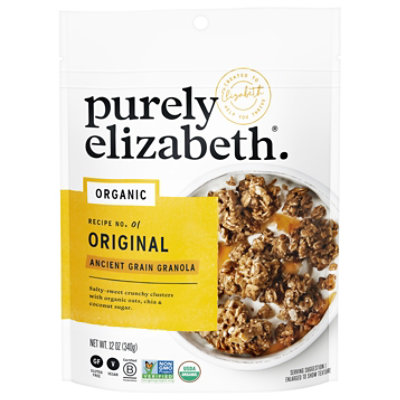
Ingredients Organic Whole Rolled Oats, Organic Cane Sugar, Organic Expeller Pressed Canola Oil, Organic Whole Grain Blend (Organic Amaranth, Organic Barley, Organic Quinoa), Organic Oat Syrup Solids, Organic Quinoa Flakes, Organic Chia Seeds, Organic Flax Seeds, Organic Molasses, Organic Natural Flavor, Salt, Organic Cinnamon Bark, Mixed Tocopherols (Vitamin E to Maintain Freshness).
The Nutrition Facts panel lists "Total Sugars" with "Includes Xg Added Sugars" indented directly below it. Total sugars include sugars that occur naturally in ingredients such as raisins and dates. Added sugars are sweeteners put in during processing, such as cane sugar, honey, molasses and syrups.
The FDA Daily Value for added sugars is 50 grams based on a 2,000-calorie daily diet. In Open Nature Maple Pecan Granola, the 15 grams of added sugars in a 0.67-cup serving equal 30 percent of that Daily Value. The Bob's Red Mill muesli lists 0 g added sugars, so it contributes 0 percent of it.
Worked examples show how these values change in a normal breakfast bowl.
If you were to pour a 1-cup bowl of Bob's Red Mill Old Country Style Muesli instead of the listed 0.25-cup serving, that would be four times the labeled portion. This would mean calories rise from 140 to 560, fiber increases from 4 g to 16 g, and total sugars rise from 5 g to 20 g, while added sugars remain at 0 g (0 percent of the Daily Value).
If you pour that same 1-cup bowl with Open Nature Nut Honey Granola instead of its 0.5-cup serving, you double the numbers instead, resulting in calories climbing from 240 to 480, fiber moving from 4 g to 8 g, total sugars increasing from 12 g to 24 g, and added sugars reaching 22 g, which is 44 percent of the 50-gram Daily Value.
A 1-cup bowl of Nature's Path Heritage Flakes matches the label exactly, containing 160 calories, 7 g fiber, 5 g total sugars, and 5 g added sugars (10 percent of the Daily Value).
A 1-cup bowl of Signature SELECT Corn Flakes, which lists 150 calories and 3 g added sugars for 1.5 cups, provides only 100 calories and 2 g of added sugars (4 percent of the Daily Value).
A single cup of dense granola delivers nearly five times the calories and eleven times the added sugar of a cup of corn flakes.
Common Questions About Granola and Muesli
What is the difference between granola and muesli?
Granola combines rolled oats with ingredients such as sweetener, oil, nuts or fruit, then bakes the mixture in a layer that is broken into chunks. Muesli mixes rolled grains with dried fruit, nuts and seeds without baking or glazing the finished mixture. This is why granola forms crunchy clusters while muesli stays loose.
Can you eat muesli without cooking it?
Yes. You can eat muesli straight from the bag. Commercial rolled oats are steamed and flattened during processing, which inactivates natural enzymes and stabilizes the grain. Pour cold milk over it and eat it immediately, let 0.25 cup muesli soak in 0.5 cup milk or yogurt for 5 to 10 minutes to soften, or cover it and refrigerate it overnight with yogurt and grated apple.
Is granola a cereal?
Yes. The Environmental Protection Agency includes granola among ready-to-eat cereal groups, and Safeway places these products in the granola and muesli aisle.
Why is granola in clusters?
The sweetened oat mixture bakes as a layer. When rolled oats and nuts are tossed with oil and sweeteners like sugar, honey, or syrup and spread in an oven, the sugar melts and glazes the ingredients. Once cooled, that toasted layer is broken into chunks after baking, leaving crunchy clusters instead of individual grains.
How much granola is a serving?
It depends on the label. The three granolas here list either 0.5 cup or 0.67 cup per serving. Because granola is dense, its reference amount under 21 CFR 101.12 is 60 grams, which takes up much less room in a measuring cup than airy flake cereals. Check the serving line on the panel rather than estimating by sight.
What is the difference between granola and oatmeal?
While both can start with rolled oats, granola mixes the oats with other ingredients and bakes them into toasted pieces, whereas oatmeal cooks rolled or cut oats in liquid on the stove or in the microwave and is eaten as a soft cereal.
How should opened granola and muesli be stored?
The USDA FoodKeeper lists opened ready-to-eat cereal at about 2 to 3 months in the pantry for best quality. Clemson University Cooperative Extension says cereals keep best in airtight containers that keep out moisture, dust and insects. Transfer opened packages into sealed containers with tight lids, and store them in a cool, dry pantry.
Why do oats and nuts develop an off-flavor over time?
The oils in oats and nuts can oxidize over time, which gives opened cereal a stale or rancid taste. When oxygen and warmth interact with unsaturated fats in whole grains and tree nuts, those oils break down. Airtight storage in a cool, dry place slows this oxidation.
Why do flake cereals have larger cup servings than granola?
Serving sizes follow weight-based reference amounts in 21 CFR 101.12. Dense cereals such as granola and muesli fall in the 60-gram group, while light flakes fall in the 15-gram or 40-gram groups. Flakes weigh less per cup, so their cup serving is usually larger.