


What Is Beet Juice, and What Does It Do?
What it is
Beet juice is pressed from beetroot. It's deep red, with an earthy, slightly sweet taste, and many bottles add a little lemon to cut the earthiness. It comes three ways: ready-to-drink bottles, either 100% beet or blended with other juices; small concentrated "shots" of about 70 mL, usually sold to athletes; and concentrates you dilute yourself. The part that does anything is nitrate, a compound beets carry in unusually high amounts. Beets are one of the highest-nitrate vegetables, along with spinach, arugula, and celery.
What people think it does
People drink it to lower blood pressure, to last longer during exercise, and to raise "nitric oxide." Those claims have more research behind them than most drinks on the shelf.
What the research shows
Two things hold up, both from the nitrate: a modest drop in blood pressure, and better use of oxygen during exercise.
Your body turns nitrate into nitric oxide, which relaxes and widens blood vessels. Wider vessels lower the pressure inside them, and during exercise they let blood reach working muscle more easily. Bacteria on the back of your tongue do a conversion your own cells can't, turning the nitrate into nitrite before the body finishes the job. Because those bacteria are part of the process, antibacterial mouthwash can blunt the effect. In a 2013 study, 19 adults who used antibacterial mouthwash twice a day for a week saw their blood pressure rise by 2 to 3.5 points, and a 2019 review of human studies found the same pattern.
For blood pressure, the research is consistent on one number: the top one, systolic. Several reviews land in the same range, a drop of about 3 to 5 points. A 2017 review of 22 trials found about 3.5 points. Reviews limited to people with high blood pressure found closer to 5. One four-week trial of 68 people with high blood pressure found a drop of about 9 points on nitrate-rich beet juice, with no change on a nitrate-free placebo. Daily use works better than a single dose. People who already have high blood pressure respond more than people whose pressure is already normal.
The effect on the bottom number, diastolic, is small and often shows nothing. In one 2024 review, the drop in clinic blood pressure didn't carry through to all-day readings. The trials are small and short, usually a few dozen people over days or weeks, with no long-term data on heart attacks or strokes. Beet juice can support healthy blood pressure as part of a diet, but it isn't a treatment for high blood pressure and isn't a substitute for medication.
For exercise, nitrate lowers the amount of oxygen your muscles need for a given effort. At the same pace, you use less oxygen. The most-cited study, from 2009, had eight men drink beet juice for six days. Their oxygen use at a fixed workload dropped 3 to 5%, and the time they could keep cycling before exhaustion rose about 16%. It's a small study, eight people, but it's where the beet-shot category came from. Larger reviews since have confirmed the effect is real but smaller.
The benefit depends on training level. A 2021 review of 73 trials found recreational athletes improved, while elite and sedentary people showed no significant gain. A 2025 review of 20 earlier reviews said the same. A highly trained endurance athlete already has efficient muscle and little left to gain. The effect also shows up more in "hold on as long as you can" efforts than in self-paced time trials, where reviews often find no improvement. If you want to try it, the studied dose is about 6 to 8 millimoles of nitrate. That's one standard 70 mL shot, or roughly 500 mL of regular juice, taken 2 to 3 hours before exercise. More than that doesn't help.
Side effects and cautions
The most common side effect is harmless. About 10 to 14% of people get pink or red urine after beets, and red-tinged stool is more common. It's beet pigment passing through, not blood, and it clears in a day or two. It's only worth a doctor's visit if the red urine lasts more than two days or comes with pain.
There is one real caution. Beets are high in oxalate, and the most common kidney stones are made of calcium oxalate. If you've had calcium-oxalate stones, go easy on beet juice and other high-oxalate foods, and ask your doctor how much fits your diet. For everyone else, this isn't a reason to avoid beets.
Because beet juice lowers blood pressure, it can add to the effect of blood-pressure medication and push your pressure too low. If you take any, tell your doctor or pharmacist and check your blood pressure regularly.
The nitrate in vegetables isn't the health concern that nitrate in cured meats is. In processed meats, nitrate and nitrite combine with protein under heat to form nitrosamines, which is where the cancer link comes from. In beets, the same nitrate comes with vitamin C and other antioxidants that block that reaction.
Babies under about six months shouldn't have beet juice or other high-nitrate vegetables. Their systems can turn nitrate into a form that interferes with oxygen in the blood. This applies only to young infants, not to older children or adults.
Buying it at Safeway
Beet juice is with the other juices. The biggest difference between bottles is whether it's 100% beet juice or a blend. Pure beet juice, usually just beets and a little lemon, has the most nitrate and the least sugar. Blends mix in apple, carrot, grape, or berry to soften the earthy taste. They're easier to drink, but they have less beet and more sugar. Read the ingredient list: if it starts with apple or grape juice instead of beet, you're mostly buying fruit juice.
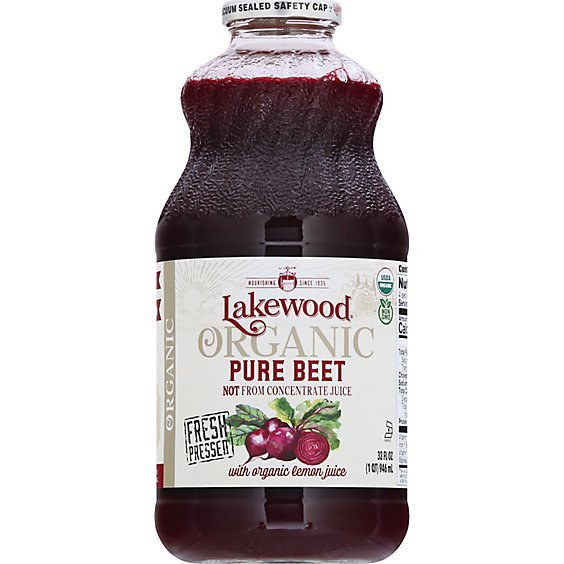
Lakewood Organic Fresh Pressed Super Beet, 32 oz
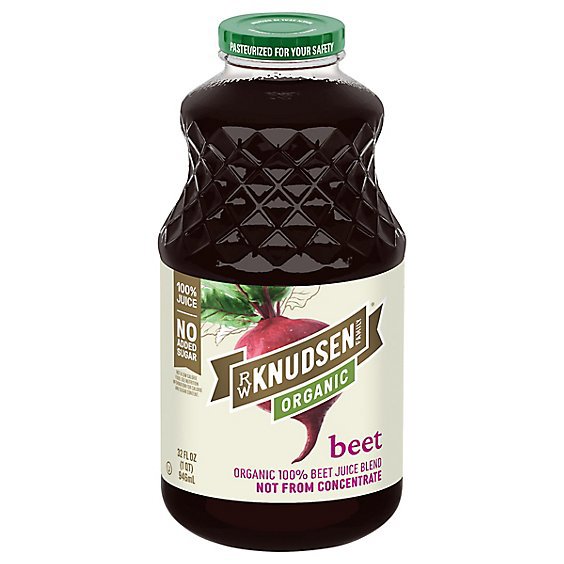
R.W. Knudsen Organic Beet Juice, 32 oz
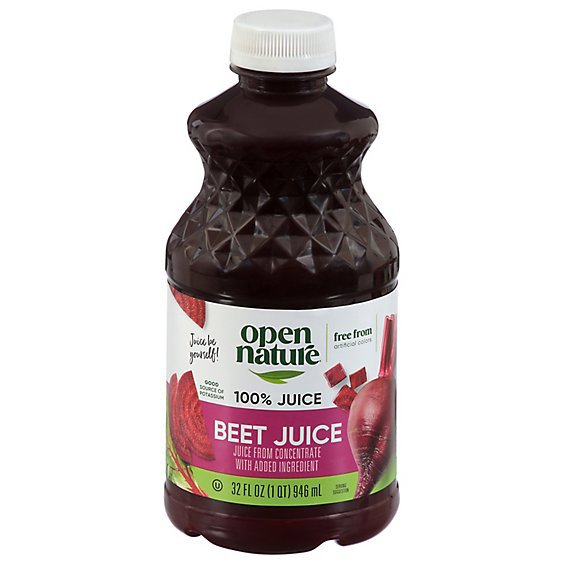
Open Nature, Safeway's store brand, is a 100% beet juice. So are Lakewood Organic Super Beet and R.W. Knudsen Organic Beet Juice. [Verify on safeway.com; availability of beet-juice brands varies by location.]
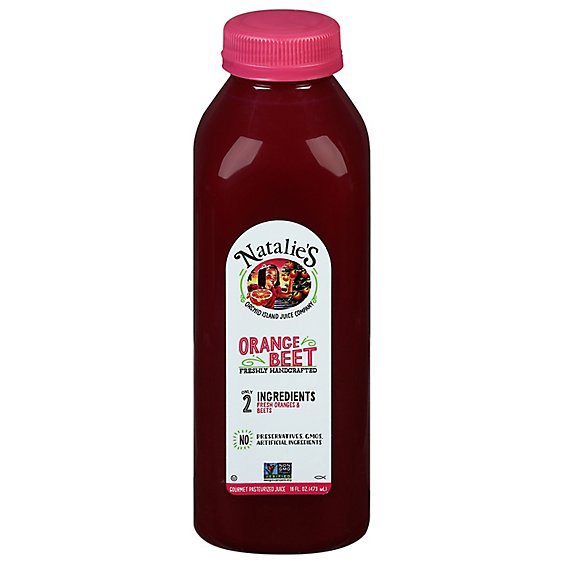
Natalie's Orange Beet Juice, 16 oz
Natalie's Orange Beet is a blend, with the beet mixed into orange juice. It's a gentler taste, but it's part fruit juice, so the beet and the nitrate are diluted.
A cup of regular bottled juice has roughly 200 to 300 mg of nitrate. The concentrated 70 mL shots sold to athletes have a standardized dose, often around 400 mg, in one swallow. Athletes use them because the dose is the same every time, where a regular bottle varies with the harvest. Safeway's selection is mostly bottles, and dedicated sport shots may not be stocked. [Verify on safeway.com.]
Check the label for added sugar and sodium, especially on blends. A cup of 100% beet juice already has about 22 grams of natural sugar and no fiber, and blends run higher. Whole beets, roasted or steamed, are the other option. They keep the fiber, which slows the sugar, but they're harder to measure for a set nitrate dose. If you cook them for the nitrate, steam or roast rather than boil, since long boiling leaches the nitrate into the water you pour off.
Common questions
Does beet juice really lower blood pressure?
Yes, modestly. Research shows a drop of a few points in the top (systolic) number, larger in people who already have high blood pressure and who drink it daily rather than once. It isn't a treatment for high blood pressure and isn't a substitute for medication.
How much should I drink before a workout, and when?
About 6 to 8 millimoles of nitrate, which is one standard 70 mL beet shot or roughly 500 mL of regular juice, 2 to 3 hours before you exercise. The benefit is clearer for recreational athletes than for elite ones, who tend to see little.
Will it turn my pee red?
It can, in about 10 to 14% of people. It's harmless pigment, not blood, and fades within a day or two. See a doctor only if it lasts more than two days or comes with pain.
Can it replace my blood pressure medication?
No. It can add to a medication's effect, which is a reason to tell your doctor and watch your numbers, but it doesn't replace prescribed treatment.
How much sugar is in beet juice?
About 22 grams of natural sugar per cup of 100% juice, with no fiber. Blends with added fruit run higher. Check the label.
Is the nitrate in beet juice the same as in cured meats?
No. The nitrate in beets comes with antioxidants that block the harmful nitrosamine formation linked to processed meats.