


What Does Peppermint Tea Do?
Peppermint tea is a caffeine-free herbal drink that may ease mild, everyday digestive complaints like gas, bloating, and post-meal fullness. The strong research on peppermint for the gut is on peppermint oil capsules, a separate product, not the tea. For most people the tea is a gentle, soothing cup. If you get heartburn or acid reflux, peppermint is one to limit.
What it is
Peppermint tea is an herbal infusion brewed from peppermint leaves (Mentha × piperita). It is not made from the tea plant, Camellia sinensis, the way green and black tea are. Because it has no tea leaf in it, it has no caffeine. That is settled, and it is the reason peppermint works as an after-dinner or evening cup.
The active compound in peppermint is menthol. Menthol relaxes the smooth muscle in the wall of your digestive tract. The muscle squeezes when calcium flows into its cells; menthol partly closes that calcium gate, so the muscle relaxes instead of cramping. That is the antispasmodic effect, and it is well established in lab and animal tissue.
What people think it does
Peppermint tea has a long traditional use for settling the stomach. The menthol mechanism makes that plausible. By relaxing the gut wall, peppermint may ease mild gas, bloating, cramping, and the heavy feeling after a large meal.
Peppermint tea also has a traditional use for nausea and as an evening wind-down drink. The caffeine-free part is solid. The rest rests on tradition and on how the menthol works. No trials of the tea itself back it up.
What the research shows
There is very little direct research on peppermint tea. The National Center for Complementary and Integrative Health says there is not enough evidence to determine whether peppermint leaf helps any health condition. The claims people make for the tea borrow from studies of peppermint oil and from how menthol behaves in lab tissue.
The strong evidence is for peppermint oil capsules, not the tea. These are concentrated menthol in a capsule with a coating that keeps it from opening until it is past the stomach, so the oil acts in the gut. A 2014 review of 9 trials covering 726 people with irritable bowel syndrome found those taking peppermint oil were more than twice as likely to report symptom improvement than those on a placebo. Another 2019 review of 12 trials covering 835 people found a similar result. And finally a 2022 review of 10 trials covering 1,030 people again found peppermint oil beat placebo for IBS symptoms and abdominal pain, though the authors rated the quality of the evidence as very low: small studies, short durations, dated methods. The American College of Gastroenterology recommends enteric-coated peppermint oil capsules, not liquid forms, for short-term relief of IBS symptoms, calling it a conditional recommendation backed by low-quality evidence.
A cup of tea is a different thing. It has far less menthol and no coating to carry it past the stomach. None of those trials used tea. If you have IBS, the capsules are what the research covers, and they are something to ask your doctor about. For the tea, "may help with mild bloating and gas" is all the evidence supports.
The nausea evidence is thin and is not about the tea. The studies that exist used inhaled peppermint oil after surgery, and the results were mixed. Some found less nausea, one found no difference. Smelling peppermint oil is not the same as drinking peppermint tea. A warm cup may feel settling, but that is comfort, not a nausea remedy.
How to use it safely
Peppermint can worsen acid reflux and heartburn. For anyone with GERD or frequent heartburn, peppermint is a standard food to limit. The usual explanation is that menthol relaxes the valve at the top of the stomach, which lets acid travel back up. The exact mechanism is debated; one small 2023 study of 24 people found no change in the valve's pressure, yet the people with GERD still reported more discomfort. The practical advice holds either way: if you get reflux, skip the peppermint.
For most people, peppermint tea appears very safe. The long-term safety of drinking large amounts of peppermint leaf has not been studied.
Menthol should not be inhaled by or applied to the face of an infant or small child, because it may affect breathing. This caution covers menthol oil and rubs, and it applies if young children are around.
Buying it at Safeway
Peppermint tea sits in the tea-bags aisle alongside the other herbal infusions.
Look for "peppermint" or "Mentha piperita" in the ingredients, not just "mint" or "natural flavor." A pure peppermint tea lists one thing: peppermint leaf. Spearmint is a different leaf, milder and lower in menthol, so "peppermint" and "mint" are not interchangeable on a label. Both are caffeine-free.
A single-ingredient peppermint is the cleanest caffeine-free, no-additives option.
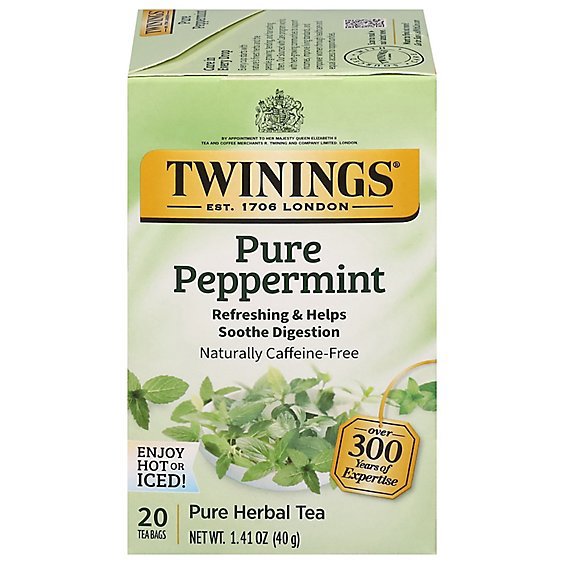
Twinings of London Herbal Tea Caffeine Free Pure Peppermint - 20 Count
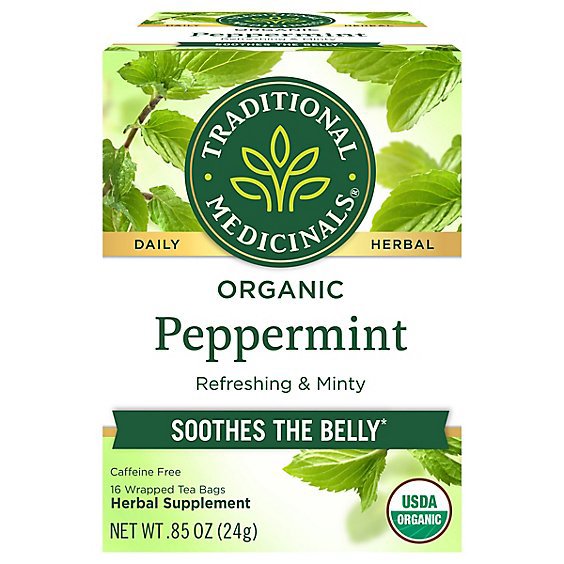
Traditional Medicinals Organic Peppermint Herbal Tea Bags - 16 Count
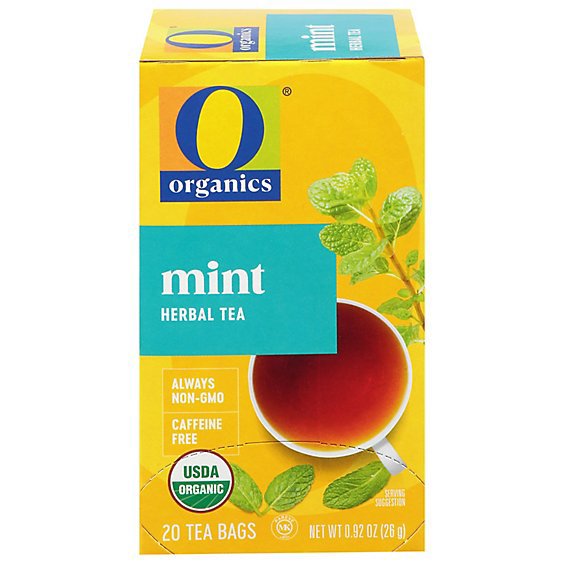
The store brand carries an organic mint herbal tea.
O Organics Herbal Tea Organic Mint Herbal - 20 Count
Some teas are sold as "digestive" or "after-dinner" blends. These pair peppermint with other herbs like ginger or fennel. The branding is marketing that signals a blend built around gut-settling herbs. Read the panel for licorice, which is a blood-pressure caution, and decide whether you want the other herbs in the mix.
Confirm the box says caffeine-free. A blend built on a green or black tea base is not caffeine-free, and the box will say so.
Loose-leaf and tea bags are both fine. Loose-leaf has more whole leaf and a stronger aroma; bags are convenient and consistent. This is preference, not a difference the evidence can measure.
One caution in this aisle. Traditional Medicinals Smooth Move Peppermint is flavored with peppermint and sits near the digestive teas, but it is a senna stimulant laxative for constipation, a different product. It is not a digestive-comfort tea. Read the box if you are reaching for a soothing cup.
Common questions
Does peppermint tea help with bloating?
It may. Menthol relaxes the muscle in your gut wall, which can ease gas and cramping. The strong trial evidence is for peppermint oil capsules, not the tea, so treat the tea as a gentle, traditional option rather than a proven fix.
Is peppermint tea the same as the IBS capsules?
No. The capsules are concentrated peppermint oil with a coating that carries the menthol past the stomach to the gut. Tea has far less menthol and no coating. If you have IBS, the capsules are what the research covers, so ask your doctor about them.
Does peppermint tea help with nausea?
Maybe as comfort, but the evidence is thin. The nausea studies used inhaled peppermint oil, not tea, and the results were mixed.
Can peppermint tea cause heartburn?
Yes, for some people. Peppermint is a common heartburn trigger and a standard food to limit if you have acid reflux or GERD.
Is peppermint tea caffeine-free?
Yes. It is an herbal infusion of peppermint leaves, not true tea, so it has no caffeine. That is why it works as an after-dinner or evening cup.
When should I drink it?
After meals or in the evening are the common times. It is caffeine-free, and a warm cup fits a wind-down. If you get reflux, skip it.